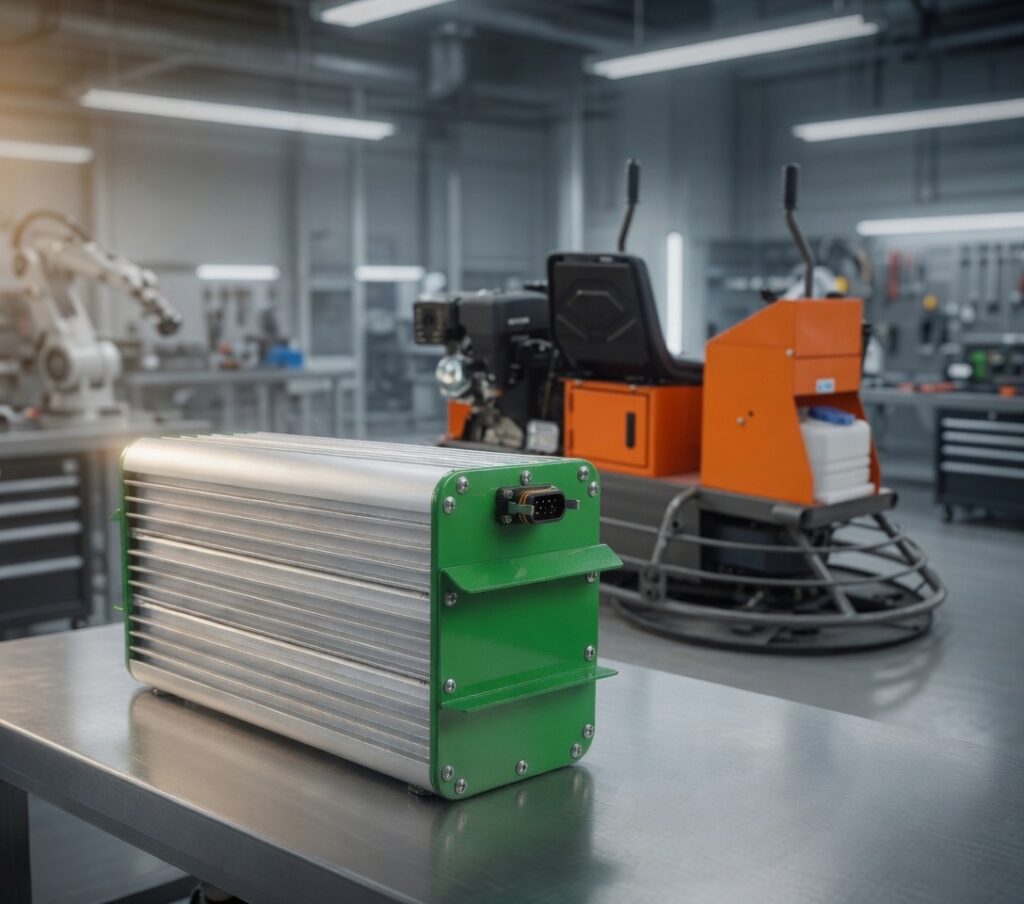

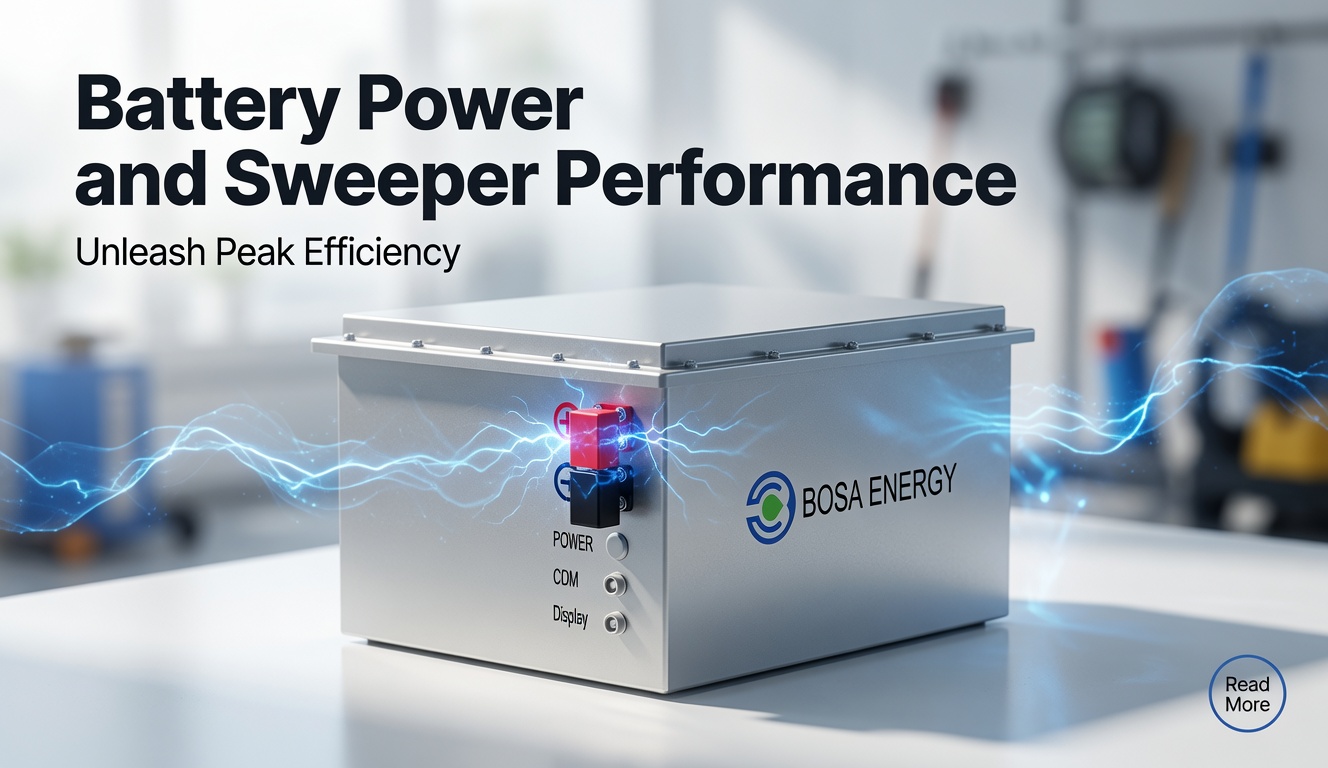
Battery power and sweeper performance are tightly linked in modern industrial floor cleaning. The energy available from the battery pack determines how long a ride-on sweeper can run, how consistently the main and side brushes maintain torque, how effective the vacuum and dust-control system remains, and ultimately how many square metres a facility can clean per shift. In 2026, facility managers evaluating ride-on sweepers treat battery capacity, voltage stability and chemistry as primary selection criteria rather than secondary options.
Understanding the relationship between battery power and sweeper performance allows buyers to avoid under-sized packs that force mid-shift recharges or over-sized packs that add unnecessary cost and weight. This technical briefing explains the measurable relationships between battery specifications and real cleaning outcomes, using current OEM data from leading manufacturers and established industrial battery standards.
Why Battery Power Directly Governs Sweeper Output
A ride-on sweeper draws continuous power for three main loads: the propel motor, the main brush motor, and the vacuum fan. Peak current spikes occur when the main brush engages heavy debris or when the machine accelerates. Lead-acid packs experience progressive voltage sag under these loads, reducing brush speed and vacuum efficiency in the second half of a shift. Lithium iron phosphate (LiFePO₄) packs maintain a flatter discharge curve, delivering near-full power until a low state of charge (SOC).
The practical result is higher average cleaning productivity and fewer mid-shift interruptions. Industry guidance consistently shows that matching battery energy (kWh) and continuous discharge capability to the machine’s average power draw is the single highest-leverage decision for daily output. In short, battery power and sweeper performance must be evaluated together.
Quantified Impact: Capacity, Runtime and Productivity
Approximate runtime can be estimated with the basic energy balance:
Runtime (hours) ≈ (Battery energy in kWh × usable DoD factor) ÷ average machine power (kW)
Typical mid-size ride-on sweepers draw 1.5–3.5 kW depending on mode and surface. Usable depth of discharge (DoD) is roughly 50 % for lead-acid and 80–90 % for quality LiFePO₄ systems when managed by a proper BMS.
| Battery Configuration | Typical Energy | Approximate Runtime (Eco / Normal) | Relative Productivity Impact |
|---|---|---|---|
| Lead-acid 36 V / 240 Ah | ~8.6 kWh | 3.5–4.0 h | Baseline; voltage sag late in shift |
| Lead-acid 36 V / 360 Ah | ~13.0 kWh | 5.5–6.5 h | +40–60 % area coverage |
| LiFePO₄ 36 V / 12.2 kWh | 12.2 kWh | Up to 8.5 h | Highest consistent brush & vacuum power |
| LiFePO₄ 24–25.6 V packs (3 × 50 Ah) | ~3.8 kWh | Up to 4 h | Strong opportunity-charge flexibility |
Data drawn from current Tennant S16 and Nilfisk SW3000 published specifications (2024–2026 documentation).
OEM Examples That Illustrate the Relationship
Tennant S16 compact ride-on sweeper
- Power source: 36 V battery system.
- Base lead-acid (240 Ah): up to 3.9 hours.
- High-capacity lead-acid (360 Ah): up to 6.5 hours.
- Lithium-ion options: 4.1 kWh (≈2.8 h), 8.2 kWh (≈5.6 h), and 12.2 kWh (up to 8.5 hours).
- Cleaning path up to 1 520 mm; theoretical productivity up to 13 490 m²/h.
The 12.2 kWh lithium pack more than doubles the base runtime while maintaining MaxPro™ brush power and Eco-Mode noise reduction across the full discharge window.
Nilfisk SW3000 mid-size rider
- Lithium version: three 25.6 V 50 Ah modules.
- Runtime up to approximately 4 hours with opportunity charging supported.
- Cleaning path 1 350 mm; theoretical productivity around 8 100 m²/h.
- Lead-acid versions can reach slightly longer single-charge times but lack the same mid-shift top-up capability and voltage stability.
These two platforms demonstrate that higher usable energy and stable voltage translate directly into more square metres cleaned per operator hour and fewer battery-related stoppages.
Chemistry and Voltage Stability Effects
LiFePO₄ cells deliver three performance advantages critical to sweepers:
- Flat voltage curve – Brush and fan motors stay closer to rated speed until low SOC.
- High cycle life – ≥ 3 500 cycles to 80 % remaining capacity under industrial duty is now standard for quality packs meeting IEC 62619.
- Opportunity charging tolerance – Short top-ups of 15–40 % capacity during breaks do not degrade the pack the way partial charges damage flooded or AGM lead-acid batteries.
Keeping SOC above 20–30 % and avoiding routine deep discharges further extends calendar life and preserves peak power capability.
Practical Selection Criteria for Facility Managers
When specifying or upgrading batteries for ride-on sweepers, prioritise the following measurable factors:
- Energy (kWh) sized to cover the longest continuous cleaning block plus a safety margin.
- Continuous and peak discharge current that matches or exceeds motor inrush and sustained loads.
- BMS with industrial communication (CAN or equivalent) for real-time SOC, temperature and fault reporting.
- Certification to IEC 62619 (industrial lithium) and, where required, UL 2580 or equivalent.
- Physical fit and weight – lighter LiFePO₄ packs improve manoeuvrability and reduce floor loading without sacrificing traction if ballast is correctly managed.
- Charging infrastructure that supports opportunity charging without forcing full overnight cycles.
Operational Checklist
- Confirm daily cleaning area and target shift length before selecting capacity.
- Measure or obtain OEM average power draw under typical load.
- Specify LiFePO₄ when multi-shift operation or opportunity charging is required.
- Maintain SOC between 20–30 % minimum and 80–100 % after opportunity charges.
- Monitor BMS data weekly for early detection of cell imbalance or elevated resistance.
- Train operators to plug in during breaks rather than running to zero.
- Schedule annual capacity verification under load.
FAQ
How much extra runtime does a lithium pack typically deliver versus the same nominal Ah lead-acid pack? Because LiFePO₄ allows deeper usable DoD and suffers less voltage sag, real-world runtime gains of 30–60 % are common on the same machine.
Does higher battery power improve cleaning quality or only runtime? Both. Stable voltage keeps brush tip speed and vacuum airflow closer to design values throughout the shift, improving dust containment and debris pick-up consistency.
Is opportunity charging safe for industrial sweeper batteries? Yes for properly engineered LiFePO₄ systems with BMS thermal and current limits. It remains harmful for most lead-acid chemistries if performed repeatedly without full equalization.
What cycle life should I require in 2026? Specify ≥ 3 500 cycles to 80 % capacity at 80 % DoD under the stated operating temperature range, verified to IEC 62619 test methods.
Can I retrofit lithium into an existing lead-acid sweeper? Many 24 V and 36 V platforms accept drop-in LiFePO₄ packs, but charger compatibility, BMS communication and weight distribution must be verified by the battery or machine OEM.
Decision Framework
- Calculate required daily energy (area × power density × safety factor).
- Choose chemistry: lead-acid only for single-shift, overnight-charge operations; LiFePO₄ for multi-shift or flexible schedules.
- Select capacity and voltage that keep average SOC above 20–30 % under normal duty.
- Verify continuous discharge rating and peak capability against motor data sheets.
- Confirm certification (IEC 62619 minimum) and BMS monitoring features.
- Validate total cost of ownership over 5–7 years, including energy, labour and replacement cycles.
Battery power and sweeper performance are not independent variables. Correctly sized, stable, high-cycle lithium packs convert directly into higher daily area coverage, more consistent cleaning results and lower total operating cost. Facility teams that treat battery power and sweeper performance as a single integrated decision rather than a commodity purchase consistently achieve better uptime and lower cost per cleaned square metre.
Authoritative References
- Tennant Company – S16 Battery-Powered Compact Ride-On Sweeper specifications and runtime data (official product documentation, 2024–2026 revisions). https://www.tennantco.com
- Nilfisk – SW3000 Li-Ion rider sweeper technical data and opportunity-charging guidance. https://www.nilfisk.com
- IEC 62619:2022 – Secondary cells and batteries containing alkaline or other non-acid electrolytes – Safety requirements for secondary lithium cells and batteries for use in industrial applications. https://webstore.iec.ch
- ROYPOW and industry LiFePO₄ application notes for floor-cleaning machines (cycle-life and power-delivery data). https://www.roypow.com
These sources provide the primary technical foundation for the metrics and recommendations presented above.