
Why Battery Safety Matters in Heavy Equipment Operations
Heavy equipment such as floor sweepers operates in high-traffic environments—warehouses, factories, airports, and municipal facilities—where operators and pedestrians work in close proximity. Battery failures here carry amplified consequences:
- Thermal events or explosions
- Acid leaks creating slip hazards and equipment corrosion
- Toxic charging fumes affecting indoor air quality
- Unexpected power loss halting operations mid-task
- High replacement frequency driving up costs and waste
Industry data shows that proper battery selection and management can prevent the majority of these incidents. This is why leading equipment manufacturers and operators are rapidly transitioning to LiFePO4 technology.
LiFePO4 vs Lead-Acid: Safety and Performance Head-to-Head
The fundamental difference lies in chemistry and engineering. LiFePO4 batteries use an inherently stable iron-phosphate cathode that resists thermal runaway. Lead-acid batteries rely on liquid electrolyte that can spill, corrode, and generate explosive hydrogen gas.
Comparison of key safety and operational metrics (based on real-world testing for floor sweeper and industrial applications):
| Besonderheit | Bosa LiFePO4 Battery | Traditionelle Blei-Säure-Batterie | Gewinner |
|---|---|---|---|
| Lebenszyklus | >3.500 Zyklen bei 0,5 °C | 300–500 Zyklen | LiFePO4 |
| Vollständige Ladezeit | 1–2 Stunden | 8–10 Stunden | LiFePO4 |
| Fire/Explosion Risk | None under normal or abuse conditions | Significant risk (acid, hydrogen gas) | LiFePO4 |
| Wartung | Wartungsfrei | Regular watering, cleaning, corrosion checks | LiFePO4 |
| Gesamtbetriebskosten | ~70% lower over lifetime | 2× höher | LiFePO4 |
| Umweltauswirkungen | Umweltfreundlich, recycelbar | Hazardous waste, acid disposal issues | LiFePO4 |
| Typical Lifespan | Bis zu 12 Jahre | 2–4 Jahre | LiFePO4 |
| Garantie | Branchenführende 5 Jahre | Typischerweise 1–2 Jahre | LiFePO4 |
These advantages translate directly into safer daily operations and stronger financial performance.
1. Advanced Battery Management System (BMS)
A high-quality BMS continuously monitors cell voltage, current, and temperature. Bosa LiFePO4 batteries include 5 internal temperature sensors and a self-protecting monitoring system with 6 levels of safety redundancy—far exceeding basic protection circuits.
2. Comprehensive Protection Suite
Look for built-in safeguards against:
- Overvoltage and undervoltage
- Overcurrent and short circuit
- Overtemperature and low-temperature charging
- Cell imbalance
Bosa batteries incorporate all these protections plus IP54-rated enclosures for dust and moisture resistance in harsh industrial environments.
3. Mechanical Durability
Heavy equipment experiences constant vibration and shock. Bosa LiFePO4 batteries meet standards for durability and vibration resistance, ensuring reliable performance over years of daily use.
4. Smart Connectivity and Real-Time Monitoring
Modern safety goes beyond passive protection. Bosa’s Bluetooth control and positioning monitoring platform provides:
- Real-time battery status and data analysis
- Remote control and over-the-air (OTA) firmware upgrades
- GPS tracking and electronic fence alerts
- Instant alarms for any anomaly
This proactive visibility allows operators to address issues before they escalate into safety incidents.
Bosa LiFePO4 Batteries: Specifications Built for Floor Sweepers and Industrial Use
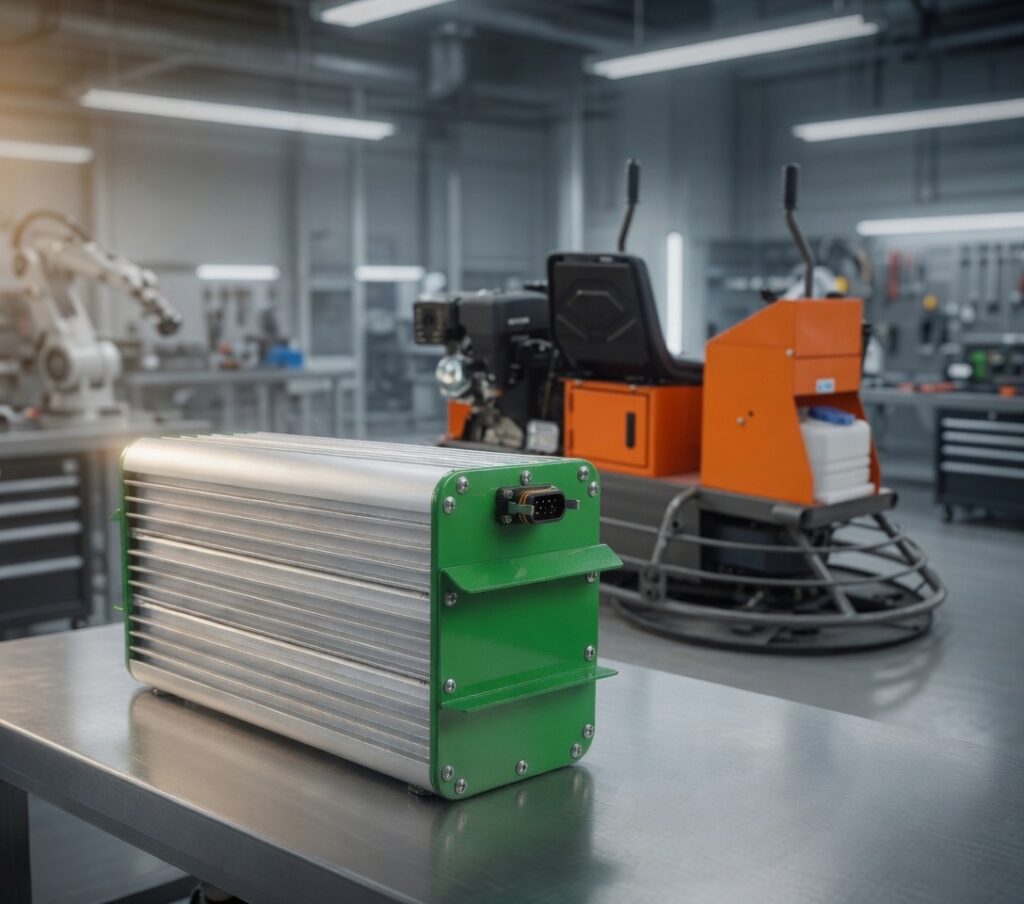
Bosa Energy specializes in lithium batteries engineered specifically for floor sweepers and other heavy equipment. Available configurations include:
25.6V Series (nominal 24V systems)
- 105Ah (2.688 kWh) – 318 × 200 × 238 mm, 27.6 kg
- 168Ah (4.30 kWh) – 420 × 348 × 230 mm, 33 kg
- 230Ah (5.888 kWh)
- 304Ah (7.782 kWh)
36V Series
- 168Ah (6.048 kWh)
- 230Ah (8.28 kWh)
Common performance specifications
- Cycle life: 3,500+ cycles at 25 ± 2 °C
- Recommended max continuous charge: up to 150A (model dependent)
- Recommended max continuous discharge: up to 200A (peak up to 350A @ 10s)
- Kommunikation: CAN / RS485
- Schutzart: IP54
- Terminals: Terminal blocks for secure connections
These batteries are proven compatible with major floor sweeper brands including HAKO, BOSCHUNG, and RCM, making them a drop-in or conversion-ready solution for existing fleets.
Charger and Accessory Safety Integration
A safe battery system requires a safe charging ecosystem. Bosa chargers feature:
- LED display for real-time operating status
- Input overvoltage/undervoltage protection
- Output overvoltage/undervoltage, overcurrent, and short-circuit protection
- Fan failure detection
- Compliance with RoHS and CE requirements
Matched chargers and accessories (display screens, extension cables) ensure the entire charging process maintains the same high safety standards as the battery itself.
Best Practices for Heavy Equipment Battery Safety
Even the safest batteries perform best when operators follow these guidelines:
- Always use the manufacturer-recommended charger matched to voltage and chemistry.
- Leverage BMS data and Bluetooth monitoring for predictive maintenance instead of reactive repairs.
- Store and operate batteries within recommended temperature ranges.
- Ensure proper mounting to minimize vibration stress on terminals and cells.
- Train operators on emergency procedures and the differences between lead-acid and lithium systems.
- For conversions from lead-acid, work with experienced suppliers to confirm compatibility and wiring.