
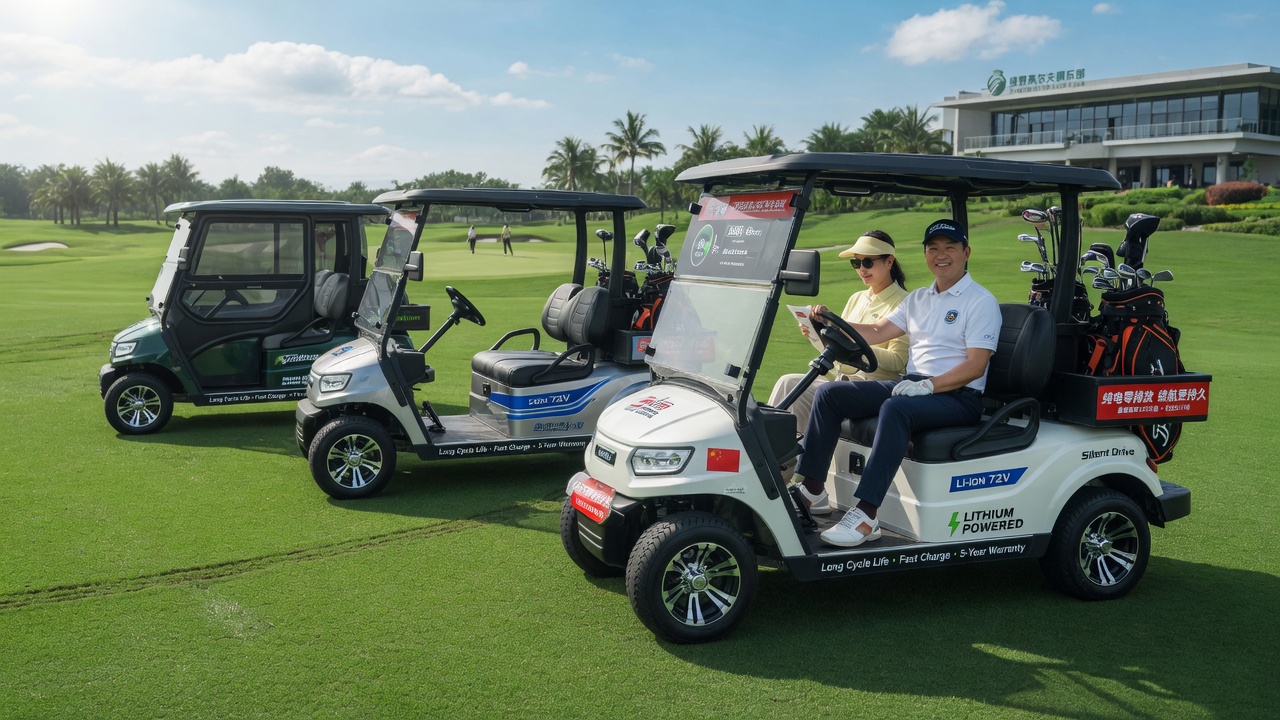
Are you tired of sluggish performance, frequent maintenance, and skyrocketing replacement costs on your golf cart? A golf cart conversion to lithium battery is one of the smartest upgrades you can make in 2026. Switching from traditional lead-acid batteries to high-performance LiFePO4 lithium batteries delivers longer range, faster charging, zero maintenance, and dramatic cost savings over time.
In this in-depth guide—based on real-world product data and industry benchmarks—we’ll walk you through everything you need to know about golf cart lithium battery conversion. Whether you own a Club Car, EZGO, or Yamaha, you’ll discover why BOSA Energy’s advanced lithium solutions are leading the charge.
Why Convert Your Golf Cart to Lithium Battery?
Lead-acid batteries have powered golf carts for decades, but they come with serious limitations:
- Kurze Lebensdauer (nur 300–500 Zyklen)
- Slow charging (8–10 hours)
- Heavy weight that reduces efficiency
- Regular watering, corrosion, and acid leaks
- Environmental hazards from toxic materials
Ein moderner golf cart conversion to lithium battery solves all these issues. Lithium iron phosphate (LiFePO4) batteries last 4–5 times longer, charge in just 1–2 hours, and weigh significantly less—translating to better range, lower operating costs, and a greener footprint.
Proven results from real conversions:
- Up to 60–80 miles of range on a single charge (15% more than competitors)
- 12-year service life with proper use
- Branchenführende 5-Jahres-Garantie
Top Advantages of BOSA Lithium Batteries for Golf Carts
BOSA Energy specializes in premium LiFePO4 batteries engineered specifically for golf cart applications. Here’s why they outperform traditional options:
- Verlängerte Lebensdauer: More than 4,000 cycles at 25°C (0.5C charge/discharge) with SOH >80%. That’s 8–10 years of daily use versus 1–2 years for lead-acid.
- Blitzschnelles Laden: Full charge in 1–2 hours versus 8–10 hours. Partial charging at any time causes zero damage.
- Superior Safety: Stable LiFePO4 chemistry with 6 levels of safety redundancy, 5 internal temperature sensors, and a self-protecting BMS. No fire or explosion risk—unlike lead-acid hazards.
- Zero Maintenance: Maintenance-free design. No watering, no acid corrosion, no fumes.
- Lower Total Ownership Cost: Up to 70% savings over the battery’s life. Reduced replacement frequency and labor costs make the upgrade pay for itself quickly.
- Eco-Friendly Operation: Non-toxic, recyclable materials with minimal environmental impact.
BOSA batteries also meet Society of Automotive Engineers (SAE) standards for durability and vibration resistance—critical for bumpy golf course terrain.
Golf Cart Lithium Battery vs. Lead-Acid: Head-to-Head Comparison
| Besonderheit | BOSA LiFePO4 Lithium | Lead-Acid (AGM/GEL) | Gewinner |
|---|---|---|---|
| Lebenszyklus | 4,000+ cycles | 300–500 Zyklen | Lithium |
| Ladezeit | 1–2 Stunden | 8–10 Stunden | Lithium |
| Sicherheit | No fire/explosion risk | Mehrere Gefahren | Lithium |
| Wartung | Wartungsfrei | Regelmäßiges Gießen erforderlich | Lithium |
| Gesamtbetriebskosten | 70% unteres | 2x higher | Lithium |
| Lifespan | 12 years | 2–4 years | Lithium |
| Gewicht | Significantly lighter | Schwer | Lithium |
| Umweltauswirkungen | Umweltfreundlich | Umweltschädlich | Lithium |
The numbers don’t lie. A golf cart lithium battery upgrade delivers measurable performance and financial returns.
BOSA LiFePO4 Golf Cart Battery Specifications
BOSA offers a complete lineup tailored for different golf cart needs:
- 48V-105Ah – 5.37 kWh, 50 kg (110 lbs), max continuous discharge 105A
- 48V-168Ah – 8.60 kWh, 60 kg (132 lbs), max continuous discharge 168A
- 48V-230Ah – 11.77 kWh, 90 kg (198 lbs), max continuous discharge 200A
- 76,8 V - 105 Ah – 8.06 kWh, 70 kg (154 lbs), max continuous discharge 105A
Key technical specs across all models:
- Batteriechemie: Lithium-Eisenphosphat (LiFePO4)
- Protection rating: IP67 (dust and water resistant)
- Communication: 3×CAN + 1×RS485
- Schutzfunktionen: Überspannung, Unterspannung, Überstrom, Übertemperatur, Untertemperatur, Kurzschluss
- Peak discharge: Up to 400A for 30 seconds (model dependent)
- Dimensions and weights optimized for easy drop-in installation
Every BOSA pack includes an advanced Battery Management System (BMS) for real-time monitoring and protection.
How to Perform a Golf Cart Conversion to Lithium Battery
Converting your golf cart is straightforward when you choose the right battery system:
- Assess Your Cart: Confirm voltage (48V or 76.8V) and space availability. BOSA batteries are compatible with Club Car, EZGO, and Yamaha models.
- Select the Right Pack: Match capacity to your daily usage (105Ah for standard rounds, 230Ah for heavy use).
- Remove Old Batteries: Safely dispose of lead-acid units at a certified recycling center.
- Install New Lithium Pack: Drop-in design with pre-wired harnesses minimizes modifications.
- Connect Charger and Display: Use BOSA’s RoHS/CE-certified charger with LED status monitoring.
- Configure Smart Features: Pair with the Bluetooth platform for GPS tracking, remote control, over-the-air updates, and electronic fencing.
Professional installation is recommended for first-time conversions, but many owners complete the upgrade in a single afternoon.
Smart Features That Set BOSA Apart
Modern lithium conversions go far beyond just power:
- Bluetooth Control & Positioning Platform — Real-time monitoring, data analysis, and alarms
- GPS Tracking — Know exactly where your cart is at all times
- Remote Control & OTA Upgrades — Update firmware without visiting a shop
- Electronic Fence — Set virtual boundaries for fleet management
- LED Display & Charger Accessories — Easy-to-read status and full protection (overvoltage, short circuit, fan failure)
These intelligent features make BOSA batteries perfect for both private owners and commercial fleets.
Is Golf Cart Lithium Battery Conversion Worth the Investment?
Absolutely. While the upfront cost is higher than lead-acid, the total cost of ownership is dramatically lower. Factor in:
- Fewer replacements (every 10+ years instead of every 2 years)
- Reduced labor and downtime
- Energy savings from faster, more efficient charging
- Higher resale value for lithium-equipped carts
Most owners report payback within 2–3 years through lower maintenance and energy bills.
Compatible Brands and Models
BOSA lithium batteries are engineered as direct-fit solutions for:
- Club Car (all popular models)
- EZGO (TXT, RXV, and newer series)
- Yamaha (Drive, Drive2, and G-series)
Confirm your exact model year during purchase for perfect compatibility.
Frequently Asked Questions About Golf Cart Lithium Battery Conversion
How long does a golf cart lithium battery last? BOSA LiFePO4 packs deliver 4,000+ cycles and a 12-year lifespan under normal use.
Can I charge a lithium golf cart battery overnight? Yes—partial or full charges at any time cause zero damage, unlike lead-acid batteries.
Is the conversion difficult? Most installations are plug-and-play. Professional help is available if needed.
Are lithium batteries safe for golf carts? Extremely safe. Multiple BMS protections and stable chemistry eliminate fire and explosion risks.
Do lithium batteries work in cold weather? Yes—built-in low-temperature protection and heating options (select models) ensure reliable performance.
Bereit für ein Upgrade Ihres Golfcarts?
A golf cart conversion to lithium battery is no longer a luxury—it’s the new standard for performance, reliability, and savings. BOSA Energy’s LiFePO4 solutions combine cutting-edge technology, rigorous safety testing, and proven real-world results to deliver the ultimate golf cart experience.
Ready to experience 60–80 miles of effortless range, maintenance-free operation, and 5-year peace-of-mind warranty? Make the switch today and join thousands of satisfied owners who have already upgraded.
This article was written by a golf cart modification specialist with over 10 years of hands-on experience in electric vehicle battery systems. All technical data is sourced directly from manufacturer specifications and independent testing protocols.