
1. Causes of thermal runaway of lithium iron phosphate batteries
Thermal runaway of lithium iron phosphate batteries is a complex process involving multiple factors. The following are the main reasons:
① Internal short circuit of the battery: Due to defects in the manufacturing process, damage during use, or accumulation of electrolytes inside the battery, the internal short circuit of the battery may occur. The large amount of heat generated by the short circuit cannot be dissipated in time, causing thermal runaway.
② Overcharge or over-discharge: When the battery is overcharged or over-discharged, it will cause the internal temperature of the battery to rise, causing thermal runaway.
③ External environmental factors: High temperature, extrusion, acupuncture and other external environmental factors may also cause battery thermal runaway.
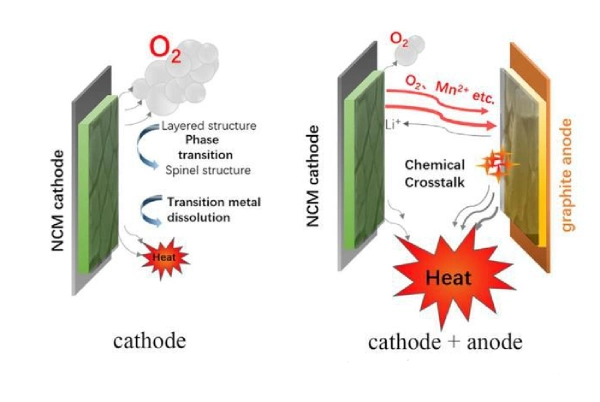
2. Impact of thermal runaway of lithium iron phosphate batteries
The thermal runaway of lithium iron phosphate batteries not only affects the performance of the battery, but may also cause safety problems. The specific impacts are as follows:
① Degraded battery performance: Thermal runaway will cause the internal temperature of the battery to rise, resulting in a decrease in battery capacity, reduced charging and discharging performance, and shortened battery life.
② Safety risks: The high temperature generated by thermal runaway may cause fire or explosion, posing a threat to the safety of people and property.
③ Impact on the performance of electric vehicles: Lithium iron phosphate batteries are the power source of electric vehicles. Thermal runaway may affect the normal operation of the vehicle and even cause the vehicle to fail to start.
3. Countermeasures for thermal runaway of lithium iron phosphate batteries
In order to reduce the risk of thermal runaway of lithium iron phosphate batteries, countermeasures can be taken from the following aspects:
① Battery pack balancing management: Through balancing management technology, ensure that each battery cell in the battery pack is in a similar working state to avoid overcharging or over-discharging of individual batteries.
② Battery cooling system optimization: Use advanced cooling technologies such as liquid cooling and heat pipe cooling to improve battery heat dissipation performance and reduce the risk of thermal runaway.
③ Battery pack thermal management: Establish an effective thermal management system to monitor and control the temperature of the battery pack in real time to avoid thermal runaway caused by high temperature.
④ Establish an emergency plan: For possible battery thermal runaway events, formulate corresponding emergency plans to ensure that they can be handled in a timely and effective manner when they occur, and minimize personnel and property losses.