
Why Humidity Damages Golf Cart Batteries
Humidity affects batteries through two main pathways: surface condensation and long-term moisture ingress.
Lead-acid batteries are especially vulnerable. Condensation on terminals forms conductive paths that increase resistance and accelerate sulfation. Electrolyte evaporation rises in humid, warm conditions, exposing plates and reducing capacity. In coastal or southeastern U.S. climates with sustained 70 %+ relative humidity, terminal corrosion can appear within weeks if left unprotected.
Lithium iron phosphate (LiFePO₄) cells are inherently more stable. Sealed construction and the absence of free liquid electrolyte eliminate watering-related issues. However, imperfect seals or damaged gaskets still allow gradual moisture entry. Once inside, water can react with residual electrolyte salts, raise internal resistance, and degrade capacity over time. Quality packs mitigate this through robust enclosure design and conformal coatings on electronics.
Ideal long-term storage relative humidity sits below 50–60 %. Values consistently above 70 % increase the rate of both corrosion and capacity fade.
Core Elements of Golf Cart Battery Humidity Protection
1. Enclosure and Ingress Protection Rating
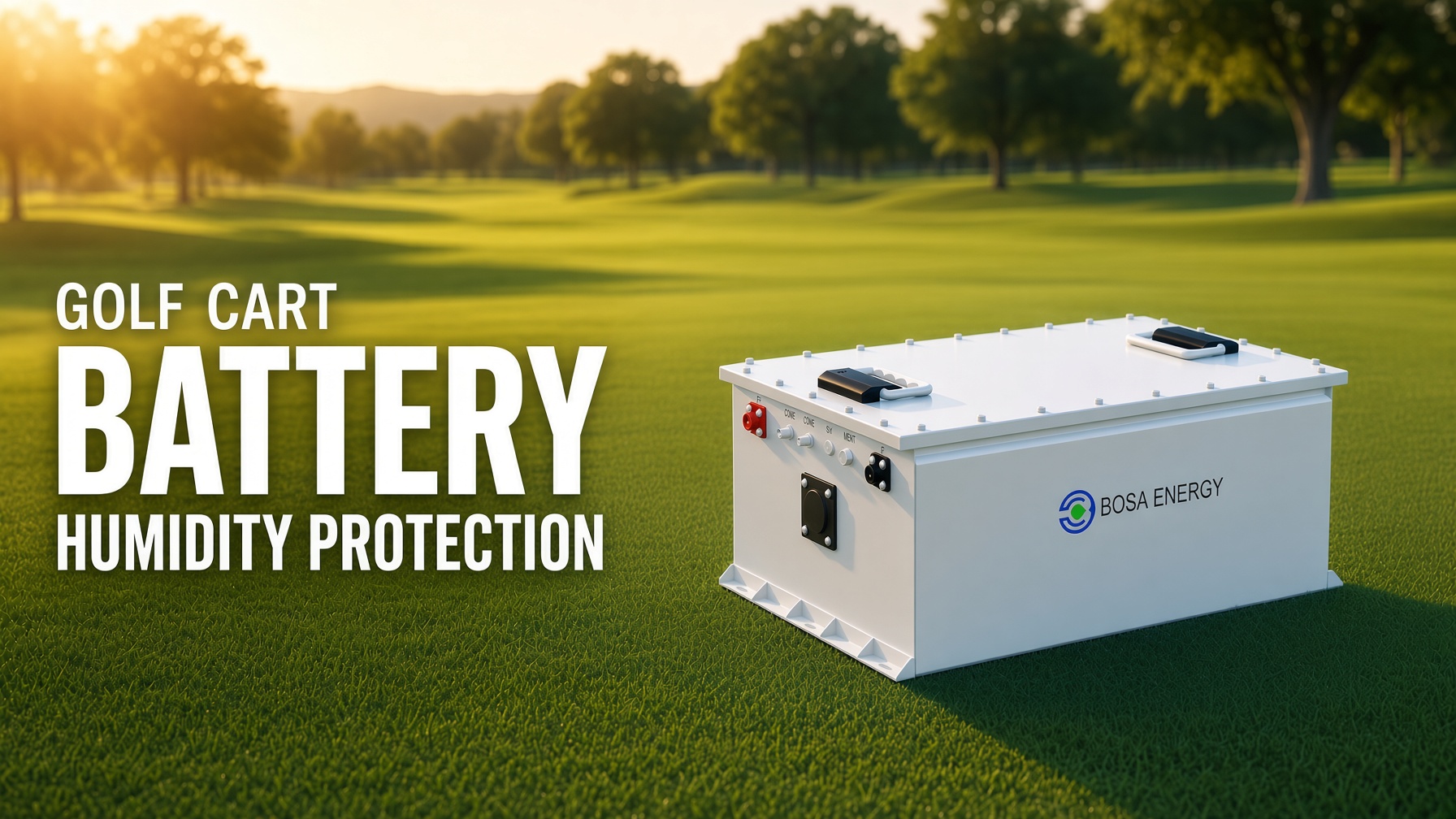
Specify IP65 (dust-tight + water jets) as a minimum and prefer IP67 (temporary immersion to 1 m for 30 minutes) for coastal, rainy, or wash-down environments. High-quality ABS or aluminum enclosures with continuous gaskets and sealed cable glands prevent both rain intrusion and the slow diffusion of humid air. Corrosion-resistant coatings further protect against saline humidity common near the coast.
2. Terminal and Connector Sealing
Even the best sealed pack still has external terminals. After cleaning, apply a thin layer of dielectric grease to metal contact surfaces. This creates a moisture barrier that stops oxidation without interfering with conductivity. Re-apply every 6–12 months or after any heavy water exposure. For Anderson-style or SB connectors, ensure mating surfaces receive the same treatment.
3. Storage Environment Control
Store the cart or removed packs in a dry, ventilated space. Garages in humid regions benefit from a dehumidifier set to maintain relative humidity under 50–60 %. Elevate batteries slightly off concrete floors to avoid rising damp. Avoid non-breathable plastic tarps that trap condensation; use vented covers instead.
4. Operating Practices That Support Protection
- Keep state of charge (SOC) between 20–30 % minimum during regular use and avoid prolonged storage at 100 % SOC in high heat and humidity.
- Use opportunity charging (15–40 % capacity top-ups during short stops) rather than deep discharges; this reduces stress and the time the pack spends at low voltage where corrosion risk can rise.
- After wet-weather use, open the battery compartment briefly to equalize temperature and humidity before sealing again.
5. Battery Management System (BMS) Role
A properly configured BMS continuously monitors cell voltages, temperatures, and current. While it does not directly dry the pack, it prevents the over-discharge and imbalance conditions that make internal components more susceptible to moisture-related degradation.