
Lithium Golf Cart Batteries vs Lead Acid: Head-to-Head Comparison
Here’s a clear breakdown of how lithium golf cart batteries stack up against lead-acid batteries across the most important factors:
1. Cycle Life and Longevity
- LiFePO4 Lithium: >3,500–4,000+ cycles at 80% depth of discharge (DOD) with State of Health (SOH) remaining above 80%. BOSA Energy models achieve >4,000 cycles.
- Lead-Acid: Only 300–500 cycles before significant capacity loss.
Winner: Lithium. A single lithium battery can outlast 4–5 lead-acid batteries, translating to 8–12 years of reliable service versus 2–3 years.
2. Charging Time
- Lithium: Fully charged in just 1–2 hours. You can top off anytime without damaging the battery.
- Lead-Acid: 8–10 hours for a full charge. Partial charging reduces lifespan.
Winner: Lithium. Spend more time on the course and less time waiting for a charge.
3. Safety
- Lithium (LiFePO4): Extremely stable chemistry with no fire or explosion risk. BOSA batteries include 6 levels of safety redundancy, 5 internal temperature sensors, and a self-protecting Battery Management System (BMS).
- Lead-Acid: Risk of acid leaks, hydrogen gas buildup, corrosion, and potential thermal runaway.
Winner: Lithium. Peace of mind for fleet operators and families alike.
4. Total Ownership Cost
- Lithium: Up to 70% lower lifetime cost. No watering, no acid drips, minimal replacements.
- Lead-Acid: 2x higher overall costs due to frequent replacements, labor, and maintenance.
Real-world data from BOSA shows lithium batteries deliver the lowest total cost over life when comparing purchase price, installation, maintenance, and replacement labor.
5. Maintenance Requirements
- Lithium: Maintenance-free. No watering, no corrosion, no fumes.
- Lead-Acid: Regular watering, cleaning terminals, and ventilation required.
Winner: Lithium. Set it and forget it.
6. Environmental Impact
- Lithium (LiFePO4): Eco-friendly, recyclable, and non-toxic. No hazardous acid.
- Lead-Acid: Highly toxic lead and sulfuric acid pose disposal and environmental hazards.
Winner: Lithium—better for the planet and your course.
7. Performance and Range
BOSA LiFePO4 golf cart batteries deliver 60–80 miles per charge (15% more than competitors). They handle vibration and bumps per Society of Automotive Engineers (SAE) standards and support high C-rate discharge for consistent power.
| Feature | Lithium (BOSA LiFePO4) | Lead-Acid |
|---|---|---|
| Cycle Life | 4,000+ cycles | 300–500 cycles |
| Charge Time | 1–2 hours | 8–10 hours |
| Weight | 50–90 kg (lighter) | Significantly heavier |
| Maintenance | None | Regular watering & cleaning |
| Warranty | 5 years (industry-leading) | 1–2 years |
| Lifespan | 12 years | 2–3 years |
| Safety | 6-level redundancy + BMS | Acid & gas risks |
| Total Cost of Ownership | 70% lower | 2x higher |
Why Choose BOSA Lithium Golf Cart Batteries?
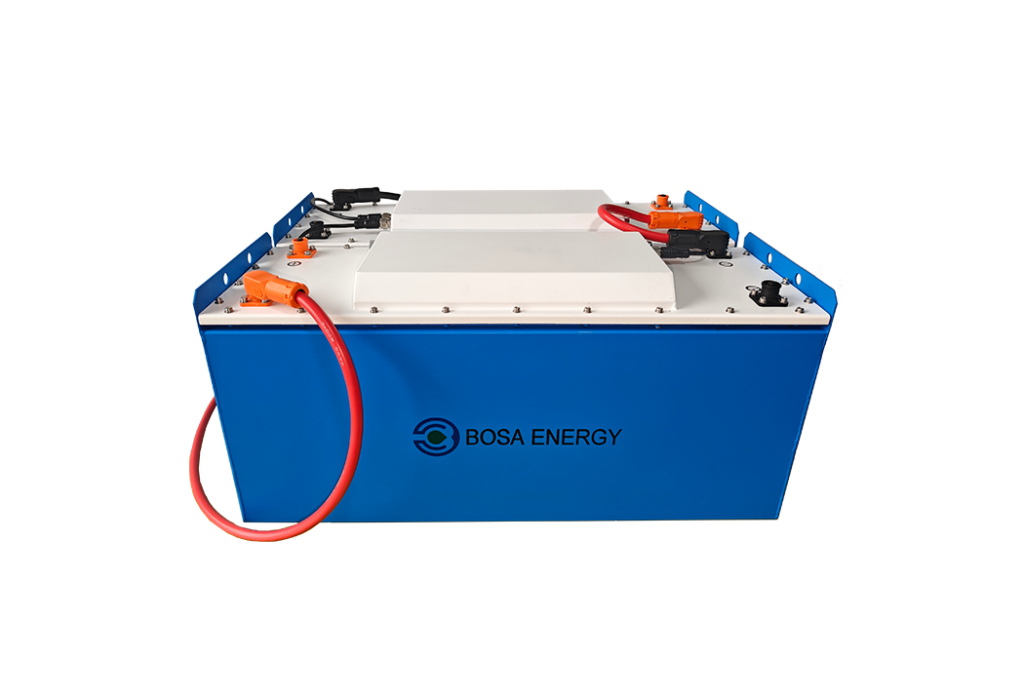
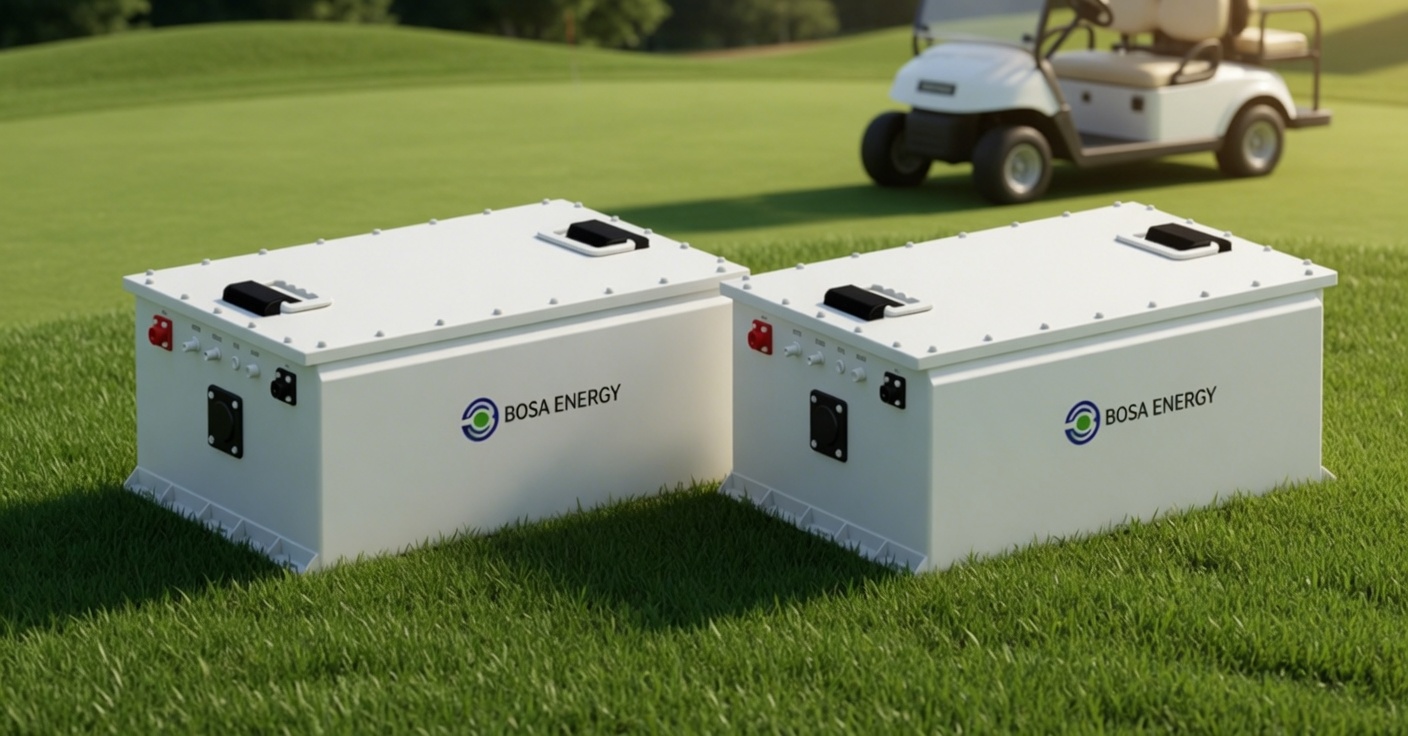
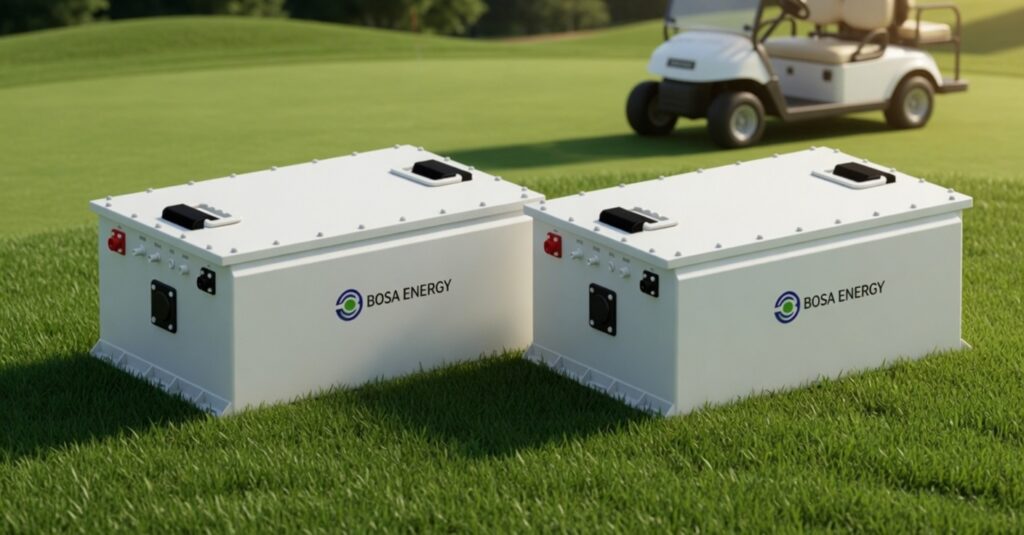
BOSA Energy stands out as a leader in lithium golf cart batteries. Their LiFePO4 packs are engineered for golf carts with:
- Multiple voltage/capacity options: 48V-105Ah (5.37kWh), 48V-168Ah (8.60kWh), 48V-230Ah (11.77kWh), and 76.8V-105Ah (8.06kWh).
- High performance specs: Max continuous discharge up to 200A, peak discharge 400A@30s, IP67 waterproof rating.
- Advanced BMS features: GPS tracking, remote control, over-the-air (OTA) upgrades, real-time monitoring, electronic fence, data analysis, and Bluetooth app integration.
- Complete accessories: LED display, smart charger (RoHS/CE compliant with multiple protections), extension cables, and three-view diagrams.
- Wide compatibility: Perfect drop-in fit for Club Car, EZGO, and Yamaha golf carts.
These batteries not only outperform lead-acid—they include modern smart features that traditional batteries simply can’t match.
Real-World Benefits of Switching to Lithium Golf Cart Batteries
Golf course operators and individual owners report:
- Zero downtime: 12-year lifespan with 5-year warranty means fewer interruptions.
- Faster rounds: Quick charging lets you get back on the course immediately.
- Lower operating costs: Save thousands over the battery’s life.
- Smoother ride: Consistent voltage delivery and better torque.
- Future-proof: Supports modern accessories and fleet management systems.