
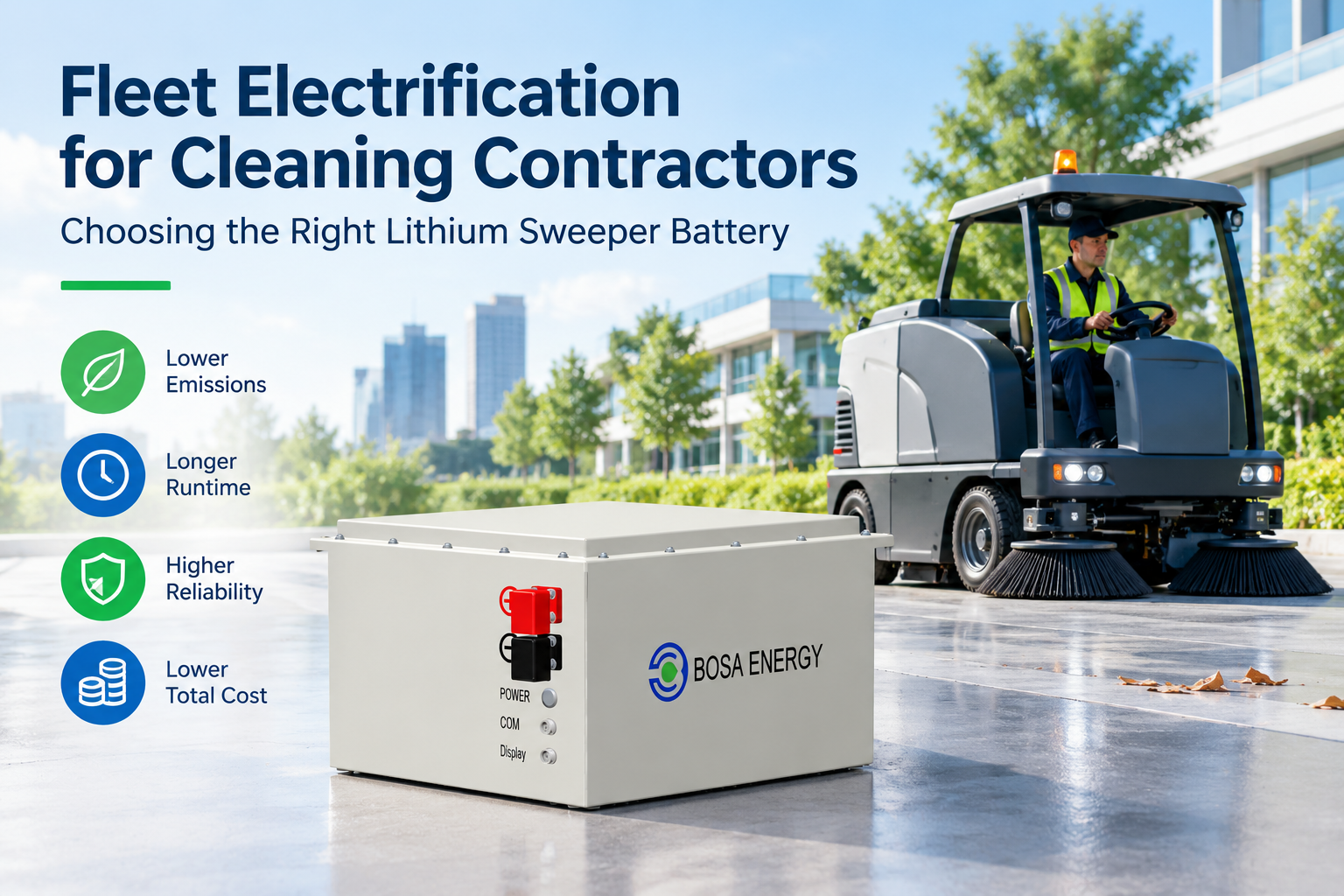
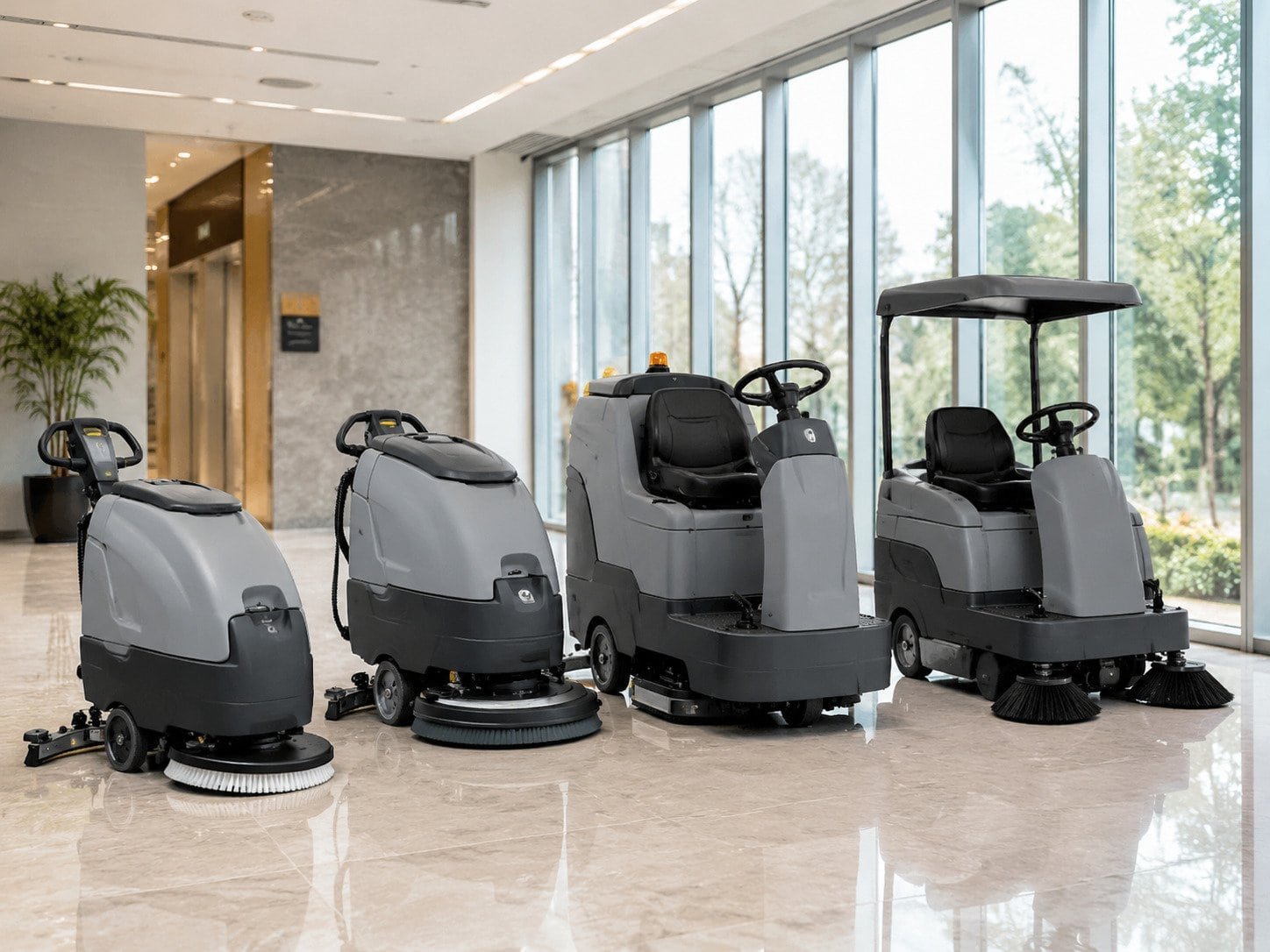
Cleaning contractors managing fleets of floor sweepers, scrubbers, and municipal vehicles face growing pressure to reduce operating costs, improve uptime, and meet sustainability expectations from clients. Traditional lead-acid batteries have long powered these machines, yet their limitations in runtime, maintenance, and total cost of ownership are driving a clear shift toward lithium technology. Selecting the correct lithium ion battery for commercial floor sweepers is no longer optional for competitive fleets; it is a core operational decision that affects daily productivity and multi-year economics.
Why Cleaning Contractors Are Electrifying Their Fleets
Contractors serving warehouses, airports, retail centers, hospitals, and municipal routes operate machines for multiple shifts with limited downtime windows. Lead-acid packs typically require 6–12 hours for a full charge, suffer voltage sag as they discharge, demand regular watering and terminal cleaning, and last only 300–500 cycles under deep-cycle use. This forces spare machines, mid-shift battery swaps, or reduced cleaning quality late in a run.
Lithium iron phosphate (LiFePO4) packs reverse these constraints. Industry data consistently shows cycle lives of 2,000–4,000+ cycles (often at 80% depth of discharge), charge times of 1–3 hours, energy efficiencies above 95%, and weight reductions of 30–60%. The result is higher machine availability, lower labor for battery care, and measurable reductions in total cost of ownership over three to five years. For contractors bidding on multi-year contracts or operating across several sites, these gains compound quickly.
Lead-Acid Versus Lithium: Practical Performance Differences
| Factor | Lead-Acid (Flooded/AGM) | LiFePO4 Lithium |
|---|---|---|
| Typical cycle life | 300 à 500 cycles | 2,000–4,000+ cycles |
| Full charge time | 6–12 hours | 1–3 hours |
| Recharge d'opportunité | Damages lifespan (sulfation) | Supported without degradation |
| Entretien | Watering, equalization, cleaning | Aucun |
| Poids | Lourd | 30–60% lighter |
| Voltage stability | Significant sag | Consistent until near empty |
| efficacité énergétique | ~70–85% | >95% |
| Typical replacement | Every 1–3 years in heavy use | Often 5–8+ years |
Real contractor experience confirms the table. Operators who previously bought spare machines to cover overnight charging or mid-shift failures now run the same unit across shifts by topping up during breaks. The absence of acid fumes and corrosion also simplifies indoor storage and reduces facility damage claims.
Key Selection Criteria for the Right Lithium Sweeper Battery
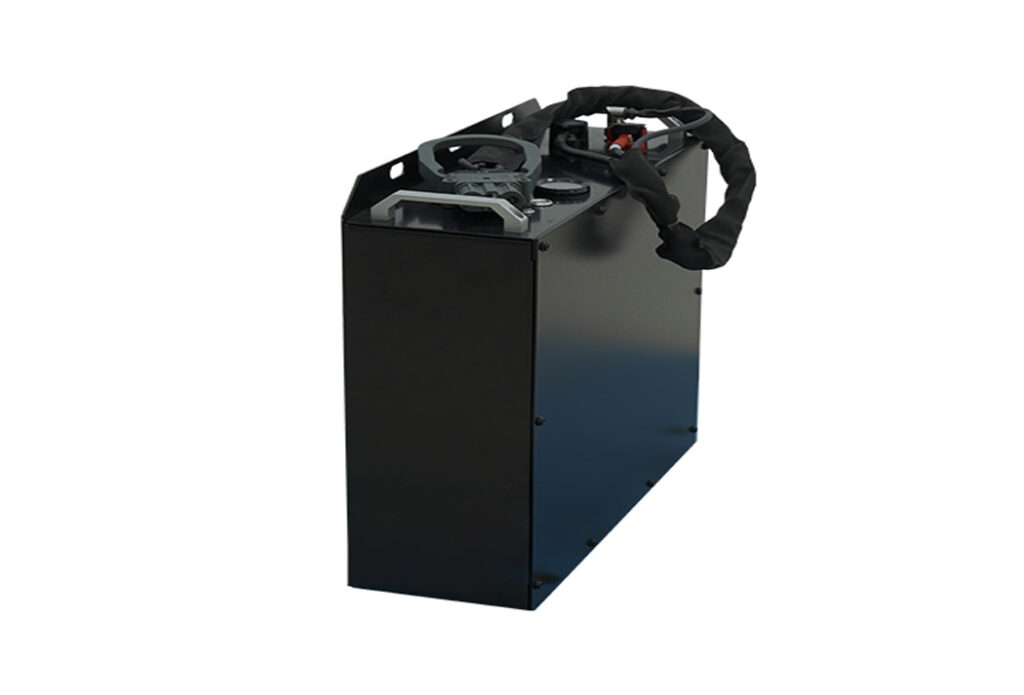
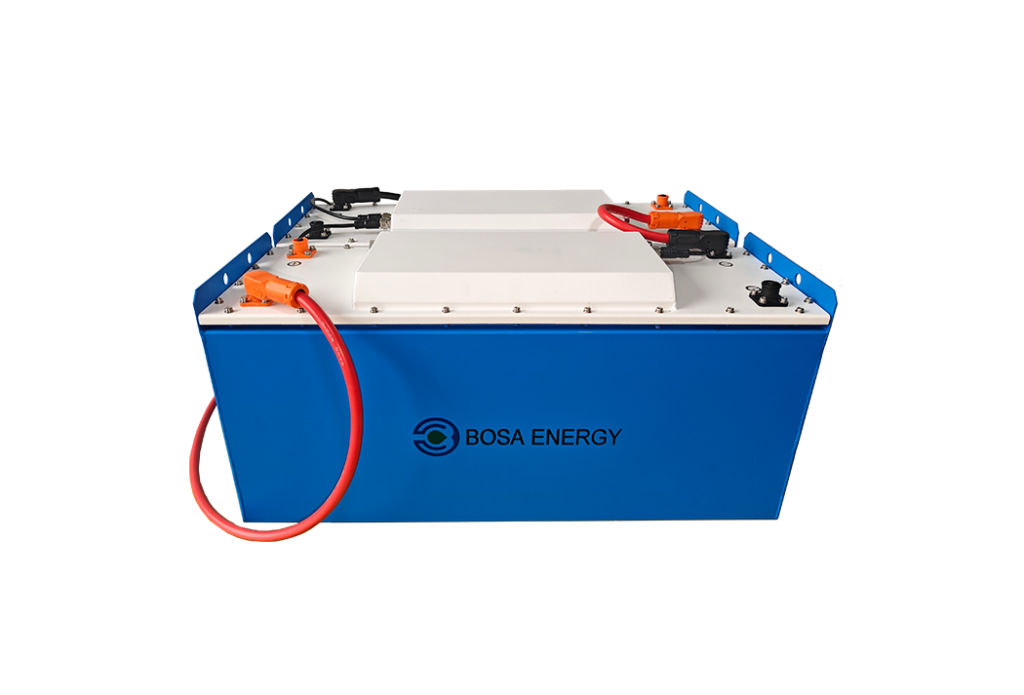
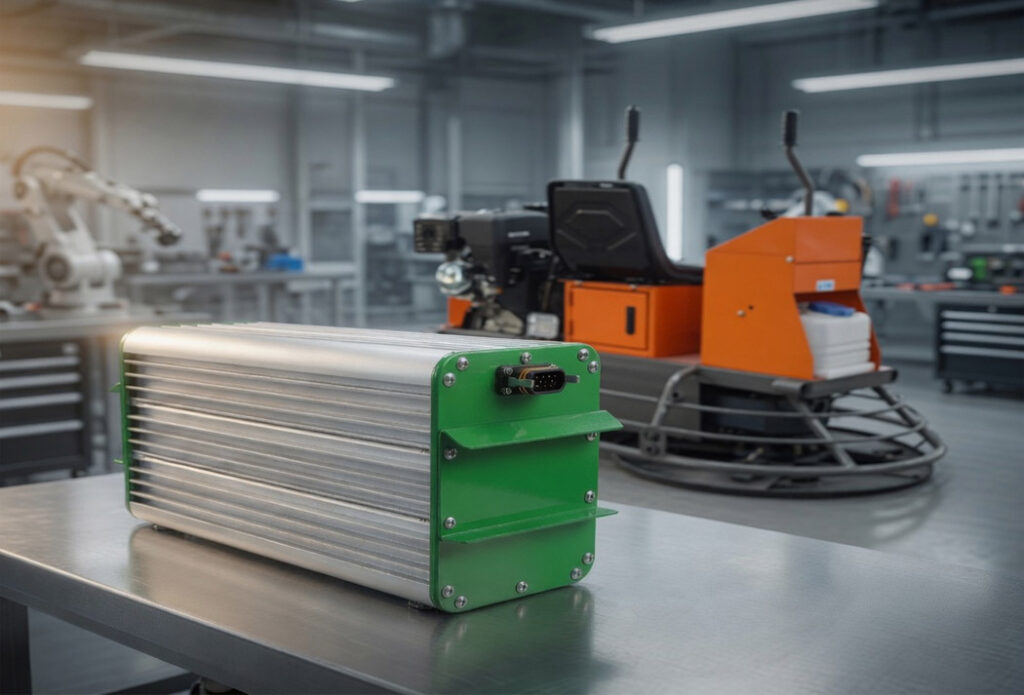
Choisir un high capacity LiFePO4 sweeper battery pack requires matching technical specifications to the machine, duty cycle, and operating environment rather than simply buying the largest available unit.
Voltage, Capacity, and Machine Compatibility
Commercial walk-behind and ride-on sweepers commonly use 24 V (nominal 25.6 V), 36 V (nominal 38.4 V), or 48 V (nominal 51.2 V) systems. Street and municipal sweepers often require higher-voltage packs (around 100 V or more) with energy capacities measured in tens of kilowatt-hours. Always verify the original equipment manufacturer’s voltage range, continuous and peak discharge current, and physical dimensions before selecting a pack. Drop-in form-factor batteries simplify retrofit, while custom packs may be needed for specialized vehicles.
Capacity should be sized for the longest typical shift plus a buffer, accounting for real-world factors such as brush load, floor type, and temperature. A 150–200 Ah pack at 36 V frequently supports double-shift operation when paired with opportunity charging; larger street-sweeper packs in the 15–25 kWh range support extended municipal routes.
Cycle Life, Depth of Discharge, and Total Cost of Ownership
High-quality LiFePO4 cells deliver thousands of cycles while retaining usable capacity. Contractors should evaluate cycle ratings at the intended depth of discharge (commonly 80%) and review warranty terms (often five years or 10,000 hours). Although the upfront cost is higher, the combination of fewer replacements, near-zero maintenance labor, and higher charging efficiency typically produces a lower three- to five-year total cost of ownership. One documented three-year comparison showed lithium delivering roughly $950 in net savings versus lead-acid after accounting for electricity and replacement costs.
Charging Strategy and Opportunity Charging
A defining advantage is support for opportunity charging lithium battery for sweepers. Operators can connect the machine for 15–30 minutes during breaks and recover substantial runtime without shortening pack life. This capability is essential for multi-shift or tightly scheduled routes. Matched smart chargers (often 0.5C or higher) and a properly configured battery management system (BMS) make the process safe and automatic. Charging can occur on the facility floor rather than in a dedicated ventilated room.
Safety, BMS, Ingress Protection, and Certifications
LiFePO4 chemistry itself is thermally stable and far less prone to thermal runaway than other lithium variants, making it suitable for indoor cleaning environments. An advanced BMS adds layers of protection against over-charge, over-discharge, over-current, short-circuit, and temperature extremes. Look for IP65 or IP67 ratings for dust and water resistance, especially on outdoor or wet-area machines.
Relevant standards include UN 38.3 (mandatory for transport), IEC 62619 (safety requirements for industrial secondary lithium cells and batteries), and, where applicable, UL 1973 or region-specific marks. These certifications provide independent verification of design and testing under electrical, mechanical, and thermal abuse conditions. Proper mechanical design that resists vibration (common in sweepers) further supports long-term reliability.
Weight, Form Factor, Communication, and Monitoring
Lighter packs improve maneuverability of walk-behind units and reduce structural stress on ride-on machines. Many modern packs include CAN bus or RS485 communication for integration with machine controllers and remote monitoring via Bluetooth or telematics. Real-time state-of-charge, temperature, and cycle data help fleet managers schedule maintenance and optimize charging.
Implementation Best Practices for Cleaning Contractors
Successful fleet electrification lithium battery solutions for contractors begin with a site-by-site audit of daily runtime, charging windows, ambient temperature range, and existing charger infrastructure. Pilot one or two machines across different duty cycles before full conversion. Train operators on the simple habit of opportunity charging and on the absence of traditional watering routines. Monitor early performance data (runtime, energy consumption, and any BMS alerts) and adjust capacity or charger power as needed.
For municipal or outdoor sweepers, prioritize packs with liquid cooling or robust thermal management, high IP ratings, and quick-swap connectors where route schedules demand minimal downtime. Across the fleet, standardize on compatible voltages and communication protocols where possible to simplify spares and technician training.

Conclusion
For cleaning contractors, the right lithium sweeper battery is defined by more than chemistry. It must match voltage and current demands, deliver sufficient capacity for real shifts, support opportunity charging, incorporate a reliable BMS and appropriate certifications, and demonstrate a clear total-cost advantage over multi-year contracts. When these criteria are met, fleets gain longer runtime, near-zero maintenance, higher machine utilization, and lower lifetime energy and replacement costs. The transition from lead-acid to a properly specified electric cleaning equipment lithium battery system is already delivering measurable operational and financial returns across commercial and municipal cleaning operations.