
Dans le paysage industriel actuel en constante évolution, engins lourds alimentés par batterie L'énergie électrique transforme le fonctionnement des secteurs de la construction, des mines, de l'agriculture et de la logistique. Des excavatrices et chargeuses géantes aux camions miniers et machines agricoles, les systèmes de batteries électriques offrent des performances zéro émission sans compromis sur la puissance ni la fiabilité.
Ce guide complet explore les dernières innovations en matière d'engins lourds alimentés par batterie, et présente les spécifications détaillées des plateformes haute et basse tension. Gestionnaire de flotte, opérateur d'engins ou défenseur du développement durable, vous découvrirez pourquoi la technologie des batteries LFP est le choix idéal pour les applications exigeantes.
Pourquoi les engins lourds alimentés par batterie gagnent en popularité
Les engins lourds traditionnels fonctionnant au diesel ont longtemps dominé les industries, mais la hausse des coûts du carburant, les réglementations environnementales strictes et la volonté mondiale d'atteindre la neutralité carbone sont à l'origine d'un changement massif. engins lourds alimentés par batterie offres :
- Zéro émission à l'échappement pour des chantiers plus propres et une meilleure conformité urbaine
- coûts d'exploitation réduits grâce à une réduction de la consommation de carburant, des coûts d'entretien et des temps d'arrêt.
- Débit de couple supérieur à partir de moteurs électriques pour une puissance instantanée
- Fonctionnement silencieux idéal pour les environnements sensibles au bruit
- Sécurité renforcée sans carburants inflammables ni risques liés aux gaz d'échappement
Les systèmes de batteries lithium-fer-phosphate (LFP) modernes égalent ou surpassent désormais les performances de leurs homologues diesel tout en offrant plus de 2 800 cycles de charge et une durabilité certifiée IP67.
Plateforme haute tension : alimenter les machines les plus lourdes
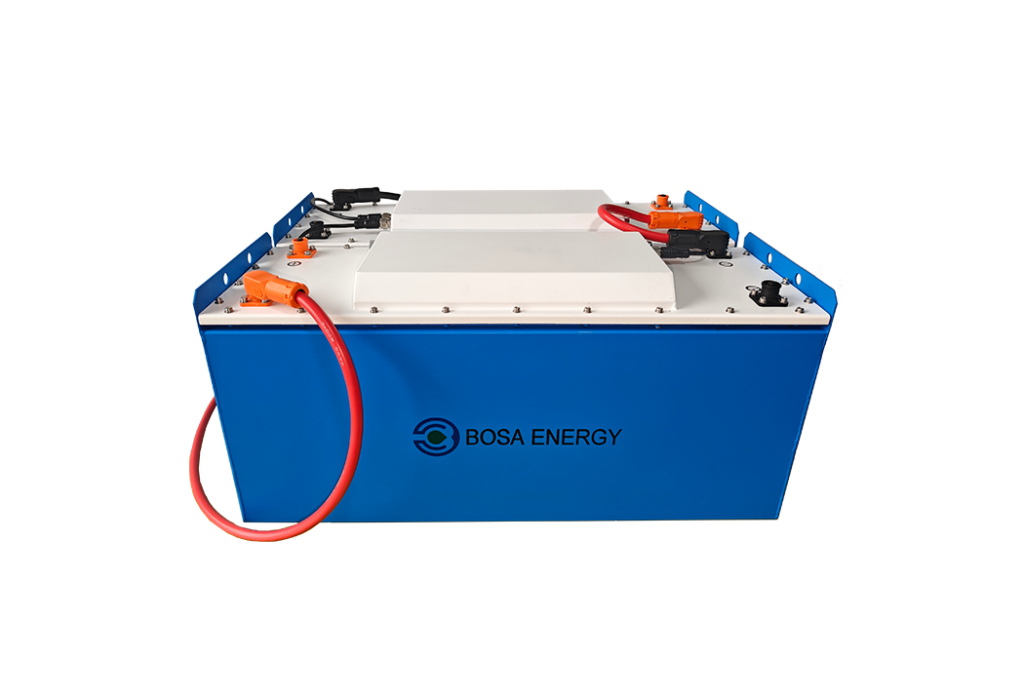
Pour les applications exigeantes comme les chargeuses, les excavatrices, les camions miniers, les poids lourds et les gros équipements agricoles, les plateformes de batteries haute tension fournissent la densité énergétique et la puissance soutenue nécessaires aux opérations à temps plein.
Ces systèmes sont dotés d'une gestion thermique avancée avec film chauffant + refroidissement liquide, permettant des performances fiables à des températures de décharge de -30 °C à 60 °C et de charge de 0 à 60 °C.
Voici les principales caractéristiques des principaux modèles haute tension :
| Taper | PF173C1P189S105 | PF230C2P192S282 | PF304C2P180S350 | PF230C3P192S423 |
|---|---|---|---|---|
| Type de batterie | LFP | LFP | LFP | LFP |
| Tension nominale | 608,58 V | 614,4 V | 576 V | 614,4 V |
| Capacité | 173 Ah | 460 Ah | 608 Ah | 690 Ah |
| Énergie | 105,284 kWh | 282,624 kWh | 350,2 kWh | 423,936 kWh |
| Gestion thermique | Film chauffant + refroidissement liquide | Film chauffant + refroidissement liquide | Film chauffant + refroidissement liquide | Film chauffant + refroidissement liquide |
| Température de charge. | 0 à 60 °C | 0 à 60 °C | 0 à 60 °C | 0 à 60 °C |
| Température de refoulement. | -30 à 60 °C | -30 à 60 °C | -30 à 60 °C | -30 à 60 °C |
| Taux de charge continu | 1C | 1C | 1C | 1C |
| débit de décharge continu | 1C | 1C | 1C | 1C |
| Poids | 709 ± 20,7 kg | 1877 ± 48 kg | 2233 ± 60 kg | 2724,1 ± 72 kg |
| Cycle de vie | ≥2800 cycles | ≥2800 cycles | ≥2800 cycles | ≥2800 cycles |
| Niveau IP | IP67 | IP67 | IP67 | IP67 |
| Format de l'emballage | 1060×630×240 mm | 1060×630×240 mm | 1060×630×240 mm | 1060×630×240 mm |
Ces packs haute tension fournissent une énergie modulable de 105 kWh à plus de 423 kWh, ce qui les rend parfaits pour engins lourds alimentés par batterie qui fonctionne sous des charges extrêmes pendant des périodes prolongées.
Plateforme basse tension : des solutions polyvalentes pour les équipements lourds compacts
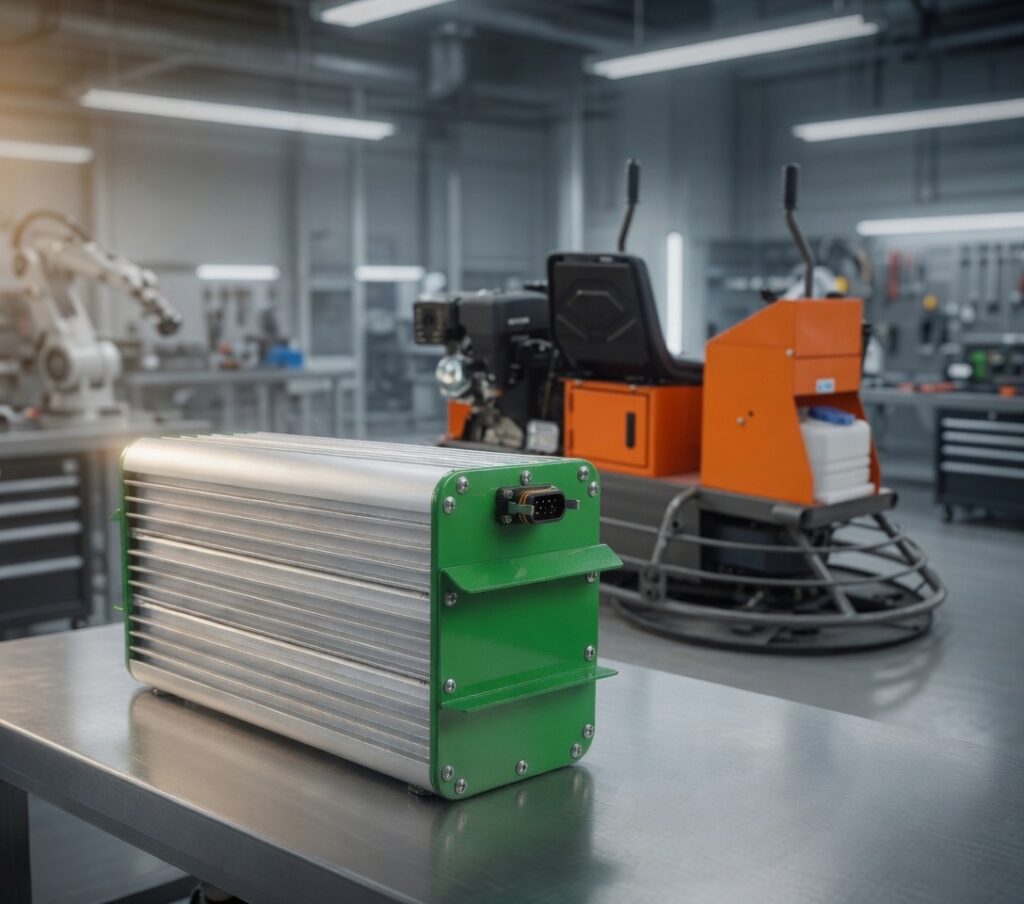
Les applications plus petites mais tout aussi robustes — telles que les petites chargeuses électriques, les véhicules logistiques à basse vitesse, les plateformes élévatrices, les voiturettes de golf et les chariots élévateurs — tirent parti des plateformes de batteries basse tension compactes. Ces systèmes utilisent une gestion thermique efficace par film chauffant et conservent des performances optimales sur une large plage de températures.
Les principales caractéristiques techniques sont les suivantes :
| Taper | PF150X1P28S13 | PF230X1P28S20 | PF304X1P28S27 | PF173X1P24S13 | PF230X1P24S17 | PF173X1P8S4 |
|---|---|---|---|---|---|---|
| Type de batterie | LFP | LFP | LFP | LFP | LFP | LFP |
| Tension nominale | 90,16 V | 89,6 V | 89,6 V | 77,28 V | 76,8 V | 25,76 V |
| Capacité | 150 Ah | 230 Ah | 304 Ah | 173 Ah | 230 Ah | 173 Ah |
| Énergie | 13,524 kWh | 20,608 kWh | 27,238 kWh | 13,369 kWh | 17,664 kWh | 4,456 kWh |
| Gestion thermique | Film chauffant | Film chauffant | Film chauffant | Film chauffant | Film chauffant | Film chauffant |
| Température de charge. | 0 à 60 °C | 0 à 60 °C | 0 à 60 °C | 0 à 60 °C | 0 à 60 °C | 0 à 60 °C |
| Température de refoulement. | -30 à 60 °C | -30 à 60 °C | -30 à 60 °C | -30 à 60 °C | -30 à 60 °C | -30 à 60 °C |
| Taux de charge continu | 0,5°C | 0,5°C | 0,5°C | 0,5°C | 0,5°C | 0,5°C |
| débit de décharge continu | 1C | 1C | 1C | 1C | 1C | 1C |
| Poids | 130 ± 3 kg | 170 ± 4 kg | 210 ± 5 kg | 140 ± 3 kg | 178 ± 3 kg | 50 ± 3 kg |
| Cycle de vie | ≥2800 cycles | ≥2800 cycles | ≥2800 cycles | ≥2800 cycles | ≥2800 cycles | ≥2800 cycles |
| Niveau IP | IP67 | IP67 | IP67 | IP67 | IP67 | IP66 |
| Format de l'emballage | 1146×496×339 mm | 1146×496×339 mm | 1146×496×339 mm | 624×494×412 mm | 851×494×613 mm | 550×209×440 mm |
Les options basse tension offrent une énergie flexible de 4,5 kWh à 27 kWh, assurant un équilibre parfait entre puissance et portabilité. engins lourds alimentés par batterie dans des scénarios où l'espace est limité ou pour des applications moins exigeantes.
Caractéristiques clés qui font de ces systèmes de batteries des leaders du secteur
Toutes les plateformes partagent des attributs de pointe conçus pour une utilisation réelle avec des engins lourds :
- Chimie LFPStabilité thermique supérieure, absence de cobalt et sécurité exceptionnelle
- Large plage de fonctionnementPerformances fiables dans des conditions de températures extrêmes (-30°C à 60°C)
- Recharge rapide: Jusqu'à 1 C en continu pour un temps d'arrêt minimal
- Longue durée de viePlus de 2 800 cycles correspondent à des années d'utilisation intensive.
- Protection robusteLes indices de protection IP67 (pour la plupart des modèles) et IP66 garantissent l'étanchéité à la poussière et à l'eau.
- Compact et légerDimensions et poids optimisés pour une intégration facile
Ces caractéristiques position engins lourds alimentés par batterie comme solution de remplacement directe pour les machines diesel dans de nombreux secteurs.
Applications concrètes des équipements lourds alimentés par batterie
- ConstructionLes pelles et chargeuses électriques réduisent les émissions sur les chantiers tout en maintenant leurs performances d'excavation et de levage.
- Exploitation minièreLes camions et chargeuses à batterie fonctionnent en toute sécurité sous terre sans problèmes de ventilation.
- AgricultureLes tracteurs et moissonneuses-batteuses zéro émission protègent les cultures et la santé des sols
- Logistique et manutentionLes chariots élévateurs électriques et les véhicules à basse vitesse améliorent l'efficacité des entrepôts.
- Véhicules spécialisésLes plateformes de travail aériennes et les voiturettes de golf bénéficient d'une alimentation électrique silencieuse et propre.
L'avenir des engins lourds alimentés par batterie
À mesure que la technologie des batteries progresse, il faut s'attendre à des densités énergétiques encore plus élevées, une recharge plus rapide et une intégration accrue avec les systèmes télématiques et autonomes. La transition vers engins lourds alimentés par batterie Ce n'est pas seulement respectueux de l'environnement, c'est aussi essentiel sur le plan économique pour des opérations compétitives.
Conclusion : Passez à l'alimentation par batterie dès aujourd'hui
engins lourds alimentés par batterie Elle représente l'avenir de l'industrie lourde. Grâce à ses plateformes LFP haute et basse tension éprouvées, offrant une fiabilité, une efficacité et des avantages environnementaux inégalés, les entreprises qui adoptent cette technologie acquièrent un avantage concurrentiel tout en atteignant leurs objectifs de développement durable.
Prêt à électrifier votre flotte ? Évaluez vos besoins en équipement par rapport à ces spécifications détaillées et rejoignez le nombre croissant d’opérateurs qui alimentent leurs engins lourds avec des systèmes de batteries propres et efficaces.
Dernière mise à jour : mai 2026. Les spécifications sont soumises aux normes du fabricant et peuvent varier selon la configuration.
Questions fréquentes sur les équipements lourds à batterie
Q : Quelle est la durée de vie des batteries dans les applications d'équipement lourd ? A: Les systèmes LFP de haute qualité offrent plus de 2 800 cycles, ce qui correspond à 5 à 8 ans d'utilisation intensive quotidienne en fonction du cycle de service.
Q : Les engins lourds alimentés par batterie peuvent-ils fonctionner par grand froid ? R : Oui. La gestion thermique avancée permet la décharge jusqu'à -30 °C et la charge à partir de 0 °C.
Q : Ces batteries sont-elles sûres pour une utilisation industrielle intensive ? R : Absolument. La chimie LFP, associée aux indices de protection IP67/IP66 et à la protection multicouche du système de gestion technique du bâtiment (GTB), garantit une sécurité optimale.
Q : Quel entretien nécessitent les systèmes alimentés par batterie ? A: Nettement moins cher que le diesel. Pas de vidange d'huile, de filtre à carburant ni de système antipollution — seulement des mises à jour logicielles périodiques et des contrôles visuels.
Pour en savoir plus sur les engins lourds durables ou les solutions de batteries sur mesure, consultez nos guides connexes sur les équipements de construction électriques et la transition vers des flottes zéro émission.