
Méta-description : Découvrez comment les batteries au lithium augmentent l'autonomie des voiturettes de golf de 15 % par rapport aux batteries au plomb-acide (référence 15-60%). Apprenez-en davantage sur les spécifications des batteries BOSA ENERGY LiFePO4, leurs performances réelles, les économies réalisées et pourquoi les professionnels les adoptent dès 2026.
Les batteries au lithium révolutionnent les performances des voiturettes de golf, offrant gamme considérablement améliorée, Une charge plus rapide et une durée de vie supérieure aux batteries plomb-acide traditionnelles. Si vous en avez assez de voir votre voiturette de golf tomber en panne en plein parcours ou de passer des heures à la recharger, opter pour une batterie lithium-ion (LiFePO4) peut augmenter votre autonomie de 95 à 130 km par charge tout en réduisant vos coûts d'utilisation.
Dans ce guide complet, nous allons détailler précisément comment les batteries au lithium améliorent l'autonomie des voiturettes de golf, Grâce aux données réelles fournies par BOSA ENERGY, leader du secteur, ce guide vous offre des conseils pratiques pour optimiser les performances de votre voiturette en 2026, que vous possédiez une Club Car, une EZGO, une Yamaha ou tout autre modèle populaire.
Pourquoi l'autonomie des voiturettes de golf est plus importante que jamais
Les voiturettes de golf modernes ne sont plus réservées aux parcours : elles servent désormais aux déplacements de proximité, dans les complexes hôteliers, les exploitations agricoles et même pour de petits travaux d'entretien. Les batteries au plomb traditionnelles offrent généralement une autonomie de 50 à 80 kilomètres par charge et perdent rapidement en performance après 300 à 500 cycles.
Résultat? Temps d'arrêt fréquents, maintenance lourde et coûts à long terme plus élevés.
Les batteries au lithium permettent de résoudre ces problèmes grâce à :
- Densité énergétique plus élevée — plus de puissance dans un format plus léger
- efficacité de décharge supérieure — une tension constante tout au long du cycle
- Capacité utile plus importante — Utilisez en toute sécurité la batterie 80-100% (capacité en Ah) au lieu de la 50% pour les batteries au plomb-acide.
Comment les batteries au lithium augmentent l'autonomie des voiturettes de golf : la science
1. Plus léger = Plus efficace
Les batteries pour voiturettes de golf BOSA ENERGY pèsent 30 à 501 TP3T de moins que les batteries au plomb équivalentes. Ce poids réduit signifie moins d'énergie gaspillée pour le transport de batteries lourdes, ce qui se traduit directement par… gamme étendue.
2. Courbe de décharge plus plate
Contrairement aux batteries au plomb-acide dont la tension chute rapidement, la batterie BOSA LiFePO4 maintient une tension stable tout au long du cycle de décharge. Votre voiturette fonctionne ainsi plus longtemps à pleine vitesse.
Exemple concret (issu des tests BOSA BS-LFP48) :
- Batterie au plomb-acide : la tension chute brutalement après une décharge de 40-50%
- BOSA Lithium : Maintient une tension de 12,0 V+ jusqu'à décharge complète de la batterie 80%+.
3. Capacité utile et durée de vie des cycles supérieures
Les modèles 48 V populaires de BOSA (105 Ah, 168 Ah, 230 Ah) offrent :
- 60-80 miles sur une charge complète (15%+ de plus que les concurrents)
- >4 000 cycles à une profondeur de décharge (DoD) de 80% — 8 à 10 fois plus longue que les 300 à 500 cycles des batteries au plomb-acide
| Type de batterie | Cycle de vie | Capacité utile | Autonomie par charge (cartouche 48V typique) | Poids (pack 48V) |
|---|---|---|---|---|
| Batterie au plomb-acide (AGM/Gel) | 300 à 500 cycles | ~50% | 30 à 50 miles | 80-120 kg |
| BOSA LiFePO4 | >4 000 cycles | 80-100% | 60-80 miles | 50-90 kg |
Données issues des courbes de performance de BOSA ENERGY et de tests indépendants.
4. Recharge plus rapide et plus sûre
Les batteries lithium BOSA atteignent une charge complète en seulement 1,5 à 4 heures Contre 8 à 10 heures pour une batterie au plomb-acide. Vous pouvez la recharger à tout moment sans l'endommager ; aucun local de charge dédié n'est nécessaire.
Batteries pour voiturettes de golf BOSA ENERGY : conçues pour une autonomie maximale
BOSA ENERGY est le premier exportateur chinois de modules de batteries au lithium (#1), avec une production annuelle de 20 GWh et plus de 80 brevets. Série BS-LFP48 est spécialement conçu pour les voiturettes de golf :
Caractéristiques principales (modèles populaires) :
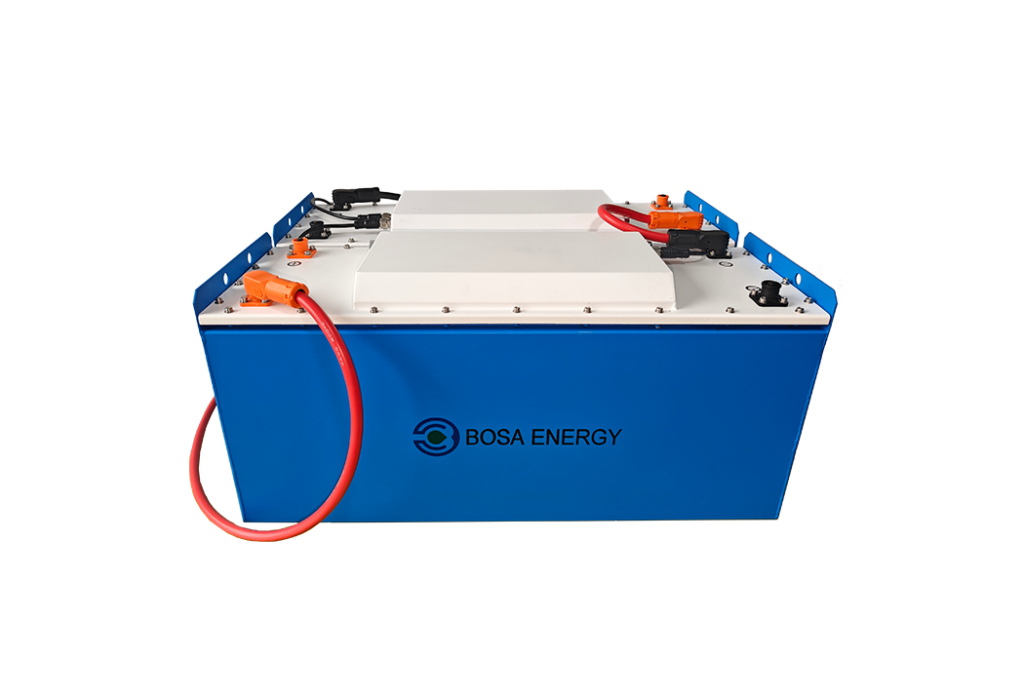
- 48V-105Ah5,37 kWh, 50 kg, étanchéité IP67
- 48V-168Ah: 8,60 kWh, 60 kg
- 48V-230Ah: 11,77 kWh, 90 kg
- Durée de vie : > 4 000 cycles à 80% SOH
- Courant de décharge maximal : jusqu’à 400 A pendant 30 secondes
- Système de gestion technique du bâtiment (GTB) intégré avec Bluetooth et surveillance à distance
Compatible avec : Club Car, EZGO, Yamaha, ICON, Melex et bien d'autres (voir le tableau de compatibilité complet dans la brochure BOSA).
Les caractéristiques de vue latérale comprennent Bornes d'alimentation, aérations, interrupteurs et deux ports de communication pour une intégration parfaite.
Lithium vs. plomb-acide : analyse du coût total de possession (CTP)
L'analyse de BOSA montre 40% coût total de possession inférieur avec LiFePO4 :
- Facturation des coûts: Nettement inférieur grâce à l'efficacité du 95%+
- coût de remplacementUne batterie au lithium dure de 8 à 12 ans (contre 2 à 3 remplacements pour une batterie au plomb).
- EntretienAucun arrosage nécessaire, aucun déversement d'acide, aucune corrosion
- Temps d'arrêt: Pratiquement éliminé
Sur une période de 5 ans, les économies réalisées sur l'énergie, la main-d'œuvre et les remplacements compensent largement l'investissement initial plus élevé.
Avantages concrets pour l'utilisateur : Portée étendue en action
- Utilisation quotidienne du coursTerminez plus de 36 trous sans recharger.
- flottes de complexes hôteliers et communautaires: Taux d'utilisation plus élevés et entretien de la flotte réduit
- Terrain vallonné: Une puissance constante même en pente
- performances par temps froid: Les plaques chauffantes optionnelles maintiennent la plage
Les batteries BOSA répondent aux normes SAE en matière de durabilité et de résistance aux vibrations — idéales pour les terrains de golf accidentés.
Comment choisir la bonne batterie au lithium pour votre voiturette de golf
- Tension d'adaptation (le plus courant : 48 V)
- Calculer le besoin Ah basé sur le kilométrage quotidien
- Vérifiez les dimensions — Les packs BOSA sont des pièces de rechange compatibles.
- Vérifier la compatibilité avec votre manette et votre chargeur
- Recherchez un indice de protection IP67 et un système de gestion de batterie (BMS) Bluetooth. pour la tranquillité d'esprit
Conseil de pro : BOSA offre une garantie de 3 ans et une durée de vie nominale de 12 ans.
Prêt à améliorer votre gamme de voiturettes de golf ?
Passer à Batteries au lithium BOSA ENERGY C'est l'investissement le plus judicieux pour tout propriétaire de voiturette de golf en 2026. Vous bénéficierez d'une plus grande autonomie, d'une charge plus rapide, d'un entretien nul et d'économies considérables à long terme.
Contactez BOSA ENERGY dès aujourd'hui :
- Site web: www.bosaenergy.cn
- Courriel : Info@bosaenergy.cn
- Tél. : +86 135 2379 1950
Distributeurs du monde entier Aux États-Unis, en Europe, en Australie et dans plus de 30 pays.
Envie de profiter d'une autonomie de 95 à 130 km avec votre voiturette de golf ? Demandez un devis ou une vérification de compatibilité gratuite dès maintenant.
Étiquettes : Batteries au lithium pour voiturettes de golf, améliorez l'autonomie de votre voiturette de golf, batterie LiFePO4 pour voiturette de golf, BOSA ENERGY, mise à niveau de la batterie de votre voiturette de golf, batterie au lithium ou au plomb pour voiturette de golf
Publié : Avril 2026 | Mise à jour selon les dernières spécifications BOSA
Avertissement : Les données de performance sont basées sur des tests effectués par le fabricant dans des conditions standard. L’autonomie réelle varie en fonction du terrain, de la charge, de la température et du style de conduite.