
Purchase price is the wrong scoreboard. A comparable electric daycruiser still lists 20–40% above the diesel twin in 2026. The useful question is whether energy, service, battery life and regulation close that gap before year ten — and under which duty that happens.
Electric vs Diesel Boat Cost: A Ten-Year Model is a cash-flow brief, not a brand ranking. The model has six lines: hull-plus-drivetrain premium, energy, scheduled maintenance, charging hardware, a battery reserve, and (for commercial craft) emissions compliance. Berth, insurance and finance sit outside the base case because they move with the owner, not the powertrain.
Key Takeaways
- In 2026 a like-for-like electric 7–8 m daycruiser typically costs 20–40% more at list than the diesel version of the same hull. The premium is the pack, the charger and the motor hardware, not the gelcoat.
- Hours decide the result. On the wide-premium pair used below (€180,000 electric vs €140,000 diesel), diesel still wins at 40–200 private hours. The undiscounted cash lines cross near 317 hours per year. Charter and workboat duty at 500–800 hours commonly pays the premium in 2–4 years.
- Energy is not automatically cheap. Eurostat put the EU household average at €0.29/kWh in H2 2025; marina retail power at €0.30–0.45/kWh can leave a planing electric boat only modestly cheaper per nautical mile than marine diesel. Home-base or yard charging at €0.15–0.25/kWh is what opens a real gap. Foiling hulls such as the Candela C-8 (69 kWh, 57 NM at 22 kn) sit in a different efficiency class at roughly 1.2 kWh/NM.
- Maintenance is often the larger private-owner saving. A diesel inboard still needs oil, filters, raw-water service, injectors and an exhaust path. An electric pod or outboard does not. Ten-year service differentials of €10,000–€40,000 are common on mid-size boats.
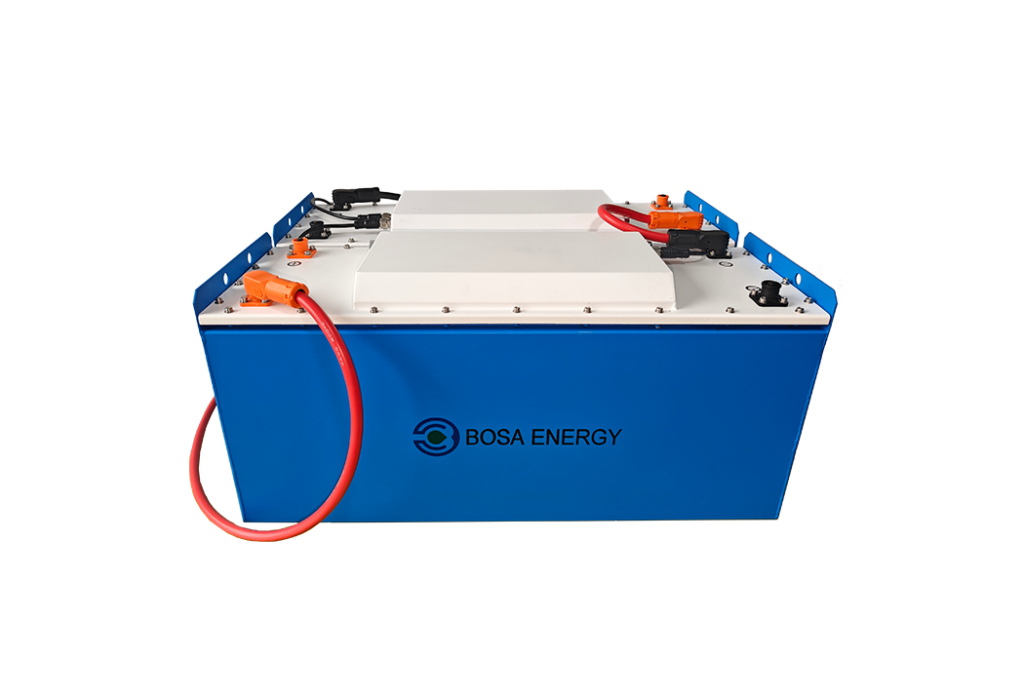
- Specify LiFePO₄ (LFP) for open marine banks. Industrial and purpose-built marine LFP commonly publishes ≥3,500–4,000 cycles at 80% depth of discharge (DoD). Keep daily work above 20–30% state of charge (SOC) and restore 15–40% in the real dock window. Under that plan a private pack used 80–150 cycles per year does not need a mid-life swap inside ten years.
- Commercial short-sea economics now include EU ETS and FuelEU Maritime. Kongsberg Maritime’s May 2026 battery-electric RoPax study reports ~20% higher CAPEX, 19–27% lower OPEX and 8–15% lower total annual cost on high-frequency European routes from 2030.
Table of Contents
- What the Ten-Year Model Must Include
- Purchase Premium in 2026
- Energy Cost: Rate, Hull and Charging Location
- Maintenance and Downtime
- Battery Life, Replacement Reserve and Charging Hardware
- Worked Ten-Year Cases
- Commercial Short-Sea Overlay
- Buyer Checklist
- FAQ
- Decision Framework
- Authoritative References
What the Ten-Year Model Must Include
Do not compare sticker prices and stop. Do not compare only fuel either.
In the model
- Delivered purchase price of two boats that do the same job (same length, same passenger count, same cruise speed band).
- Energy at the owner’s real tariff, not a brochure average.
- Scheduled service from both makers’ intervals, plus a reserve for one unplanned diesel cooling or injector event.
- Charging hardware the electric boat actually needs at the home berth.
- A battery line with three cases: no swap, module refresh, full pack replacement.
- For commercial vessels only: EU ETS allowances, FuelEU penalties or equivalent flag-state carbon cost.
Out of the base case
Slip or marina fees, hull insurance, loan interest, VAT recovery and resale. Those lines matter, but they are owner-specific. Treat them as a sensitivity, not as a hidden “electric always wins” adjustment.
Purchase Premium in 2026
Industry quotes for comparable recreational platforms in 2026 cluster at a 20–40% electric premium. A 7 m electric daycruiser listing near €180,000 against a €140,000 diesel from the same builder is a representative wide pair; a tighter pair at €145,000 versus €125,000 is also in current dealer files. The €20,000–€40,000 gap is almost entirely pack, charger and drivetrain.
Closed high-efficiency platforms sit outside that band. The Candela C-8 lists from about €330,000 excluding VAT for a carbon foiler with a 69 kWh Polestar pack. Comparing that boat to a €140,000 diesel runabout is not a powertrain test. It is a hull-and-materials test.
On commercial RoPax, Kongsberg’s 2026 concept work puts the battery-electric CAPEX premium near 20% (€127 million versus €106 million on the cargo-oriented reference design). That is the same structure as the daycruiser: more capital, less fuel and no ETS bill.
Expect the recreational premium to compress toward 10–15% by 2030 if cell prices keep falling. Do not underwrite a 2026 purchase on that hope. Price the boat you can sign this season.
Energy Cost: Rate, Hull and Charging Location
Three numbers drive the energy line: kWh or litres per hour at your cruise, the tariff at your plug or pump, and annual hours.
Planning bands for a 7–8 m planing or semi-displacement boat
| Input | Electric | Diesel |
|---|---|---|
| Cruise consumption | 15–30 kWh/h, or 2.5–4 kWh/NM | 7–12 L/h at cruise |
| Energy price (2026 private) | €0.15–0.25/kWh home or yard; €0.30–0.45/kWh marina retail. EU household average €0.29/kWh (Eurostat, H2 2025) | Marine diesel typically €1.70–2.20/L. EU road diesel averaged €1.97/L on the 3 September 2026 Weekly Oil Bulletin (€1.966/L week of 31 August); marina fuel is usually at or above the pump |
| Cost per hour at cruise | €2.25–€13.50 depending on tariff and load | €12–€26 at 7–12 L/h and €1.70–2.20/L |
| Foil reference | Candela C-8 ≈ 1.2 kWh/NM at 22 kn (69 kWh ÷ 57 NM) | A similar-length planing diesel is often 1.5–2 L/NM |
U.S. on-highway diesel averaged $5.46/gal in August 2026 on the EIA / FRED monthly series ($5.462 monthly; week of 31 August $5.599/gal). Marina diesel is usually higher. Convert local pump price and burn rate before you trust any “electric is 90% cheaper” claim.
Home charging is the private-owner lever. Marina retail power can erase most of the energy advantage on a planing hull. Opportunity charging of 15–40% at the home berth or during a lunch stop is how the electric boat actually books the lower tariff. A weekly balance charge is not a substitute for those mid-day top-ups on a propulsion day.
Keep daily work above 20–30% SOC. The last 10% is where voltage sag and cycle damage concentrate, and it is also where a skipper starts planning an expensive dock-power sprint.
Maintenance and Downtime
This is the line low-hour owners under-count and charter operators feel first.
A diesel inboard still needs oil and filter changes, raw-water impeller and heat-exchanger service, injector and turbo attention, exhaust and fuel-system integrity, and a gearbox or sterndrive interval. Published private-owner reserves of €800–€2,000 per year are realistic; commercial duty is higher. A mid-life cooling or injector event of €1,000–€3,000 belongs in the ten-year diesel column even if it has not happened yet.
An electric outboard, pod or C-Pod has no oil circuit, no fuel system and no exhaust. Annual work is inspection, anode and connector care, software and cooling-circuit checks where fitted. Published private reserves of €150–€900 per year are the useful band. Some builders quote first scheduled drivetrain service at 10,000 hours — well beyond a private ten-year life.
Ten-year maintenance differentials of €10,000–€40,000 in the electric’s favour are the range that current European dealer models use on mid-size boats. For a 50-hour-per-year owner that line can exceed the energy saving. For a 300-hour charter boat it stacks on top of a large energy saving.
Downtime has a cost only if you bill the boat. Private owners should still count a missed weekend. Charter desks should count a lost week.
Battery Life, Replacement Reserve and Charging Hardware
Nameplate cycles become calendar years only inside a defined window.
Cycle math that belongs in the model
| Use case | Cycles per year (order of magnitude) | 10-year cycles | LFP ≥3,500 cycles at 80% DoD |
|---|---|---|---|
| Private weekender, 80–100 h | 80–150 | 800–1,500 | Inside rating; no swap in the base case |
| Active private, 200 h | 150–250 | 1,500–2,500 | Still inside rating if SOC stays above 20–30% |
| Charter / workboat, 500–800 h | 300–600 | 3,000–6,000 | Plan a module refresh or a second pack |
Torqeedo rates the Deep Blue Battery 80 at 3,750 cycles at 80% DoD / 4,000 at 75% DoD (79.2 kWh nominal / 77.6 kWh usable, 348 V, IP67). ePropulsion E-Series LFP publishes 3,000 cycles to 80% SOH. Closed automotive packs such as the C-8’s Polestar module carry an OEM battery warranty (commonly eight years on current literature) rather than an open LFP cycle sheet.
Three battery cases to run, not one
- Base: no replacement. Correct for a certified LFP bank operated above 20–30% SOC with 15–40% opportunity charges.
- Module refresh at year 8–10: €8,000–€25,000 depending on kWh. Use this when hours are high or the pack is NMC in a closed system approaching warranty end.
- Full pack swap: treat as a stress case, not the default. A 60–80 kWh marine pack at 2026 integration cost is a five-figure event.
Charging hardware is a first-year electric cost. A 7–22 kW AC pedestal or wallbox at the home berth is typically €2,000–€8,000 installed. DC-fast for a high-voltage daycruiser is a marina or club decision, not a private capex line unless you own the dock.
Install to ISO 23625:2025 and ABYC E-13-2025. Those documents do not change the cash model, but a pack that cannot be insured or surveyed is a write-off, not an asset.
Worked Ten-Year Cases
Figures are undiscounted cash in 2026 euros, excluding berth, insurance, VAT and finance. Change the hours and the tariff; do not change the structure.
Shared assumptions (wide-premium pair)
- Comparable 7–8 m daycruiser: electric €180,000 list, diesel €140,000 list.
- Electric cruise 16 kWh/h; diesel cruise 8 L/h.
- Electricity €0.25/kWh (home/yard mix). Diesel €1.80/L.
- Annual service reserve: electric €900, diesel €2,000.
- Electric charger €4,000 in year 0.
- Base case: no battery swap.
Electric 10-year cash = €184,000 + 10 × (€4/h × hours + €900) = €193,000 + €40 × hours. Diesel 10-year cash = €140,000 + 10 × (€14.40/h × hours + €2,000) = €160,000 + €144 × hours.
The two lines cross when €193,000 + €40h = €160,000 + €144h → h ≈ 317 hours per year. Below that, diesel is cheaper on this wide pair. Above that, electric is cheaper — before any pack reserve.
| Scenario | Hours / year | Electric 10-year cash | Diesel 10-year cash | Result |
|---|---|---|---|---|
| Low-hours private | 40 | €194,600 | €165,760 | Diesel lower by ≈ €29,000 |
| Base private | 100 | €197,000 | €174,400 | Diesel lower by ≈ €23,000 |
| Active private | 200 | €201,000 | €188,800 | Diesel lower by ≈ €12,000 |
| Wide-pair breakeven | ≈317 | ≈ €205,700 | ≈ €205,700 | Cash lines meet |
| Charter / high-use | 500 | €213,000 | €232,000 | Electric lower by ≈ €19,000 |
| Base + €25,000 pack reserve | 100 | €222,000 | €174,400 | Diesel lower; reserve widens the private gap |
Energy at 100 h: electric €400/year, diesel €1,440/year. Maintenance at 100 h: electric €900, diesel €2,000. The €40,000 purchase premium plus the charger is larger than ten years of those two savings at 100 hours. That is the honest private-owner result on a wide premium.
Raise hours to 500 and the electric column wins even if you later book a module refresh. The 200-hour private case is still diesel-ahead on this wide pair; it is not a break-even.
Tight-premium pair (same rates, no extra charger line)
A second transparent pair used in current European dealer notes — electric €145,000, diesel €125,000, 100 h, 16 kWh/h vs 8 L/h, €0.30/kWh and €1.80/L, service €900 vs €2,000 — lands near €158,800 electric versus €159,400 diesel over ten years with no pack swap. Tight premiums make 100-hour private ownership a coin toss. Wide premiums do not.
Sensitivity that actually moves the answer
| Change | Effect on the electric column |
|---|---|
| Marina power at €0.45/kWh instead of €0.25 | Adds €320/year at 100 h; widens the private diesel advantage |
| Diesel at €1.20/L | Shrinks diesel energy cost; private electric case worsens |
| Diesel at €2.20/L (high-end marina) | At 200 h the wide pair moves close to even; charter payback shortens |
| Foiling hull at ~1.2 kWh/NM | Energy line collapses; do not use planing kWh/h on that boat |
| 300–500 charter hours plus a 10–15% rate premium | Payback often inside four years before counting marketing value |
Electric vs Diesel Boat Cost: A Ten-Year Model therefore has no single winner. It has a hours-and-tariff surface.
Commercial Short-Sea Overlay
Private dayboats do not pay EU ETS. Ferries and cargo RoPax on European routes do.
Kongsberg Maritime’s May 2026 electric-RoPax study is the current public benchmark: about 20% higher CAPEX (€127 million versus €106 million), 19% lower OPEX in 2030 rising to 27% by 2035–2040, and 8–15% lower total annual cost once capital repayment at 6% over 15 years is included. The electricity assumption in that work (€0.14/kWh, with Nordic industrial power historically lower) is conservative relative to some Baltic corridors. Coverage includes Helsinki–Tallinn and other high-frequency North European links.
FuelEU Maritime and the EU ETS turn diesel’s “cheap energy” line into a rising compliance line. That is why a commercial electric case can close in a few years while a 60-hour lake boat never does. A June 2026 npj Clean Energy assessment of short-sea electrification reaches the same structure: by 2030 battery-electric propulsion is already the cheapest decarbonisation lever on a large share of technically electrifiable RoPax and workboat duty.
Infrastructure is the commercial failure mode. An electric ferry that still burns diesel because the shore charger is late is a diesel boat with a larger capex. Model charger availability as a binary: if the pedestal is not in the timetable, do not book the electric energy rate.
Class type approval (DNV, ABS, BV, LR, RINA) belongs in the commercial pack file. Recreational buyers still need ISO 23625:2025, ABYC E-13 / E-11, IEC 62619 / 62620 and UN 38.3. They do not need class notation.
Buyer Checklist
- Duty written in hours per year and nautical miles at cruise, not “weekends.”
- Two quotes on the same hull family, same options, same delivery window.
- Energy modelled at the home-berth tariff and at marina retail. Use the worse number as the stress case.
- Service schedules from both makers in writing. Include one unplanned diesel cooling or injector event.
- Charger capex in year 0. Confirm the BMS handshake and a 15–40% opportunity-charge window that fits the berth.
- Pack chemistry and cycle sheet: LFP ≥3,500 cycles at 80% DoD, or a closed OEM warranty with a year-8 reserve.
- Daily SOC floor 20–30%. Winter storage in the mid band, not at 0%.
- ISO 23625:2025, ABYC E-13-2025, IEC 62619 / 62620, UN 38.3 on the pack file. Class approval if the vessel is commercial.
- Three battery cases run: no swap, module refresh, full pack.
- For commercial routes: ETS / FuelEU line and a signed charger commissioning date.
FAQ
Electric vs Diesel Boat Cost: A Ten-Year Model — does the electric boat always cost less after ten years? No. At 40–200 private hours and a 20–40% purchase premium, diesel often remains cheaper on undiscounted cash. On the wide pair in this brief the lines cross near 317 hours per year. The electric column needs hours, a cheap home tariff, a tight premium, or a commercial compliance bill to win.
How much more does the electric boat cost to buy in 2026? Plan 20–40% on a comparable recreational platform. Closed foilers and carbon daycruisers sit above that band because the hull is different, not only the battery.
Will I replace the battery inside ten years? Not in the base private case if the bank is certified LFP, kept above 20–30% SOC and opportunity-charged 15–40%. Charter hours and some closed NMC packs need a reserve. Run that reserve as a separate case.
Is marina electricity cheap enough? Often not. €0.30–0.45/kWh on a planing hull can leave only a thin gap versus marine diesel at €1.70–2.20/L. The saving appears when you charge at home or yard rates.
Do emissions rules change a private TCO? Not directly. They change commercial short-sea TCO today and they change the residual-value story if your flag or marina starts restricting combustion access.
Decision Framework
- Write annual hours and the cruise you actually run. If you cannot name both, you cannot price energy.
- Get two delivered prices on the same job, not two brochure pages.
- Price energy at home tariff and at marina tariff. Keep daily SOC above 20–30% and size the charger for 15–40% top-ups in the real dock window.
- Put both service schedules on one sheet. Add one diesel unplanned event.
- Choose chemistry. LFP for open marine banks. Accept a closed OEM pack only with its charger, BMS and warranty.
- Run three battery cases. Book the no-swap case only when cycle math and SOC discipline support it.
- Add ETS / FuelEU and a commissioned charger date if the boat earns money.
Electric vs Diesel Boat Cost: A Ten-Year Model in one sentence: pay the pack premium only when your hours, your tariff and your compliance line recover it before year ten — and keep the pack inside a 20–30% SOC floor so the reserve stays a reserve.
Authoritative References
- International Organization for Standardization, ISO 23625:2025 — Small craft — Lithium-ion batteries — systems above 500 Wh; IEC 62619 / 62620 required.
- American Boat & Yacht Council / ANSI, ABYC E-13-2025 — Lithium Ion Batteries — selection, installation and system design for banks above 500 Wh.
- Panbo, ABYC publishes updated battery and electrical standards — first revision of E-13.
- IEC, IEC 62619:2022 — safety requirements for industrial lithium cells and batteries.
- IEC, IEC 62620 — performance requirements for industrial lithium cells and batteries.
- Candela, C-8 specifications — 69 kWh pack, 57 NM at 22 kn, 11 kW AC / 135 kW DC charging.
- Torqeedo, Deep Blue battery technology and Deep Blue Battery 80 datasheet — 79.2 / 77.6 kWh, 3,750 cycles at 80% DoD.
- European Commission, EU Emissions Trading System and FuelEU Maritime — commercial compliance overlay.
- Eurostat, Electricity price statistics and H2 2025 household prices — EU household average €28.96/100 kWh (€0.29/kWh) in H2 2025.