
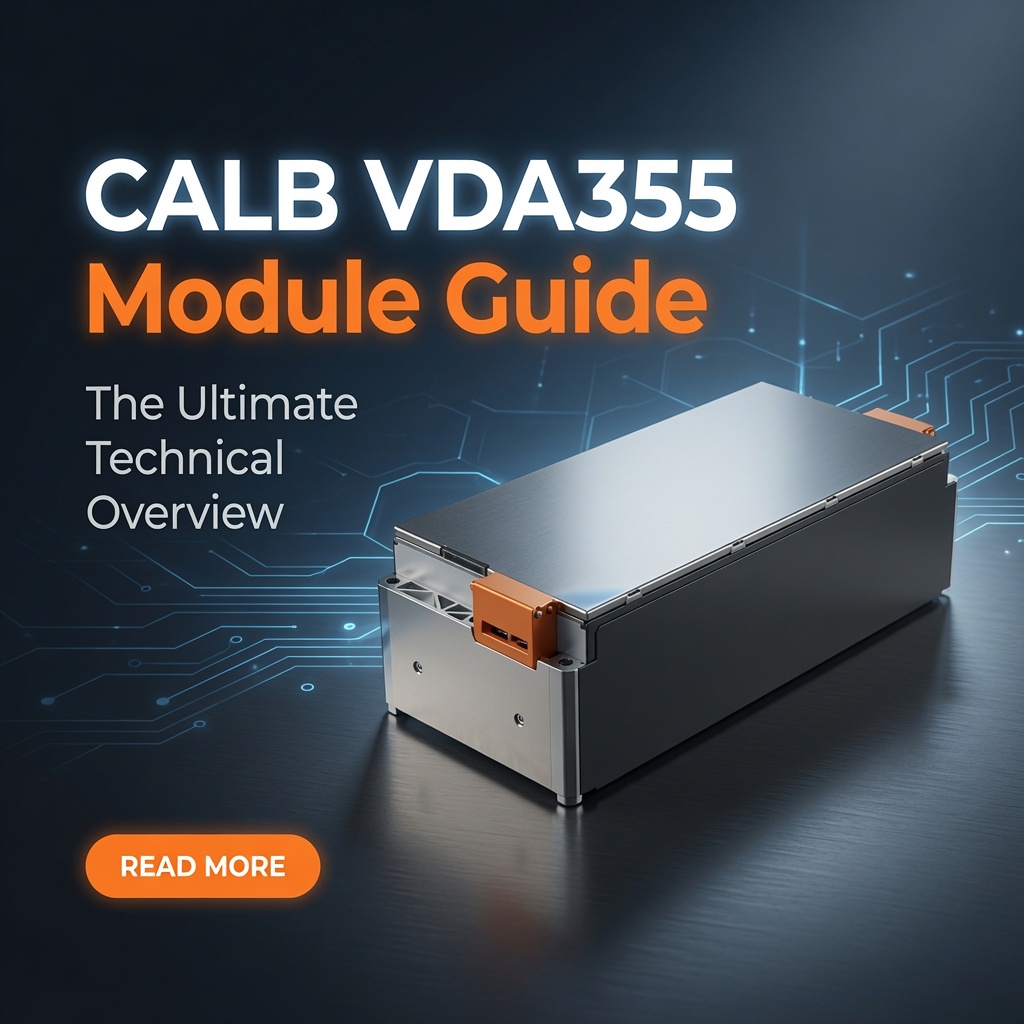
The CALB VDA355 Module has emerged as one of the most versatile and widely adopted standardized lithium-ion battery building blocks in the electric vehicle, commercial vehicle, and energy storage industries. Whether you’re designing a custom EV battery pack, planning an energy storage system, or working on a vehicle conversion project, understanding this module is essential.
This comprehensive guide covers everything you need to know about the CALB VDA355 Module — from technical specifications and real-world performance to installation best practices and applications.
What Is the VDA355 Module Standard?
The VDA355 module standard was developed by the German Association of the Automotive Industry (Verband der Automobilindustrie — VDA). It defines a compact, standardized prismatic battery module size that enables:
- Consistent mechanical interfaces across manufacturers
- Simplified battery pack design and scaling
- Better supply chain compatibility
- Optimeret termisk styring
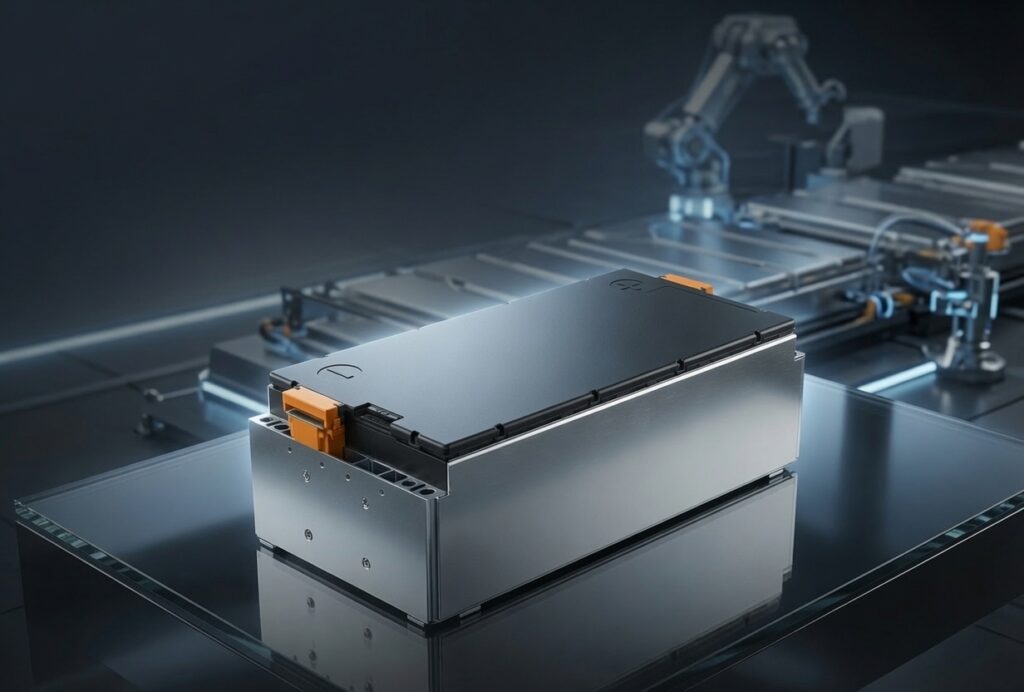
Typical dimensions: 355 mm (length) × 151 mm (width) × 108 mm (height). Minor variations (±1 mm) exist depending on the exact model and manufacturer tolerances.
This format became popular in European and especially Chinese EV platforms because it strikes an excellent balance between energy density, ease of integration, and manufacturing efficiency. Today, it is used not only in passenger cars but also in commercial vehicles, stationary storage, marine applications, and industrial equipment.
CALB VDA355 Module: Key Specifications
CALB (CALB Group Co., Ltd.), a leading global lithium battery manufacturer, produces highly regarded VDA355-compliant modules. The most common and widely available version is the D148N58-3P4S NMC module.
Here are the detailed specifications:
| Parameter | Value |
|---|---|
| Configuration | 3P4S (3 parallel strings × 4 series cells) |
| Kemi | NMC (Nickel Manganese Cobalt) |
| Nominel spænding | 14.68 V |
| Kapacitet | 174 Ah |
| Nominal Energy | ≈ 2.55 kWh |
| Internal Resistance | ≤ 4.5 mΩ |
| Dimensioner (L×B×H) | 355 × 151.3 × 108.1 mm (±1 mm) |
| Vægt | 12.0 – 12.2 kg |
| Cyklusliv | ≥ 1,200 cycles @ 25°C ≥ 800 cycles (fast charge, 45°C, 80% SOH) Up to 2,000 cycles @ 80% DOD (optimized conditions) |
| Charge Temperature | -20°C to +55°C |
| Discharge Temperature | -30°C to +55°C |
| Operating Voltage Range | 11.0 – 17.4 V (0–55°C) 8.8 – 17.4 V (-30–0°C) |
| Overvågning | Integrated FPC (Flexible Printed Circuit) for voltage & temperature |
| Housing | Aluminum alloy with integrated busbars |
Note: LFP (LiFePO4) versions of the VDA355 format also exist (e.g., 12.8 V 135 Ah modules), offering even higher safety and cycle life for stationary or less power-dense applications.
Key Features & Engineering Advantages
The CALB VDA355 Module stands out for several reasons:
- Standardization & Interchangeability — Modules from different production batches or even compatible suppliers can be mixed in the same pack with minimal redesign.
- High Energy Density — Delivers strong performance in a compact footprint, ideal for space-constrained vehicle designs.
- Robust Mechanical Design — Aluminum housing provides excellent structural integrity, vibration resistance, and thermal conductivity.
- Advanced Cell Monitoring — Built-in FPC enables precise cell-level voltage and temperature data for the Battery Management System (BMS).
- Thermal Management Ready — Designed to pair with liquid cooling plates or efficient air-cooling systems for high-performance or fast-charging applications.
- Proven Automotive Heritage — Originally aligned with platforms used by major OEMs; now widely adopted in aftermarket and conversion projects.
Common Applications
1. Electric Vehicles & Commercial Vehicles
Many Chinese OEMs and some European platforms use VDA355-based battery packs. The modular nature allows flexible pack voltages (e.g., 400 V, 800 V architectures) by connecting modules in series/parallel.
2. EV Conversions & Classic Car Restomods
The VDA355 format is extremely popular among conversion specialists because:
- Modules are relatively easy to source
- Standardized mounting simplifies fabrication
- Good energy-to-weight ratio for street and track use
3. Stationary Energy Storage (BESS)
Home, commercial, and industrial battery storage systems benefit from the scalability and thermal characteristics of these modules.
4. Specialty & Industrial Equipment
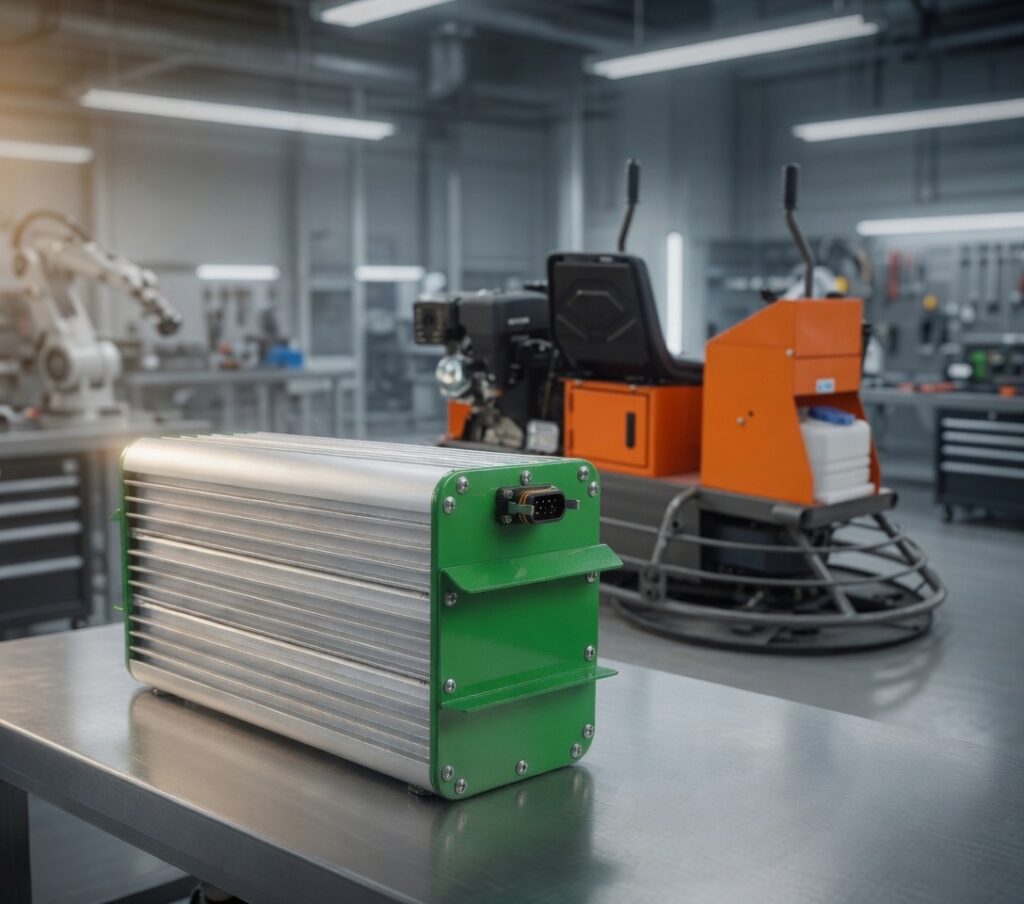
Marine vessels, mining machinery, airport ground support equipment, and even floor sweepers or material handling machines can use VDA355 modules when high reliability and standardized serviceability are required.
5. Research, Prototyping & Education
Universities and R&D teams frequently use VDA355 modules for battery pack development projects.
Installation & Integration Guide
⚠️ Safety Warning: High-voltage lithium battery systems can cause serious injury or fire if mishandled. Installation should only be performed by trained professionals with proper PPE, insulated tools, and adherence to local electrical and transportation regulations.
Recommended Best Practices
- Mechanical Mounting Use the factory mounting holes. Modules can be oriented horizontally or vertically depending on pack layout. Maintain recommended clearances for thermal expansion and service access.
- Cooling System For continuous high C-rates or fast charging, liquid cooling plates specifically designed for VDA355 modules are strongly recommended. Proper thermal interface materials (TIM) between module base and cooling plate are critical.
- Electrical Connections Use appropriately rated copper busbars or high-flex cables. Ensure torque specifications are followed on terminals. Include proper fusing and contactors at the pack level.
- BMS Integration Connect the module’s FPC signal connector to a compatible master BMS. The BMS handles cell balancing, protection (over/under voltage, over-temperature, over-current), and State of Charge (SOC) calculation.
- Enclosure & Safety Design the final pack enclosure to meet required IP rating, include pressure relief, and use fire-retardant materials. Consider crash safety and vibration requirements for mobile applications.
- Testing & Commissioning Perform insulation resistance tests, high-voltage isolation checks, and full functional testing of the BMS before energizing the system.
Performance Expectations & Real-World Considerations
- Cyklusliv: Real-world results depend heavily on depth of discharge (DOD), temperature, and charge/discharge rates. Conservative operation (≤80% DOD, moderate temperatures) can deliver well over 1,500 cycles.
- Power Capability: The module supports strong continuous and peak discharge currents suitable for most passenger and light commercial EV applications.
- Calendar Aging: Like all lithium-ion chemistries, NMC benefits from storage at moderate SOC (30–60%) and cool temperatures when the vehicle or system is not in use.
Pros and Cons Summary
Advantages:
- Excellent standardization and supply ecosystem
- Strong energy density for the size
- High manufacturing quality from CALB
- Good thermal performance when properly cooled
- Widely available in the aftermarket
Considerations:
- NMC chemistry contains nickel and cobalt (LFP alternatives exist if maximum safety or longevity is prioritized)
- Requires proper thermal management for optimal life in demanding applications
- Full pack integration still requires a quality BMS and engineering expertise
Konklusion
De CALB VDA355 Module represents a mature, well-engineered, and highly practical building block for modern lithium battery systems. Its standardized dimensions, robust construction, and strong performance characteristics make it a favorite among EV manufacturers, conversion specialists, and energy storage integrators worldwide.
Whether you are building a high-performance EV, a scalable BESS, or an industrial application, the VDA355 format offers proven reliability and design flexibility.
For the most current specifications, availability, or technical support, consult authorized distributors or manufacturers such as Bosa Energy and official CALB channels.
Frequently Asked Questions (FAQ)
Q: Can I mix CALB VDA355 modules with modules from other brands? A: It is possible if electrical characteristics (capacity, internal resistance, voltage curve) are closely matched and the BMS can handle slight variations. However, for best results and warranty compliance, using modules from the same batch or manufacturer is recommended.
Q: What voltage systems can I build with these modules? A: Very flexible. Four modules in series give approximately 58.72 V nominal. Higher voltage packs (400 V+) are achieved by combining series and parallel strings as needed.
Q: Is liquid cooling mandatory? A: Not always. For moderate duty cycles and lower C-rates, well-designed air cooling may suffice. For fast charging, high continuous power, or dense packing, liquid cooling is strongly advised.
Q: Are there LFP versions of the VDA355 module? A: Yes. Several manufacturers offer 1P4S LFP versions (typically ~12.8 V / 135 Ah) that prioritize safety and cycle life over maximum energy density.
Q: Where can I buy CALB VDA355 modules? A: Authorized distributors and specialized battery suppliers (including companies focused on VDA standard modules) offer them. Always verify authenticity and request full documentation (MSDS, test reports, etc.).
This guide is based on publicly available manufacturer specifications and industry standards as of 2026. Always verify the latest data sheets for your specific project.
Keywords: CALB VDA355 Module, VDA355 battery module, VDA 355 specs, CALB D148N58, standardized EV battery module, lithium battery module guide.
Ready to start your next battery project? The CALB VDA355 Module offers a reliable, standardized foundation trusted by professionals across the industry.