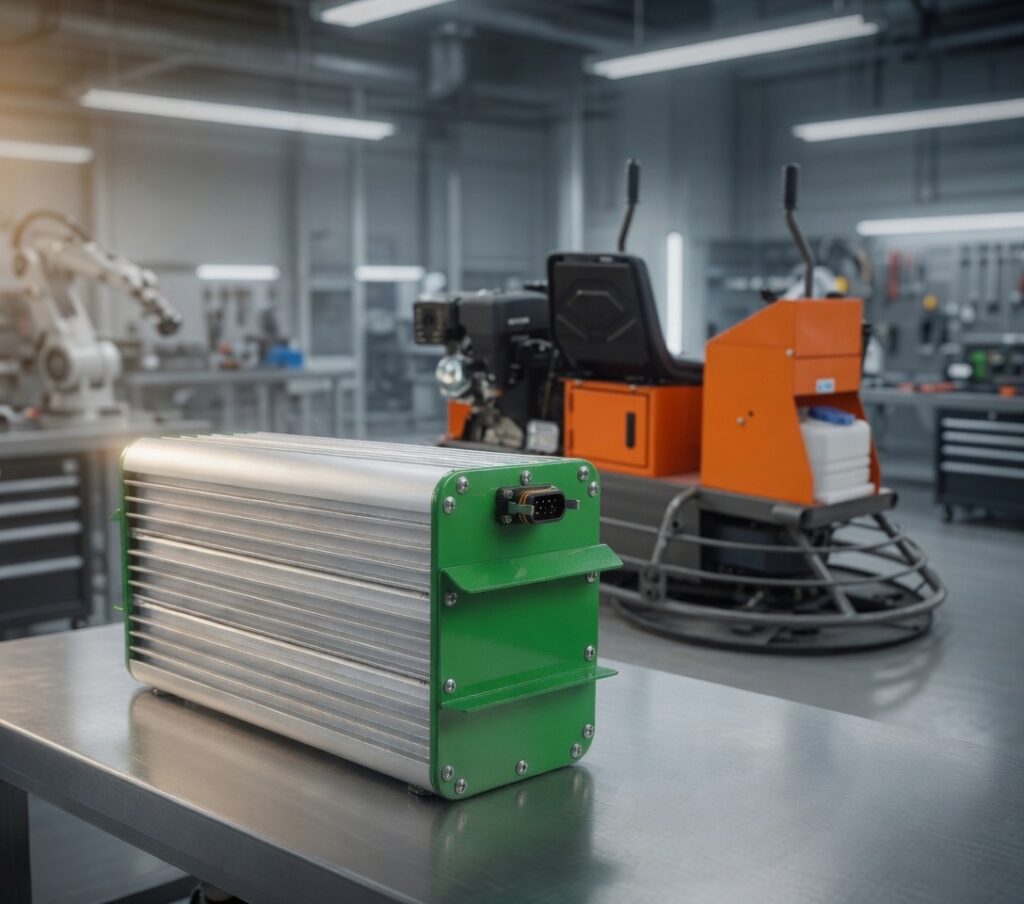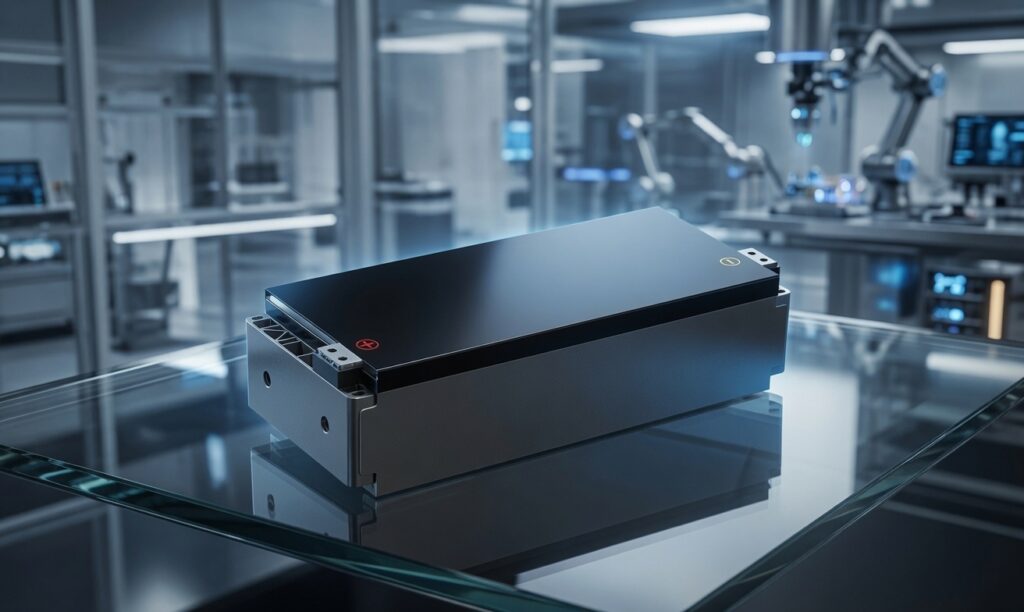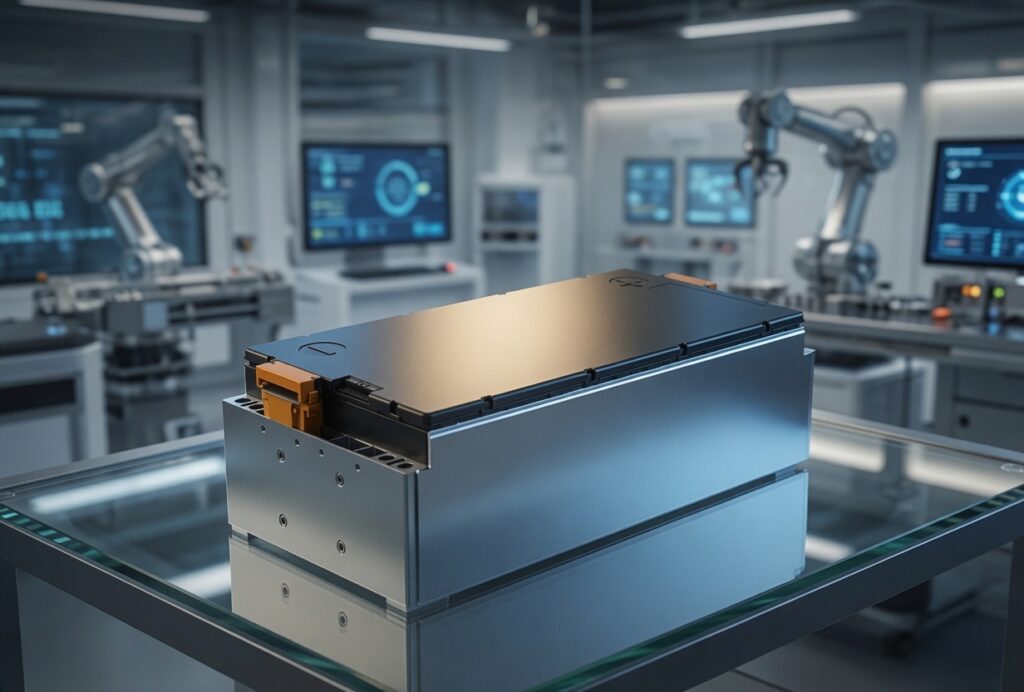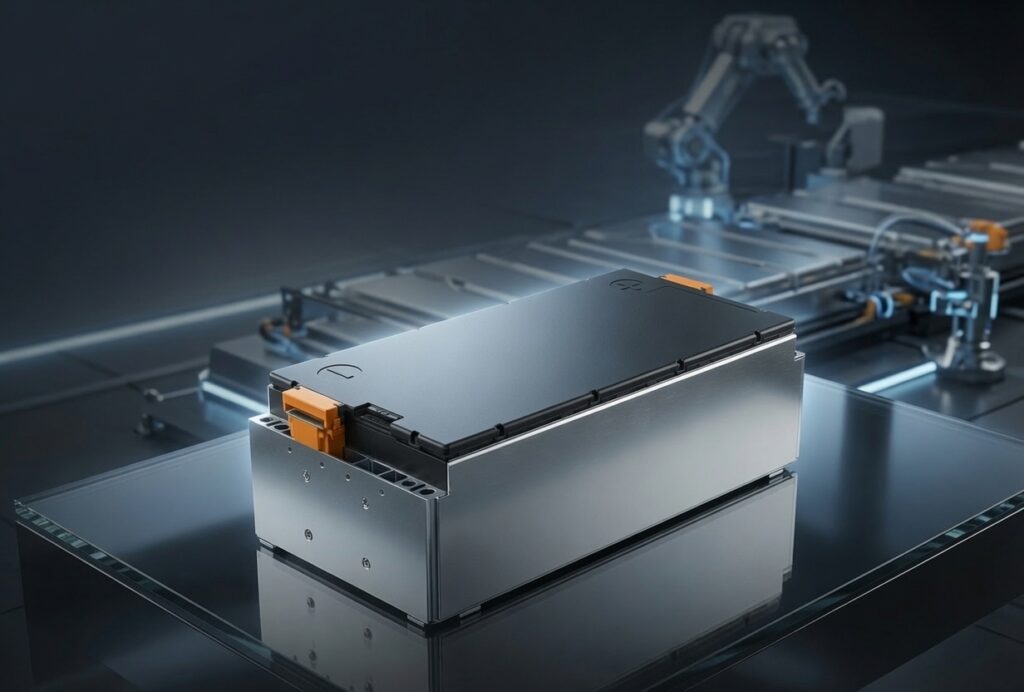

The material handling industry is rapidly shifting toward lithium forklift modules as operations demand higher productivity, lower total cost of ownership, and zero-maintenance power solutions. Among the most promising options is the VDA355 battery module — a standardized lithium-ion module originally developed under the rigorous specifications of the German Association of the Automotive Industry (VDA).
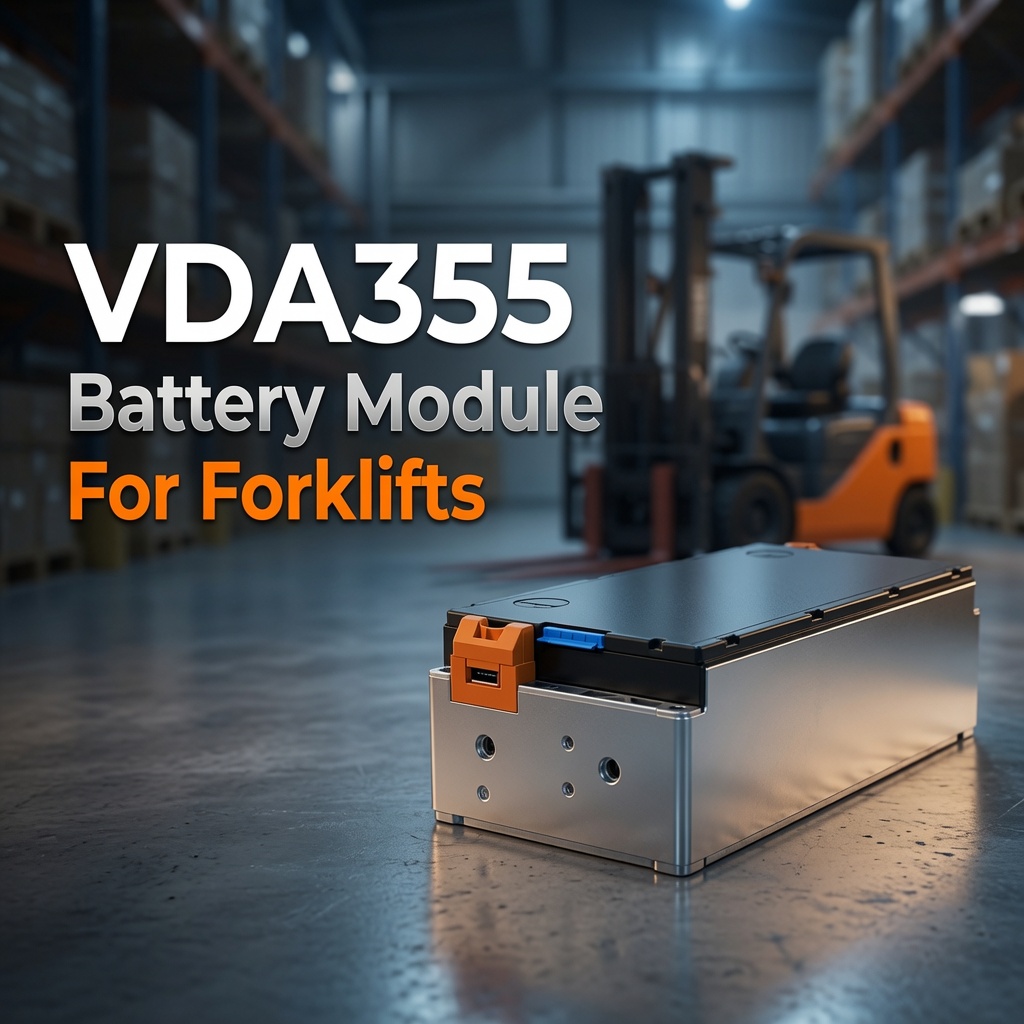
This compact, high-performance module (approximately 355 × 151 × 108–109 mm) delivers automotive-grade quality, exceptional energy density, and modular flexibility that makes it ideal for building advanced Forklift Battery Modules and complete lithium forklift battery systems.
In this expert guide, we explore the VDA355 standard, its technical advantages for forklifts, real-world performance data, and why it represents a future-proof choice for fleet managers seeking reliable Lithium Forklift Modules.
What Is the VDA355 Battery Module?
The VDA355 module is a standardized prismatic lithium-ion battery module defined by the VDA (Verband der Automobilindustrie). It features fixed external dimensions that enable easy integration across vehicle platforms while maintaining high safety, thermal performance, and manufacturing consistency.
Typical specifications include:
- Afmetingen: 355 mm (L) × 151–152 mm (W) × 108–109 mm (H)
- Common configurations: 1P4S (LFP) or 3P4S (NMC/NCM)
- Frame: Welded aluminum or robust housing designed for vibration resistance
- Koeling: Natural convection or adaptable for active thermal management in packs
Popular variants include:
- LFP 135Ah 1P4S VDA355 module — Nominal 12.88 V, ~1.74 kWh, 11.6 kg, 135 A continuous charge/discharge
- NCM 174Ah 3P4S VDA355 module — Nominal ~14.68 V, ≤12.2 kg, high energy density
These modules support advanced BMS integration, cell balancing, and communication protocols commonly required in industrial equipment.
Because of its standardized form factor, the VDA355 has become a preferred building block for custom lithium forklift battery modules and packs in 24 V, 36 V, 48 V, and 80 V configurations.
Why Lithium Forklift Modules Outperform Traditional Lead-Acid Batteries
Lead-acid batteries have powered forklifts for decades, but they come with significant operational drawbacks. Modern Lithium Forklift Modules built with VDA355 technology eliminate these pain points.
Key comparison:
| Aspect | Lead-Acid Forklift Battery | VDA355-Based Lithium Forklift Module |
|---|---|---|
| Levensduur van de cyclus | 1,000–1,500 cycles (~3–5 years) | 2,000–5,000+ cycles (7–10+ years) |
| Oplaadtijd | 8–10 hours + cooling | 1–2 hours full charge; opportunity charging supported |
| Onderhoud | High (watering, cleaning, equalizing) | None (sealed, maintenance-free) |
| Energy Efficiency | 80–85% | 95%+ |
| Weight & Space | Heavier for equivalent usable capacity | Higher energy density; more compact pack design |
| Voltage Stability | Drops significantly when discharged | Consistent power output throughout discharge |
| Safety & Environment | Acid spills, gassing, corrosion | Sealed cells, no gases (especially LFP), recyclable |
| Totale eigendomskosten | Lower upfront but high ongoing costs | Higher initial cost, significantly lower TCO |
Lithium forklift modules enable multi-shift operations without battery changes, reduce downtime, eliminate dedicated charging rooms with ventilation, and improve operator safety.
Advantages of VDA355 Lithium Forklift Modules in Material Handling
The VDA355 format brings unique benefits when engineered into Forklift Battery Modules:
- Proven Automotive-Grade Reliability Designed to meet stringent automotive supply standards, VDA355 modules offer excellent vibration resistance, thermal stability, and long-term durability — critical for the demanding environment of warehouses, loading docks, and outdoor yards.
- Excellent Modularity and Scalability Fleet managers can configure multiple VDA355 modules in series and parallel to achieve exact voltage and capacity requirements for different forklift classes (Class I, II, III, pallet jacks, reach trucks, etc.). This standardization simplifies design, repair, and future upgrades.
- High Energy Density in a Compact Footprint The fixed 355 mm length allows dense packing while leaving room for BMS, contactors, fuses, and cooling systems inside the existing battery compartment of most forklifts.
- Superior Fast-Charging Capability Many VDA355 modules support 1C continuous charge rates. Combined with a properly matched lithium charger, operators can opportunity-charge during breaks and maintain near-continuous uptime.
- Advanced Thermal and Safety Management The module design supports natural cooling or integration with liquid cooling plates. When paired with a high-quality BMS, it provides cell-level monitoring, over-current/over-voltage protection, and CAN bus communication for seamless forklift integration.
- Chemistry Flexibility
- LFP (LiFePO4) versions prioritize safety and cycle life (preferred for most industrial forklift applications).
- NMC/NCM versions deliver higher energy density when maximum runtime per charge is critical.
Typical Technical Specifications (VDA355 Lithium Modules)
LFP Example (1P4S 135Ah):
- Nominal voltage: 12.88 V
- Capacity: 135 Ah
- Energy: ~1.74 kWh
- Continuous charge/discharge: 135 A (1C)
- Pulse discharge: 270 A (≤10 s)
- Weight: 11.6 kg
- Dimensions: 355 × 151.5 × 109 mm
- Cooling: Natural
NCM Example (3P4S 174Ah):
- Nominal voltage: ~14.68 V
- Capacity: 174 Ah
- Weight: ≤12.2 kg
- Dimensions: ~355 × 151 × 108 mm
- Operating temperature: Wide range (−30 °C to +55 °C discharge in many designs)
These specifications make VDA355 modules highly suitable for building robust lithium forklift battery modules that deliver consistent performance across temperature variations common in cold storage or outdoor operations.
ROI and Total Cost of Ownership for VDA355 Lithium Forklift Batteries
Although the upfront cost of a VDA355-based lithium forklift battery is higher than lead-acid, the return on investment is typically achieved within 2–4 years through:
- Reduced energy consumption (higher efficiency)
- Elimination of maintenance labor and watering systems
- Fewer battery replacements over the forklift’s life
- Increased productivity from faster charging and opportunity charging
- Lower downtime and higher equipment utilization
- Reduced facility infrastructure costs (no need for dedicated ventilated charging areas)
Many operations also report improved sustainability metrics and easier compliance with environmental regulations.
How to Choose and Implement VDA355 Lithium Forklift Modules
When selecting a VDA355 Battery Module for Forklifts, consider these expert recommendations:
- Scheikunde: Choose LFP for maximum safety and longevity in most warehouse environments.
- BMS Quality: Ensure the module or pack includes a robust BMS with forklift-specific features (CAN communication, accurate SOC, thermal management).
- Certifications: Look for modules/packs meeting relevant standards (UN38.3, IEC 62619, UL 1973 or equivalent for industrial use).
- Pack Integration: Work with experienced integrators who understand forklift counterbalance requirements, weight distribution, and connector compatibility.
- Charger Matching: Use lithium-specific chargers with proper CC/CV profiles and communication.
- Supplier Expertise: Partner with manufacturers experienced in both automotive-grade VDA modules and industrial lithium forklift applications.
Professional installation and commissioning are strongly recommended to ensure safety, performance, and warranty compliance.
Frequently Asked Questions About VDA355 and Lithium Forklift Modules
What makes the VDA355 module different from other lithium modules? Its standardized dimensions and automotive-origin specifications ensure consistent quality, easier pack design, and better supply chain reliability compared to non-standardized modules.
Can VDA355 modules be used in existing lead-acid forklift compartments? Yes, in most cases. The compact size and modular nature allow custom packs to fit within or closely match the footprint and weight distribution of traditional batteries.
Is LFP or NMC better for forklift applications? LFP is generally preferred for forklifts due to superior thermal stability, longer cycle life, and enhanced safety. NMC offers higher energy density when maximum runtime is the priority.
How long do VDA355-based lithium forklift batteries last? With proper use and a quality BMS, expect 2,000–5,000+ cycles, translating to 7–10+ years of service in typical single- or multi-shift operations.
Do lithium forklift modules require special chargers? Yes. Lithium batteries need compatible lithium chargers. Using lead-acid chargers can damage the battery and void warranties.
Are VDA355 lithium modules safe for indoor warehouse use? Absolutely. Sealed LFP modules produce no gases or acid and are significantly safer than lead-acid batteries when properly integrated with a certified BMS.
Conclusion: Upgrade Your Forklift Fleet with VDA355 Lithium Technology
De VDA355 Battery Module represents a powerful convergence of automotive engineering excellence and industrial practicality. Its standardized design, high energy density, fast-charging capability, and proven durability make it an outstanding foundation for next-generation Lithium Forklift Modules.
Whether you operate a small warehouse fleet or a large-scale distribution center, transitioning to VDA355-based lithium forklift batteries delivers measurable gains in productivity, safety, and long-term cost savings.
Ready to explore VDA355 lithium solutions for your forklifts? Consult with specialized lithium battery integrators who understand both the VDA standard and the unique demands of material handling equipment. The future of efficient, sustainable forklift power is modular, standardized, and lithium-powered.
This article provides technical insights based on publicly available specifications from leading manufacturers and established industry practices for lithium-ion batteries in material handling applications. Always verify compatibility and work with qualified professionals for specific forklift models and installations.