
Cycle life is far more than just a technical parameter; it profoundly impacts the economic value and user experience of energy storage systems:
For commercial and industrial users: It’s the lifeline of return on investment.
The core profit model for commercial and industrial energy storage is peak-valley arbitrage—charging during off-peak hours when electricity prices are low and discharging during peak hours when prices are high. Cycle life directly determines how long this buying low and selling high strategy can be sustained.
A longer cycle life means earning more from the peak-valley price difference over the entire lifespan.
For residential users: It affects peace of mind regarding daily electricity use.
Residential energy storage users seek self-consumption and emergency backup power. As battery capacity degrades with increasing cycle count, the most direct feeling is “not being able to store electricity anymore.” Capacity degradation also means a shorter available backup time during power outages.
Core correlation: Cycle life and Levelized Cost of Electricity (LCOE).
This is the gold standard for evaluating the economics of energy storage. Simply put, LCOE is the total investment (equipment cost + installation, maintenance + replacement cost) over the entire lifespan of the battery system, spread across the total amount of electricity it can release.
Obviously, the longer the cycle life, the more total electricity the battery can release, and the lower the cost per kilowatt-hour.
A battery with a cycle life of 4000 cycles typically has twice the total discharge capacity of a battery with a cycle life of 2000 cycles. Even if the initial purchase price is slightly higher, its cost per kilowatt-hour may be lower, making it more cost-effective in the long run.

There are many types of energy storage batteries to choose from, with significant differences in cycle life, requiring selection based on individual needs.
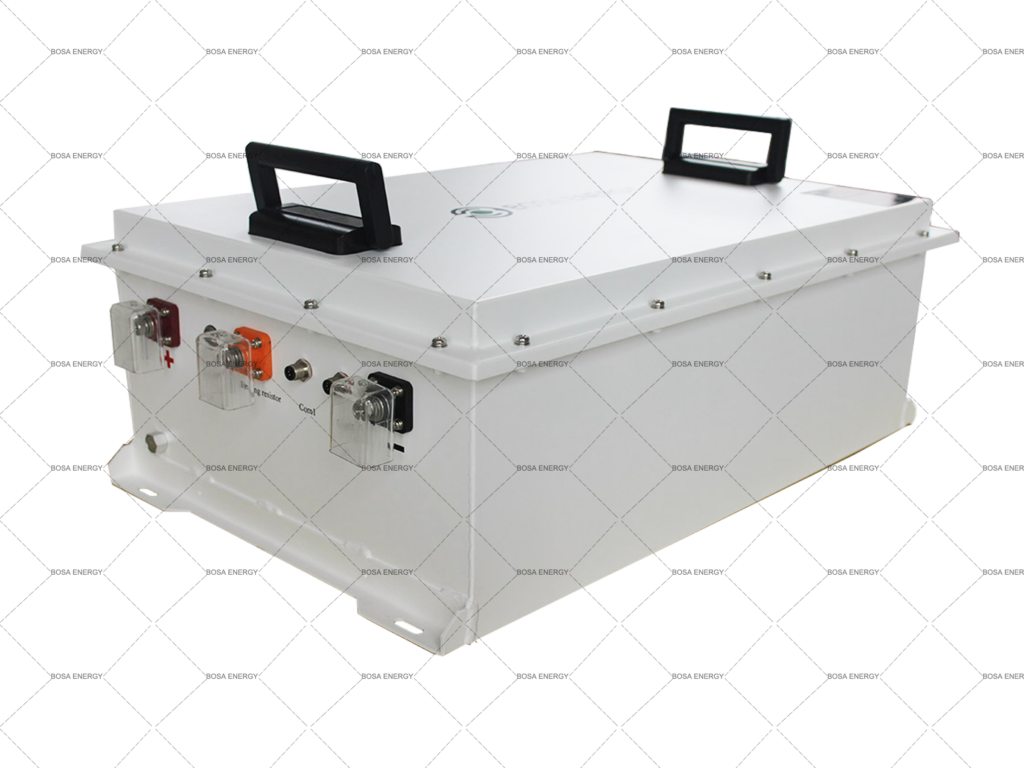
LFP Batteries: Currently the mainstream choice for commercial, industrial, and residential energy storage. One of their biggest advantages is their ultra-long cycle life, typically exceeding 3000 cycles. Combined with their good safety, this makes them the preferred choice for scenarios requiring long-term stable operation and high-frequency charge-discharge (such as commercial energy storage for daily peak-valley arbitrage).
Ternary Lithium Batteries: Higher energy density, meaning they can store more energy in the same volume or weight, often used in space- and weight-sensitive applications. However, their cycle life is usually lower than LFP, meaning they are relatively less competitive in stationary energy storage scenarios requiring long lifespan and high cycle counts.
Lead-Acid Batteries: A traditional technology with the lowest cost, but with a significant drawback: a very short cycle life, typically around 300 to 500 cycles. This means frequent battery replacements are necessary, which is not only inconvenient but also costly in the long run. They are rapidly being replaced by lithium batteries in stationary energy storage, primarily used in cost-sensitive or specific backup scenarios.

Choosing the right battery isn’t about getting the most expensive one; the key is matching it to your application scenario:
For commercial and industrial projects requiring daily charging and discharging and expected to last over ten years, high-cycle-life LFPs are the primary choice.
For residential energy storage with moderate usage frequency and a focus on cost-effectiveness, mainstream LFPs are perfectly adequate.
For very infrequent use (e.g., only once or twice a week) with an extremely limited budget, lead-acid batteries might still be an option (but the trend has changed).