
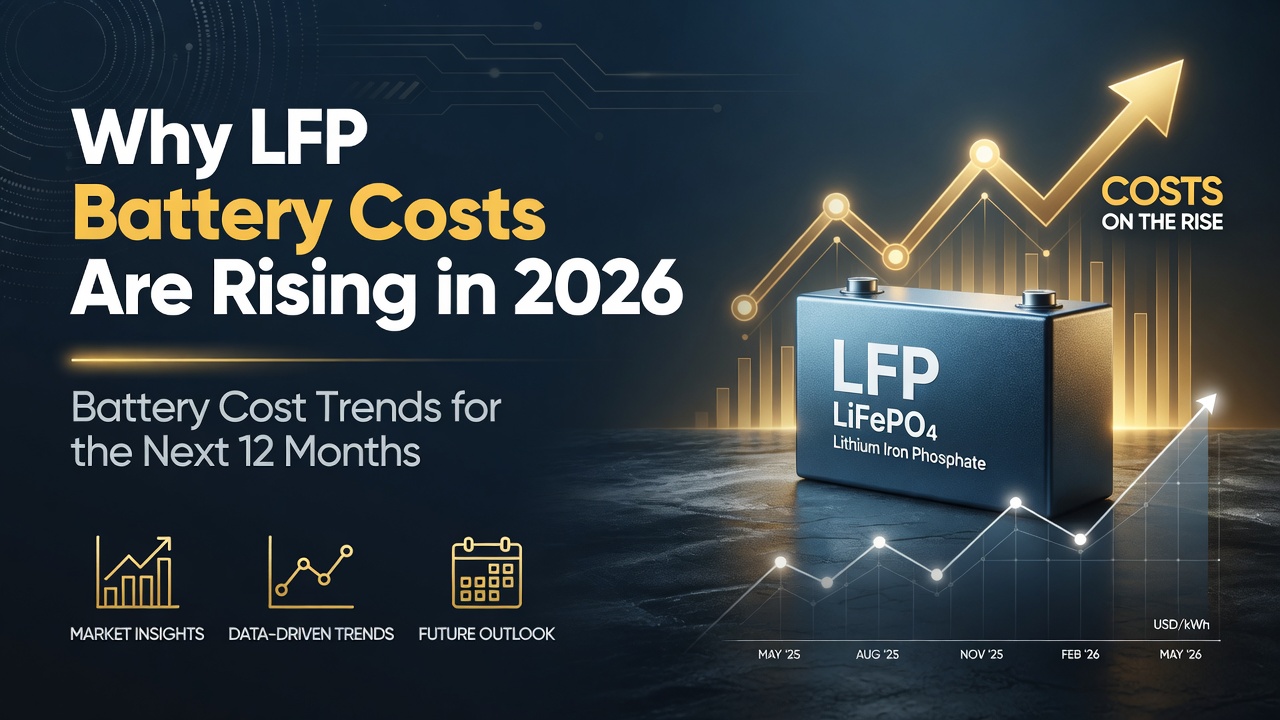
LFP (lithium iron phosphate) batteries have become a cornerstone of the global shift to electric vehicles and renewable energy storage thanks to their safety profile, long cycle life, and use of abundant materials like iron and phosphate. After years of steady price declines driven by scale and competition, many industry observers noted upward pressure on LFP battery costs during 2026. This article examines the key drivers behind these changes and provides an analysis of likely battery cost trends through mid-2027.
What Are LFP Batteries and Why Do They Matter?
LFP batteries use a lithium iron phosphate cathode chemistry instead of nickel- or cobalt-heavy alternatives. This makes them particularly attractive for mass-market electric vehicles, commercial fleets, and especially stationary energy storage systems. In recent years, LFP has gained significant global market share, dominating stationary storage deployments and powering a growing portion of new energy vehicles, particularly in China and emerging markets.
Their structural advantages—lower material volatility, enhanced thermal stability, and extended lifespan—have supported widespread adoption even as the broader battery industry navigated supply chain challenges and shifting demand patterns.
Key Factors Driving LFP Battery Cost Increases in 2026
Several interconnected forces contributed to the observed rise in LFP battery costs in 2026, marking a shift from the deflationary environment of prior years.
1. Strong Rebound in Demand Across Key Sectors
Demand for LFP batteries surged beyond many earlier expectations, particularly from the energy storage sector. Rapid expansion of grid-scale, commercial, and behind-the-meter storage projects—combined with explosive growth in AI data center power infrastructure—created significant pull on cell supply.
Energy storage applications have overwhelmingly favored LFP chemistry for its safety and cost characteristics. At the same time, steady growth in electric vehicle production continued to consume large volumes of cells. The combination of these demand streams tightened availability of high-quality cells and upstream components such as separators, copper and aluminum foils, and cathode materials.
2. Rising Raw Material Costs and Supply Constraints
Lithium prices experienced a notable rally entering 2026, influenced by faster-than-expected demand growth from both EVs and storage, relatively low inventories in key markets, and temporary supply disruptions at certain mining operations.
Additional pressures came from other battery materials, including sheet metal enclosures, current collectors, and electrolyte components. Geopolitical factors and logistics challenges further contributed to higher input costs. Previous periods of intense price competition had led some upstream producers to scale back investment and production, creating a lag when demand accelerated.
3. Changes in Trade Policies and Export Incentives
Policy shifts played a meaningful role. China began phasing down export tax rebates and VAT treatment for battery products, with further reductions expected through late 2026 and into 2027. These changes increased the effective cost base for exported cells and packs.
Simultaneously, major import markets implemented or expanded tariffs on Chinese-origin batteries and components, raising landed costs for buyers outside China. These policy developments added structural cost pressure, particularly for globally traded LFP products.
4. Supply Chain Rebalancing After the Previous Downturn
The 2023–2025 period featured aggressive price competition that compressed margins across the LFP value chain. Many manufacturers and material suppliers responded by cutting production, delaying capacity expansions, and drawing down inventories. As demand recovered more vigorously than anticipated in 2026, the industry faced a temporary mismatch between available supply and requirements—especially for energy storage-grade cells.
New hazardous goods transportation regulations effective in 2026 also contributed to higher logistics costs in some regions.
Impact on the Broader Battery Market
While LFP batteries faced specific upward pressures, the overall lithium-ion battery market continued to benefit from manufacturing overcapacity in China, intense competition, and the ongoing shift toward LFP chemistry in both EV and storage segments. Authoritative analyses from BloombergNEF noted that these factors supported expectations of modest further declines in average pack prices during 2026, even as raw material costs and tariffs exerted counter-pressure.
Regional differences remained pronounced, with Chinese domestic prices generally lower than those in North America and Europe due to scale, supply chain integration, and policy environments. LFP’s cost and safety advantages continued to support its expanding role, particularly in stationary storage where energy density requirements are less stringent than in long-range passenger EVs.
Battery Cost Trends Outlook for the Next 12 Months
Looking ahead from mid-2026 through mid-2027, battery cost trends are expected to reflect a balance of upward and downward forces rather than a simple continuation of either multi-year decline or sharp increase.
Near-term pressures (second half of 2026): Sustained demand from energy storage and AI-related infrastructure, combined with the final stages of China’s export incentive adjustments and potential volatility in lithium and other material markets, are likely to maintain upward pressure on LFP pricing in many global markets. Supply chain tightness may persist until new mining, refining, and cell capacity ramps up meaningfully.
Offsetting and stabilizing factors: Continued global adoption of LFP chemistry, ongoing manufacturing efficiency improvements, and the eventual arrival of additional supply from both Chinese and non-Chinese projects should help moderate cost increases. Long-term supply contracts, vertical integration by major players, and technological refinements in cell design and production processes provide additional buffers.
Overall trajectory: Most forecasts point to a period of relative stabilization or only modest net movement in average battery pack costs through 2027, with LFP remaining one of the more cost-competitive and supply-secure options. However, volatility around raw material prices and policy implementation timelines could create short-term fluctuations. The risk of further market consolidation among cathode material producers could also influence pricing power in specific segments.
LFP batteries are still widely viewed as structurally advantaged for many high-volume applications due to material abundance and safety characteristics, supporting their continued market share gains even amid near-term cost adjustments.
Implications for Manufacturers, Developers, and Buyers
- Battery and EV manufacturers are likely to accelerate diversification of supply chains, pursue long-term offtake agreements, and invest in vertical integration or alternative chemistries where energy density requirements justify it.
- Energy storage project developers should factor potential cost variability into planning and consider total cost of ownership, where LFP’s longevity and safety can deliver strong economics over the project lifetime.
- Policymakers and investors may focus on supporting responsible capacity expansion outside concentrated regions and encouraging technological innovation that further improves LFP performance and cost stability.
Konklusion
The rise in LFP battery costs observed in 2026 reflects a classic supply-demand rebalancing after an extended period of aggressive price competition, compounded by strong demand growth from electrification and digital infrastructure, rising input costs, and evolving trade policies. While these factors created near-term upward pressure, the fundamental advantages of LFP chemistry and the industry’s capacity for efficiency gains and scale suggest that costs are more likely to stabilize than return to sustained sharp increases.
For the next 12 months, stakeholders should prepare for a dynamic but manageable environment characterized by selective cost pressures offset by structural strengths in the LFP segment. Organizations that take a long-term view—focusing on supply security, total cost of ownership, and alignment with the broader energy transition—will be best positioned to navigate this phase successfully.
Ofte stillede spørgsmål
What is causing LFP battery prices to increase in 2026? A combination of surging demand from energy storage and AI data centers, rising lithium and other material costs, reduced Chinese export incentives, higher tariffs in key markets, and supply chain adjustments following earlier price wars.
Will LFP battery costs keep rising through 2027? Trends point to continued volatility with potential stabilization rather than unchecked increases. New supply capacity, efficiency improvements, and LFP’s inherent material advantages are expected to moderate pressures over time.
How do LFP batteries compare to other chemistries on cost trends? LFP has historically offered greater cost stability due to the absence of nickel and cobalt. While it faced upward pressure in 2026 alongside the broader market, its advantages in safety, lifespan, and material availability continue to support strong adoption in storage and mass-market EV segments.
What should buyers of batteries or energy storage systems do? Focus on total cost of ownership rather than headline cell prices, secure supply through diversified contracts, and monitor policy developments in both exporting and importing regions.
Are there alternatives gaining traction because of LFP cost changes? Sodium-ion batteries are attracting interest for applications where energy density is less critical, partly as a hedge against lithium price volatility, though LFP remains dominant in most current high-volume use cases.
This analysis draws on reports and data from authoritative sources including the International Energy Agency’s Global EV Outlook 2026 and BloombergNEF battery price assessments. Market conditions can shift with new policy announcements, supply developments, or demand surprises; readers should consult the latest primary sources for project-specific decisions.
Sources for further reading:
- IEA Global EV Outlook 2026 – Electric Vehicle Batteries
- BloombergNEF: Why Global Battery Prices Are Expected to Fall in 2026
- BloombergNEF: New Record Lows for Battery Prices
- Industry analyses on energy storage demand and supply chain dynamics (various 2026 reports).