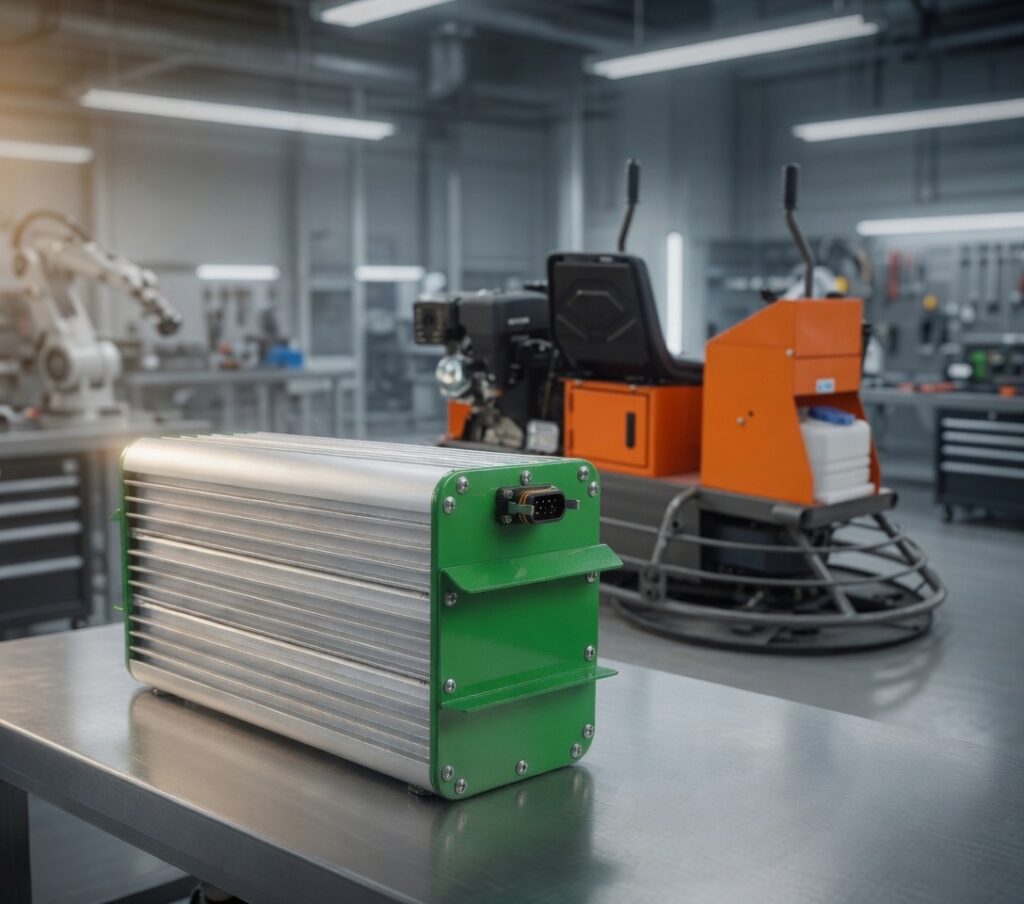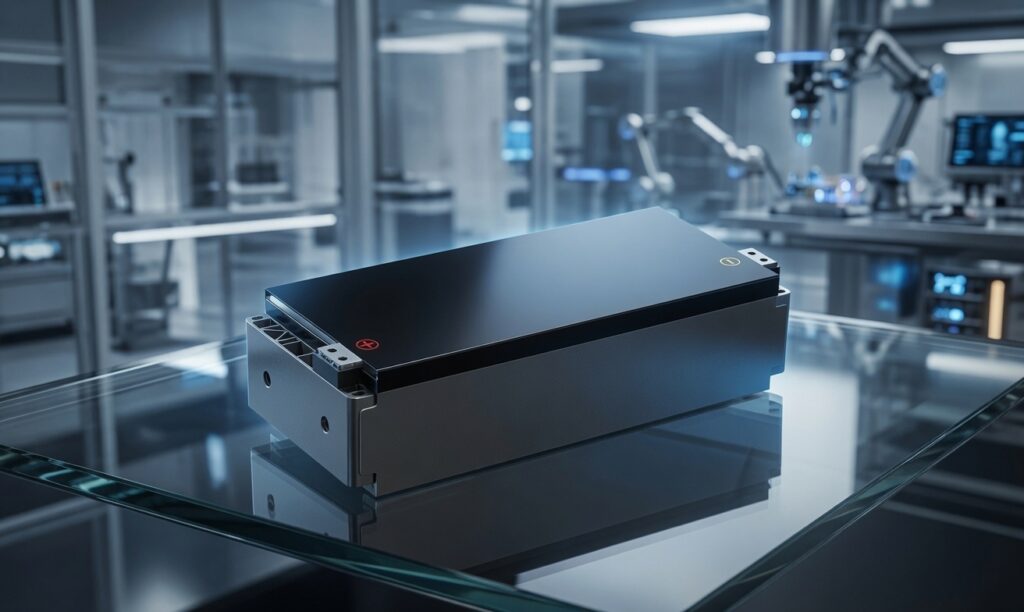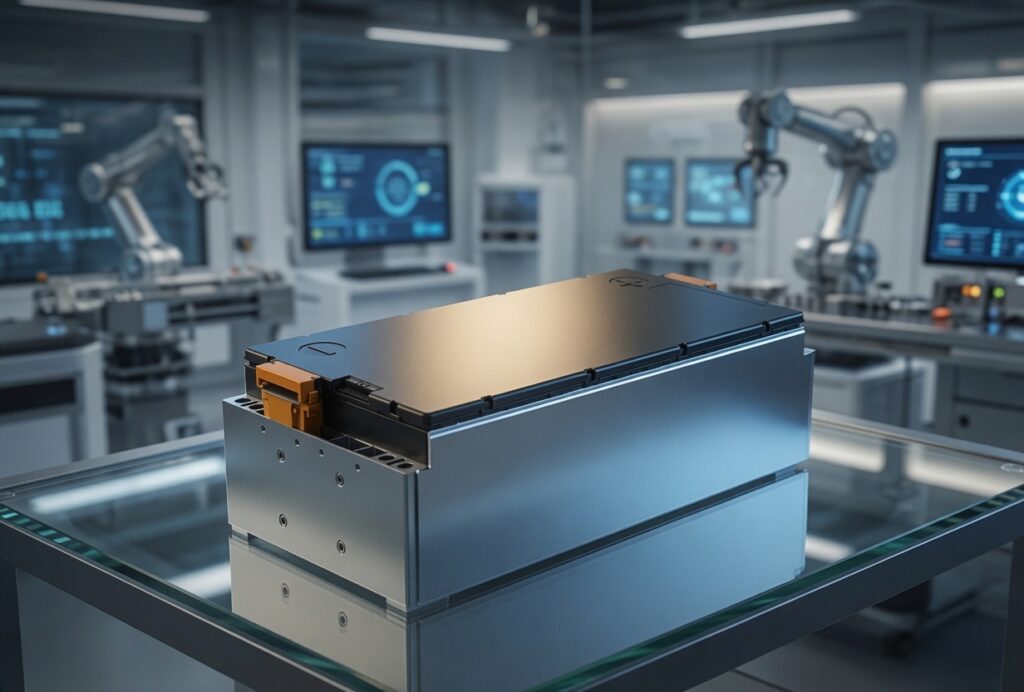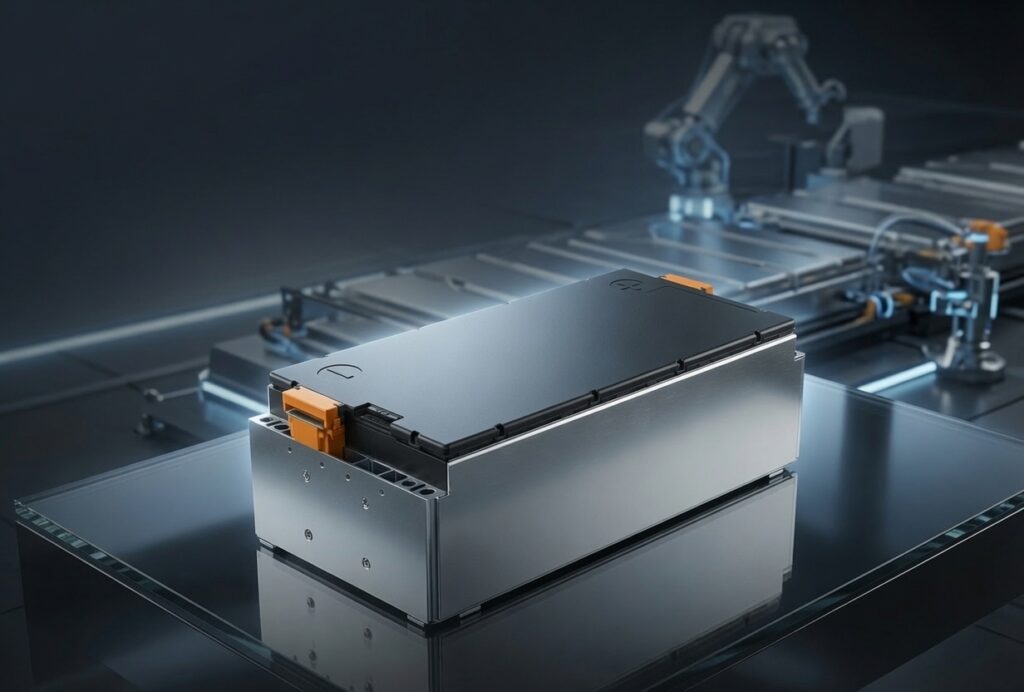

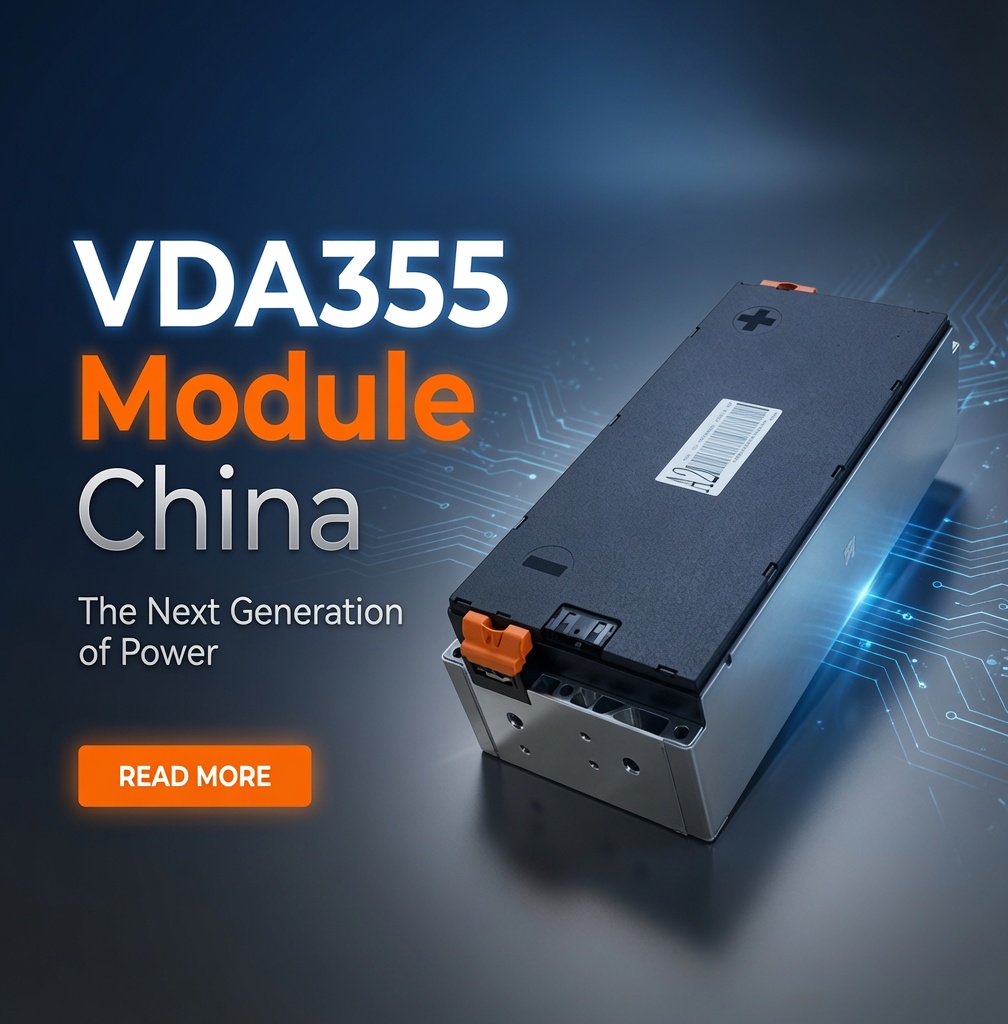
VDA355 Module China has emerged as one of the most important standardized battery solutions powering the global electric vehicle (EV) revolution. In China — the world’s largest EV market and battery manufacturing powerhouse — the VDA355 module has become the de facto foundation for countless passenger car and commercial vehicle battery packs. This article provides a comprehensive, expert overview of the VDA355 module, its technical specifications, widespread adoption in China, key benefits, and practical considerations for engineers, procurement teams, and energy storage developers.
What Is the VDA355 Battery Module?
De VDA355 module is a standardized lithium-ion battery module size developed by the Verband der Automobilindustrie (VDA), Germany’s leading automotive industry association. Introduced to harmonize battery design across the supply chain, the module features fixed outer dimensions of approximately 355 mm (length) × 151 mm (width) × 108–108.5 mm (height).
This physical standardization enables:
- Easier integration into diverse vehicle platforms
- Simplified pack design and thermal management
- Reduced engineering time and cost
- Interchangeability and easier maintenance/replacement
Originally popularized in Volkswagen vehicles, the VDA355 format quickly gained global traction. Chinese manufacturers and EV makers rapidly adopted it, making VDA355 Module China a dominant force in both domestic and export markets.
Why VDA355 Modules Dominate China’s EV Battery Market
China’s explosive growth in new energy vehicles has turned the VDA355 module into a mainstream choice. Major Chinese battery producers and automakers design EV packs around multiples of VDA355 modules because the format delivers an optimal balance of energy density, compactness, manufacturability, and cost.
Key reasons for its popularity in China include:
- Broad compatibility with passenger car and commercial vehicle architectures
- Mature supply chain and high-volume production capabilities
- Cost leadership through economies of scale and advanced automation
- Alignment with national standards (GB/T 31484/31485/31486) while meeting international automotive requirements
- Strong performance in vibration resistance and thermal management — critical for China’s diverse climate and road conditions
Today, a large percentage of Chinese EV battery pack designs are built around the 355 mm module format, making it one of the most successful standardization stories in the global battery industry.
Technical Specifications of VDA355 Modules
VDA355 modules are typically built with high-energy-density NMC (Nickel-Manganese-Cobalt) prismatic cells, though configurations vary by application.
Typical Dimensions & Construction
- Length: 355 mm (±1 mm)
- Width: 151–152 mm
- Height: 108–108.5 mm
- Vægt: Approximately 11–12.5 kg (depending on configuration and cell chemistry)
- Frame: Welded aluminum or steel VDA-standard frame for structural integrity
Example Performance Specifications (NCM 1P4S 177 Ah Module)
| Parameter | Typical Value | Noter |
|---|---|---|
| Nominel spænding | 14.64 V | 1P4S configuration |
| Nominal Capacity | 177 Ah | @ 1/3C, 100% DOD |
| Nominal Energy | ~2.59 kWh | @ 1/3C |
| Maks. kontinuerlig afladning | Up to 348 A | High-power capable |
| Driftstemperatur | -30°C to +55°C (discharge) | Wide environmental range |
| Cell Chemistry | NMC prismatic | High energy density |
| Køling | Natural / liquid cooling ready | Optimized thermal interface |
Common series-parallel configurations include 1P12S (~51–58 Ah), 3P4S (~174–177 Ah), and various custom arrangements tailored to voltage and capacity requirements.
Key Benefits of VDA355 Modules (Especially from China)
1. True Modularity & Scalability Battery packs can be easily configured by combining multiple identical modules, simplifying design, testing, and production.
2. Cost Efficiency Through Standardization Unified dimensions and interfaces enable mass production, lower tooling costs, and faster time-to-market — advantages that Chinese manufacturers have leveraged exceptionally well.
3. High Energy Density in a Compact Footprint The 355 × 151 × 108 mm envelope maximizes volumetric efficiency, helping vehicle designers achieve longer range without sacrificing interior space.
4. Proven Safety & Reliability Modules are engineered for automotive-grade vibration, crash, and thermal runaway protection. Chinese producers have invested heavily in advanced thermal management and cell-level safety features.
5. Versatility Across Applications
- Passenger EVs and PHEVs
- Commercial vehicles (buses, trucks, logistics)
- Stationary energy storage systems (ESS)
- Marine, mining, and specialty equipment
- Classic car conversions and retrofits
6. Supply Chain Strength China offers stable, high-volume supply with continuous innovation in cell chemistry (higher nickel content, improved cycle life) and module lightweighting.
VDA355 vs. Evolved Standards (MEB590 and Others)
The original VDA355 standard laid the groundwork for modern modular battery design. Volkswagen’s MEB platform later introduced the MEB590 module — an evolution that further optimizes cost and consistency while remaining compatible with VDA principles.
Many Chinese manufacturers continue to produce both classic VDA355 modules and enhanced variants, giving customers flexibility depending on whether they need maximum compatibility or platform-specific optimization.
Practical Considerations When Sourcing VDA355 Modules from China
To ensure quality and performance:
- Choose suppliers with proven automotive-grade production experience and relevant certifications.
- Verify cell consistency, SOC matching, and thermal interface quality.
- Insist on robust Battery Management System (BMS) integration and comprehensive testing data (vibration, thermal, safety).
- Evaluate total cost of ownership, including logistics, customization capability, and after-sales technical support.
Reputable Chinese manufacturers continue to improve energy density, reduce weight, and enhance safety margins while maintaining full compliance with VDA dimensional standards.
Future Outlook for VDA355 Module China
As the global EV and energy storage markets expand, the VDA355 format’s emphasis on interoperability, cost efficiency, and proven performance ensures its continued relevance. Chinese manufacturers are at the forefront of next-generation improvements — from higher-nickel NMC cells to advanced thermal management and sustainable production practices.
While new module sizes and cell formats will emerge, the VDA355 standard remains a benchmark for reliability and scalability in 2026 and beyond.
Konklusion
De VDA355 Module China story is a powerful example of how international standardization combined with world-class manufacturing excellence can accelerate the clean energy transition. Whether you are developing next-generation EVs, building large-scale energy storage systems, or exploring innovative electrification projects, VDA355 modules sourced from China offer a mature, cost-effective, and highly versatile solution.
For detailed technical datasheets, custom configuration support, or supplier introductions aligned with your specific voltage, capacity, and application requirements, consult experienced battery technology partners who specialize in VDA-standard modules.
Industry insights current as of June 2026. Always validate latest specifications and safety certifications directly with manufacturers for your project.
Ready to integrate VDA355 modules into your next project? Contact specialized Chinese battery manufacturers for samples, technical consultation, or volume pricing tailored to passenger vehicle, commercial, or energy storage applications.