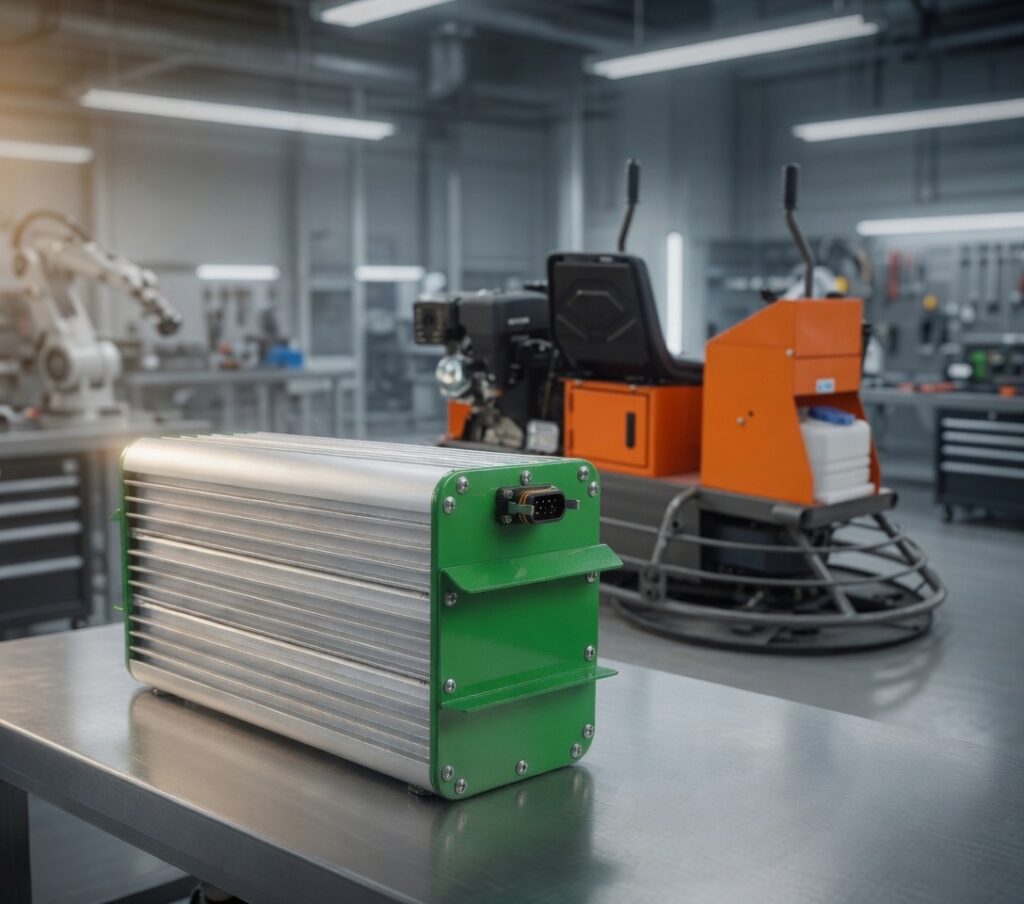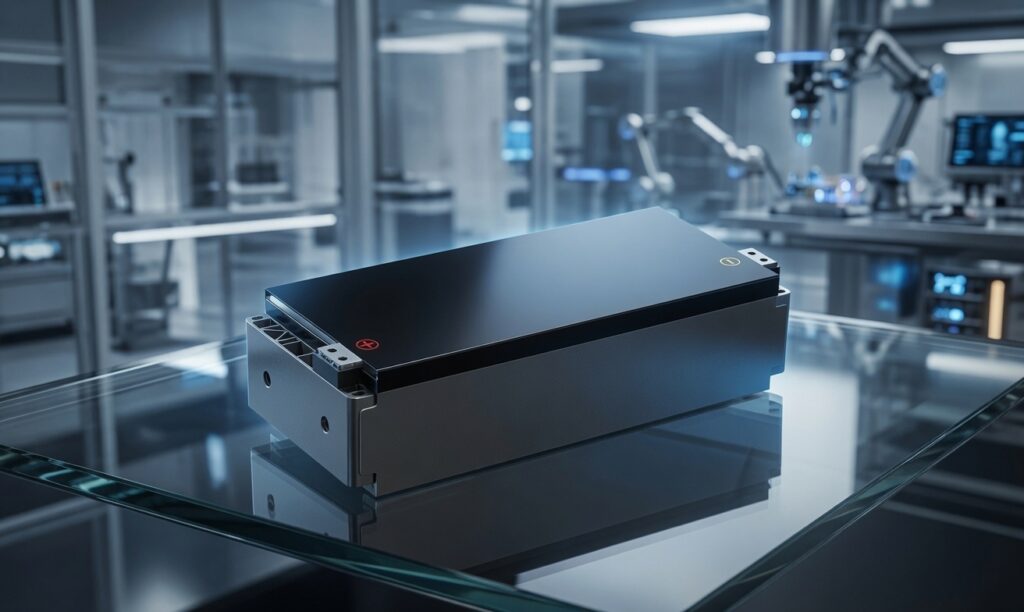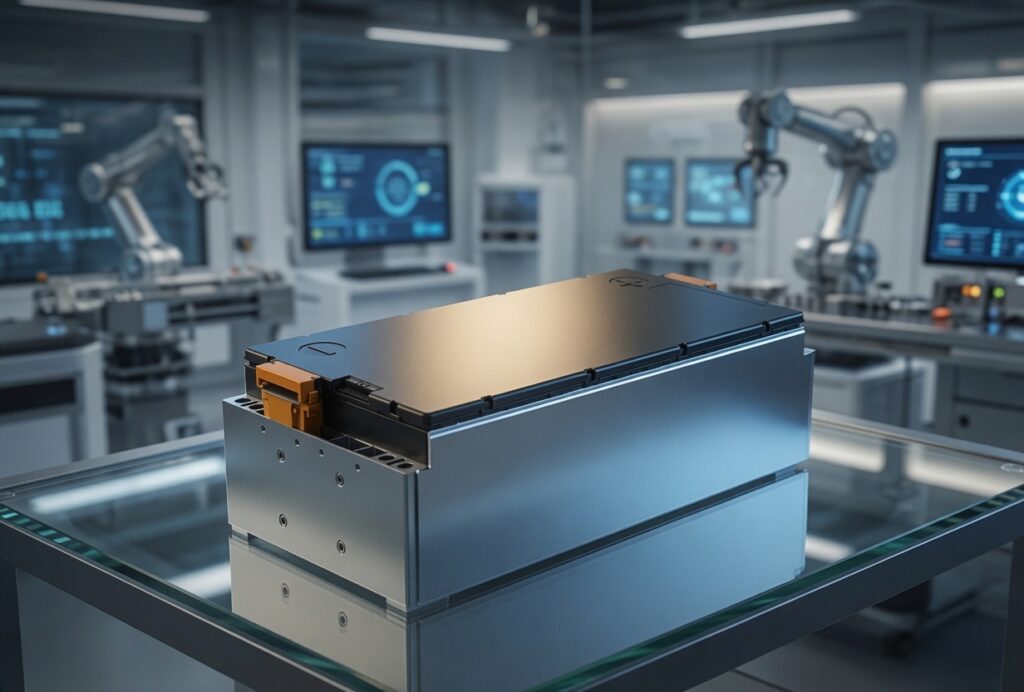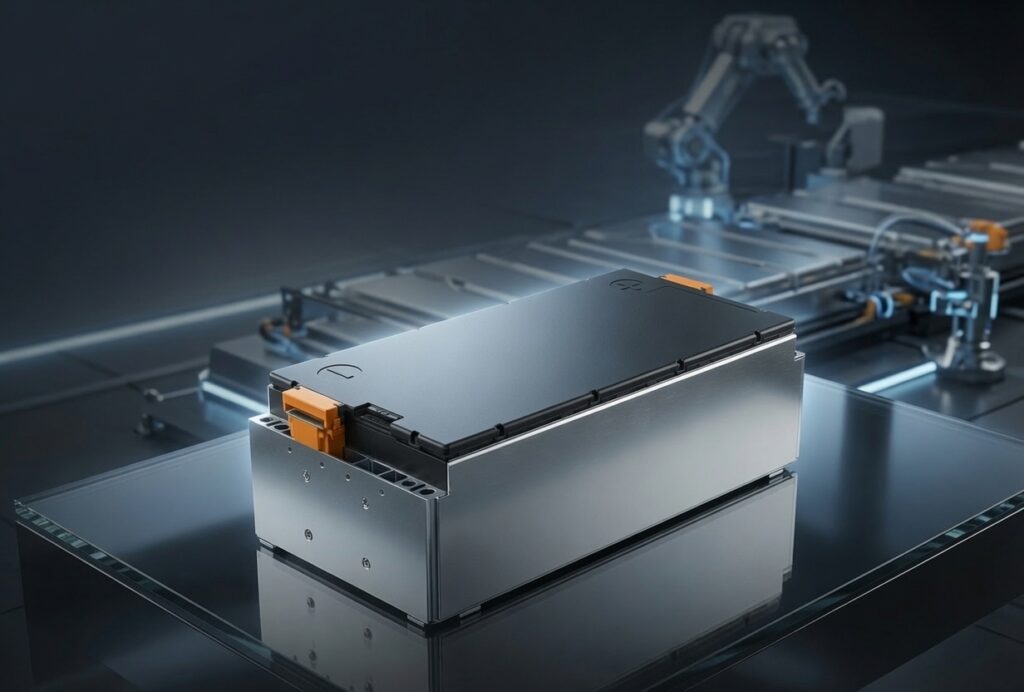

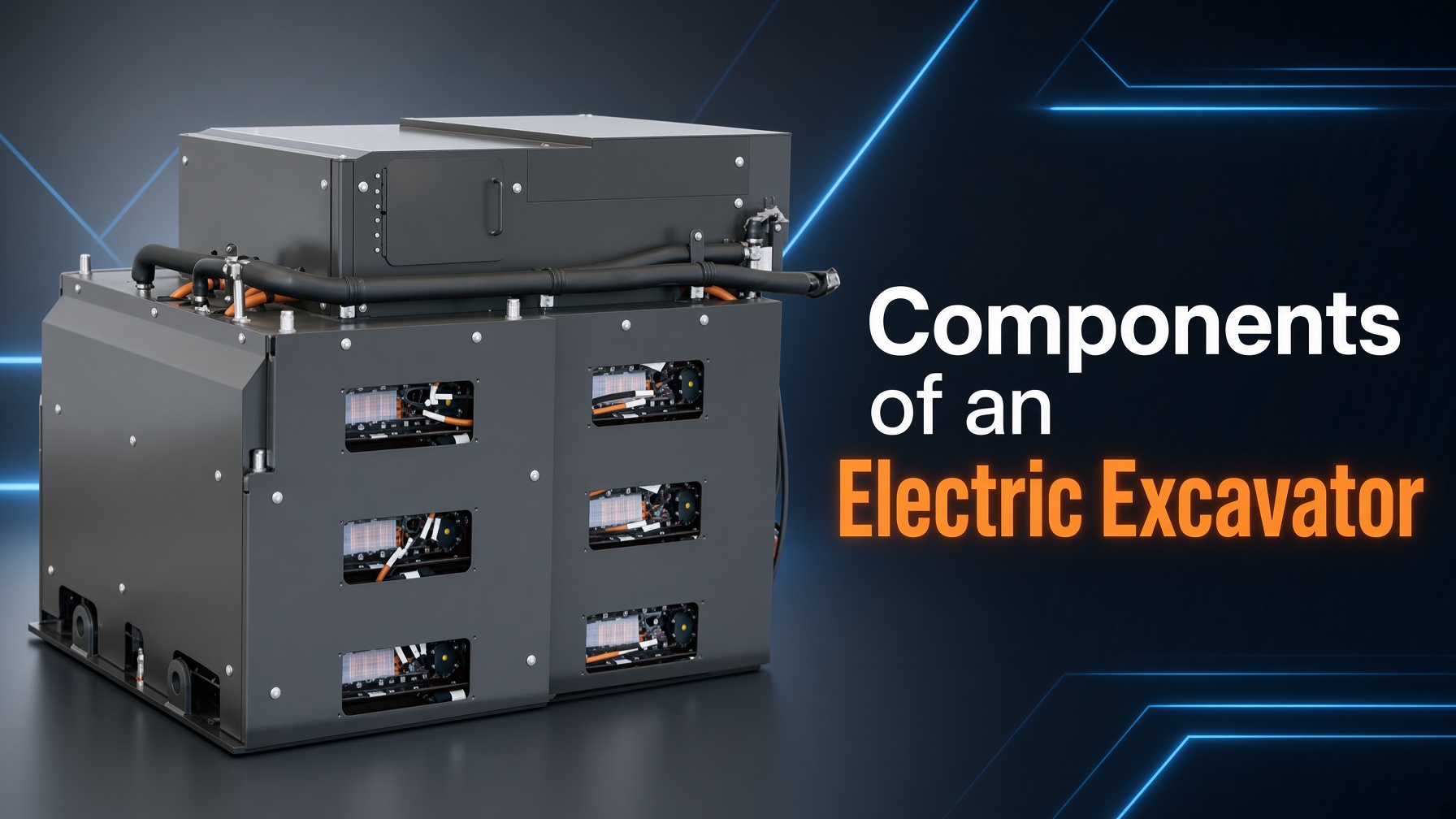
The diesel engine is the part that disappears. Almost everything else on the machine stays. Components of an Electric Excavator are therefore a hybrid architecture: a high-voltage battery, motor-inverter set and charger replace the engine and fuel system, while the boom, arm, bucket, slew ring, tracks and hydraulic cylinders remain the work circuit. Specifying the machine without mapping that split produces the wrong pack voltage, the wrong charger and a shift that ends two hours early.
In 2026 production-class electrics the numbers are no longer prototype-scale. Volvo’s EC230 Electric high-capacity configuration is a 650 V / 450 kWh lithium-ion pack with a 160 kW peak / 110 kW continuous PMSM, 7–8 hour indicative runtime and DC fast charge up to 250 kW. Caterpillar lists the 320 Electric at 750 V / 387 kWh with up to eight hours on a charge or unlimited tethered operation, and the 301.9 Electric mini at 48 V / 32 kWh. JCB’s 19C-1E is a 48 V compact with 15 kWh standard / ~19.8–20 kWh optional and a 7 kW continuous / 20 kW peak permanent-magnet motor. Those platforms share the same component map even when voltage and chemistry differ.
Industrial LiFePO₄ packs used in aftermarket and many compact machines routinely deliver ≥3,500–5,000 cycles at 80 % depth of discharge, accept 15–40 % opportunity charges and keep usable state of charge above 20–30 %. Demand IEC 62619 for industrial lithium safety and UL 2580 where the pack is treated as a traction battery. OEM integrated packs follow the manufacturer’s listed chemistry and charge protocol — Volvo documents NCA on the North American EC230 Electric 450 kWh package, while the March 2026 Brazil launch lists an LFP 600 V / 423 kWh regional pack — so do not mix a generic LFP charger with an OEM NCA or NMC system.

The Component Map at a Glance
| Subsystem | Diesel excavator | Electric excavator (2026) | What the buyer must specify |
|---|---|---|---|
| Prime mover | Diesel engine + aftertreatment | PMSM or equivalent traction motor + inverter | Peak and continuous kW, voltage class, cooling |
| Energy store | Fuel tank | High-voltage lithium pack + BMS | kWh, voltage, chemistry, cycle life, IP rating |
| Work circuit | Engine-driven hydraulic pump | Motor-driven pump (or multi-outlet digital displacement) | Pump flow/pressure, energy recovery on boom-down/slew |
| Travel / slew | Hydraulic motors | Hydraulic motors, sometimes electric slew | Same undercarriage; check counterweight after pack mass change |
| Charge / refuel | Diesel bowser | Onboard AC + CCS DC (or tether) | Connector, kW, site transformer capacity |
| الجهد المنخفض | Alternator + 24 V batteries | DC-DC converter + 24 V auxiliary batteries | 24 V loads must stay alive when HV is isolated |
| Thermal | Engine coolant + hydraulic cooler | Pack + inverter + motor liquid cooling | Ambient window; derate rules above ~40 °C |
| Safety layer | Fire suppression, lock-out | HV interlock, MSD, BMS, ISO 10218 / ISO 19014 as applicable | IEC 62619 / UL 2580 evidence; emergency isolation |
ال Components of an Electric Excavator that decide runtime are the pack kWh, the pump efficiency and the charge plan. The steel and hydraulics decide breakout force. Treat them as two purchase decisions that must close on the same machine.
High-Voltage Battery Pack and BMS
The pack is the fuel tank and the largest single cost line. Medium crawlers sit at 600–750 V so current stays manageable at 100-plus kW hydraulic demand. Compacts stay at 48 V because the motor is 10–20 kW and the site often has only single-phase power.
Published 2026 checkpoints:
- Volvo EC230 Electric (high-capacity, Europe / North America product pages): 650 V, 450 kWh, 689 Ah, lithium-ion (NCA on the North American product guide), −25 to 47 °C operating window, CCS fast charge up to 250 kW, 7–8 h indicative runtime.
- Volvo EC230 Electric (earlier / lighter-duty listing still on some regional pages): 600 V, 264 kWh, ~4–5 h indicative; 22 kW onboard AC; 150 kW CCS2 in 80–90 minutes.
- Volvo EC230 Electric (Brazil launch, March 2026): LFP, 600 V, 423 kWh, up to 9 h indicative, fast charge to 240 kW; same 160 / 110 kW motor ratings.
- Cat 320 Electric: 750 V, 387 kWh; up to 8 h or unlimited when tethered; dedicated AC connector plus CCS1/CCS2 DC.
- Cat 301.9 Electric: 48 V, 32 kWh; up to 8 h at typical 40–60 % utilization; 3 kW AC overnight, 9 kW Cat DC.
- JCB 19C-1E: 48 V, 15 kWh standard (313 Ah, three-pack) / ~19.8–20 kWh optional (417 Ah, four-pack); 3,000-cycle warranty language with >80 % capacity remaining.
The BMS is not optional software. It enforces cell voltage, pack current, temperature inhibit (typically no charge below 0 °C unless the pack is preconditioned) and isolation monitoring. A pack without documented thermal-runaway propagation testing and a working interlock is not a construction component. For third-party high-voltage modules, specify LiFePO₄ with ≥3,500 cycles at 80 % DoD, IEC 62619 and UL 2580. For OEM integrated machines, use the OEM chemistry and the OEM charger map.
Keep daily SOC above 20–30 %. Opportunity charges of 15–40 % during lunch and shift change are how a 4–5 h pack covers an 8 h urban day. Deep cycling to empty every shift is what shortens calendar life.
Electric Motor, Inverter and High-Voltage Distribution
The motor replaces the diesel flywheel. Production machines use a permanent-magnet synchronous motor because peak torque is available from zero rpm and idle consumption collapses when the pump is not needed.
Volvo rates the EC230 Electric motor at 160 kW peak / 110 kW continuous. JCB rates the 19C-1E at 7 kW continuous / 20 kW peak on a three-phase AC permanent-magnet machine. Aftermarket conversions (for example Danfoss Editron on electrified 30 t-class carriers) pair a PMSM with a matching inverter in the 600–800 V band so cable cross-section and contactor heat stay inside industrial limits.
Around the motor sit the parts that fail first if specified cheaply:
- Inverter / motor controller — converts pack DC to variable-frequency AC; must share the pack voltage window.
- High-voltage junction box / PDU — feeds the traction inverter, onboard charger, DC-DC and HVAC compressor.
- Contactors and a manual service disconnect (MSD) — isolate the pack for maintenance.
- Orange HV cabling with interlock loops — a broken interlock drops the pack offline. That is protection, not a defect.
- Insulation monitoring — required on IT high-voltage systems used on construction equipment.
Do not feed a 650 V inverter from a 400 V pack, and do not put a 48 V compact charger on a 750 V medium machine. Voltage class is a system property.
Electro-Hydraulic Pump and Work Equipment
Most electric excavators are still hydraulic machines. The motor turns one or more pumps; the pumps feed the main control valve; the valve feeds boom, arm, bucket, slew and travel. Breakout force on the official Volvo EC230 Electric listing is 125 kN SAE J1179 normal / 132 kN boost. Those numbers exist because the cylinders and linkage did not change.
Where electrics pull ahead is pump control. A diesel engine prefers a narrow rpm band. An electric motor can run the pump only as fast as the joystick demand, cut to zero on idle, and accept regeneration. Volvo cites about 10 % better hydraulic efficiency on the updated EC230 Electric versus the diesel baseline.
Field conversions go further. In June 2026 Danfoss reported that a Develon DX300LC-7 converted with an Editron EM-PMI375 motor, EC-C1200 inverter and a multi-outlet Digital Displacement DDP180D pump cut battery energy use by 35 % on a mixed duty cycle — 53 % longer runtime on the same three 140 kWh packs, or equivalent runtime with two packs instead of three. Recovered boom-down and slew energy is extra runtime, not a marketing footnote.
The mechanical components that remain:
- Boom, arm, bucket and quick coupler
- Hydraulic cylinders and main control valve
- Slew ring and slew motor (hydraulic or, on some designs, electric)
- Travel motors, final drives, tracks or wheels
- Counterweight — pack mass often sits where the engine sat; residual capacity must be revalidated if the pack is lighter or heavier than the diesel power pack
Thermal Management, Charging Hardware and the 24 V Layer
Three cooling loops usually exist: pack, power electronics/motor, and hydraulic oil. A pack that cannot reject heat will derate current long before the cells are empty. Specify the ambient window in the RFQ. Volvo publishes −25 to 47 °C for the EC230 Electric high-capacity pack; that is the operating envelope, not a suggestion.
Charging hardware is a site component as much as a machine component:
- Onboard AC charger (Volvo 22 kW CEE; Cat dedicated AC connector; JCB 110 / 230 V onboard) for overnight and weak-grid sites.
- CCS1 / CCS2 DC fast charge for lunch-break recovery. Volvo: empty-to-full in about 1.8 h on 250 kW, or 80–90 minutes on 150 kW CCS2; 20–80 % is the practical opportunity-charge window.
- Tethered AC (Cat 320) when the machine can sit on a feeder and run without drawing the pack down.
- Portable 40 kW-class DC units for sites that cannot host 150–250 kW.
Size the transformer to the charger, not to the machine nameplate. A 450 kWh pack on a 22 kW cable is an overnight asset. The same pack on 250 kW is a two-shift asset.
The low-voltage layer is easy to forget. Cab HVAC, lights, controllers, telematics and emergency hydraulics run at 24 V through a DC-DC converter plus auxiliary batteries (Volvo lists 2 × 12 V / 40 Ah on the EC230 Electric). If the DC-DC dies, the operator still needs a controlled HV shutdown and a way to release residual pressure. Write that into the service procedure.
Cab, Controls, Telematics and Structural Frame
The operator station is largely carried over: joysticks, travel pedals, ROPS/FOPS cab, cameras and grade-control options (Volvo Active Control / Dig Assist; Cat Grade / Assist / Payload). What changes is the HMI: SOC, pack temperature, charge-port status and derate warnings replace the fuel gauge and diesel fault codes. Telematics must report those HV values or the fleet cannot plan opportunity charging.
The revolving frame carries the pack, motor, inverter, pumps and hydraulic tank. Pack placement is a stability problem, not only a packaging problem. A rear-mounted high-capacity pack can replace part of the counterweight; a side-mounted compact pack must not move the centre of gravity outside the rating. Recheck the lift chart after any non-OEM pack swap.
Safety Layer That Must Travel With the Hardware
High voltage on a muddy site is manageable when isolation is designed, not improvised.
- Pack-level IEC 62619 industrial lithium safety tests
- UL 2580 where the pack is a traction battery for mobile equipment
- UN 38.3 for transport of the pack
- Manual service disconnect, HV interlock and insulation monitoring
- Charge inhibit outside the OEM temperature window
- Orange cable identification and lock-out / tag-out for the HV bus
- Emergency response plan that distinguishes a hydraulic oil fire from a lithium thermal event
LiFePO₄ remains the conservative chemistry for third-party modules because thermal runaway onset is typically above ~270 °C. OEM NCA/NMC packs on medium excavators trade energy density for that extra thermal margin; they are safe when used as a closed OEM system. They are not safe as a mix-and-match aftermarket tray.
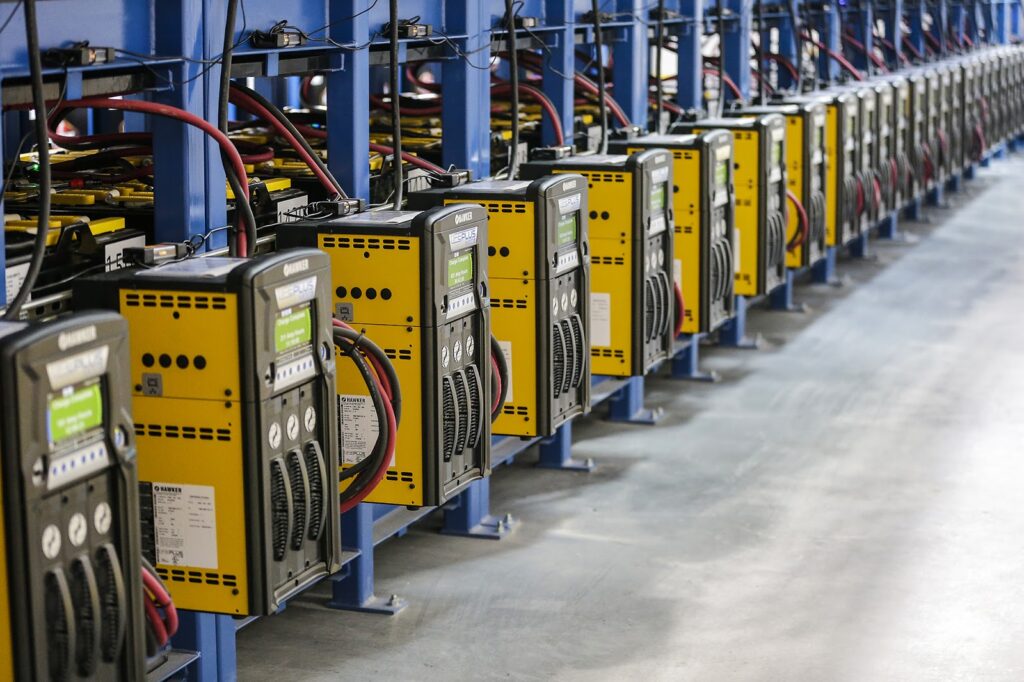
How the Components Interact on a Real Shift
Energy leaves the pack, is inverted to AC, turns the pump motor, becomes hydraulic flow, and becomes boom and bucket work. Regeneration on slew and boom-down can put a fraction of that energy back into the pack. Every throttle loss in the main valve and every hour spent below 20 % SOC wastes the kWh you paid for.
A worked check using published figures: the Volvo EC230 Electric 450 kWh high-capacity pack at 7–8 h indicative runtime implies a duty-averaged draw on the order of 55–65 kW at the pack when accessories and losses are included. A 22 kW onboard charger cannot replace that energy during a 45-minute lunch. A 150–250 kW CCS charger can restore 15–40 % and keep the afternoon above the 20–30 % SOC floor. That is why charger kW is one of the Components of an Electric Excavator even though it often sits on the ground next to the machine.
Practical Checklist for Equipment Managers
- Confirm voltage class (48 V compact vs 600–750 V medium) before requesting quotes
- Specify usable kWh and indicative runtime against the actual duty, not the brochure maximum
- Record chemistry: LiFePO₄ for third-party modules; OEM-listed chemistry for integrated machines
- Require written IEC 62619 and, where applicable, UL 2580 and UN 38.3 evidence
- Match charger protocol (CCS1/CCS2, onboard AC, tether) to site power
- Plan 15–40 % opportunity charges and a 20–30 % SOC floor
- Verify pump, motor continuous/peak kW and hydraulic recovery features
- Recalculate stability / counterweight if pack mass differs from the diesel power pack
- Confirm pack, inverter and hydraulic cooling capacity at the site’s peak ambient
- Include 24 V DC-DC, auxiliary batteries, MSD and insulation monitoring on the acceptance sheet
- Connect telematics so SOC, temperature and isolation alarms are visible to dispatch
- Write an HV lock-out procedure and a lithium-specific emergency plan
Decision Framework
- Fix the machine class and daily energy. A 2 t mini and a 23–26 t crawler do not share a pack, a connector or a transformer.
- Choose the energy store next: kWh, voltage, chemistry and charge power. Runtime is kWh divided by duty-averaged kW, corrected for opportunity charging.
- Reject any pack or conversion that cannot show BMS inhibit limits, isolation monitoring and IEC 62619 (plus UL 2580 when the pack is a traction battery).
- Size site charging before the machine arrives. Overnight AC only is a one-shift plan. CCS 150–250 kW is a two-shift plan. Tether is a continuous-production plan.
- Pilot one machine for 30–90 days. Log SOC at start/lunch/end, pack temperature, kWh per hour of digging and unplanned HV faults. Buy the fleet only after those numbers beat the diesel baseline on energy cost and availability.
التعليمات
What are the core components of an electric excavator? A high-voltage battery and BMS, electric motor and inverter, motor-driven hydraulic pump, HV distribution and charger, thermal loops, a 24 V DC-DC plus auxiliary batteries, and the same boom, undercarriage and cab used on the diesel sibling. Those are the Components of an Electric Excavator that must be specified as a system.
Is the hydraulic system removed on an electric excavator? Almost never on production machines. Linear digging force still comes from cylinders. The electric motor drives the pump. Some designs add electric slew or digital-displacement pumps to cut throttle losses and recover energy.
Which battery chemistry should we specify? LiFePO₄ for aftermarket and most compact industrial packs: ≥3,500–5,000 cycles at 80 % DoD and high thermal stability. Follow the OEM data sheet on integrated medium machines — Volvo publishes NCA on the North American EC230 Electric 450 kWh package and LFP on the 2026 Brazil 423 kWh package. Do not put an LFP charge profile on an NCA/NMC OEM pack.
How long will the battery last in years? Cycle life and calendar life both matter. An LFP pack at ≥3,500 cycles and one shallow cycle per day is an 8–10 year industrial asset if SOC stays above 20–30 % and charging stays inside the temperature window. OEM NCA/NMC packs are sized for the machine’s service life under the OEM warranty; treat them as a closed system.
Can we run a full shift on one charge? Yes on the high-capacity 23 t class (Volvo 450 kWh, 7–8 h indicative; Cat 320 Electric up to 8 h or tethered) and on many 48 V minis at typical utilization. Heavy rock, long travel and high ambient will cut that number. Design the charger to close the gap rather than oversizing the pack by default.
Authoritative References
- Volvo Construction Equipment: EC230 Electric product page (650 V / 450 kWh high-capacity listing) – https://www.volvoce.com/europe/en/products/electric-machines/ec230f-electric/
- Volvo Construction Equipment: Updated EC230 Electric boasts full day operation (18 Feb 2025) – https://www.volvoce.com/europe/en/about-us/news/2025/updated-volvo-ec230-electric-boasts-full-day-operation/
- Volvo CE EC230 Electric North American product guide (450 kWh, 650 V, NCA, PMSM 160/110 kW) – https://www.volvoce.com/-/media/aprimo/pdf/electric-crawler-excavators/ec230-electric/product-guide-ec230-electric-na-en-22-20064870-d.pdf
ال Components of an Electric Excavator are not a mystery parts list. They are a voltage class, a kWh figure, a motor-pump pairing, a charger and a BMS that must survive mud, vibration and a 40 °C afternoon. Specify those five items against a measured duty cycle, keep opportunity charging in the 15–40 % band and SOC above 20–30 %, and the rest of the machine — boom, tracks, cylinders — will dig the way the diesel did, without the engine.