
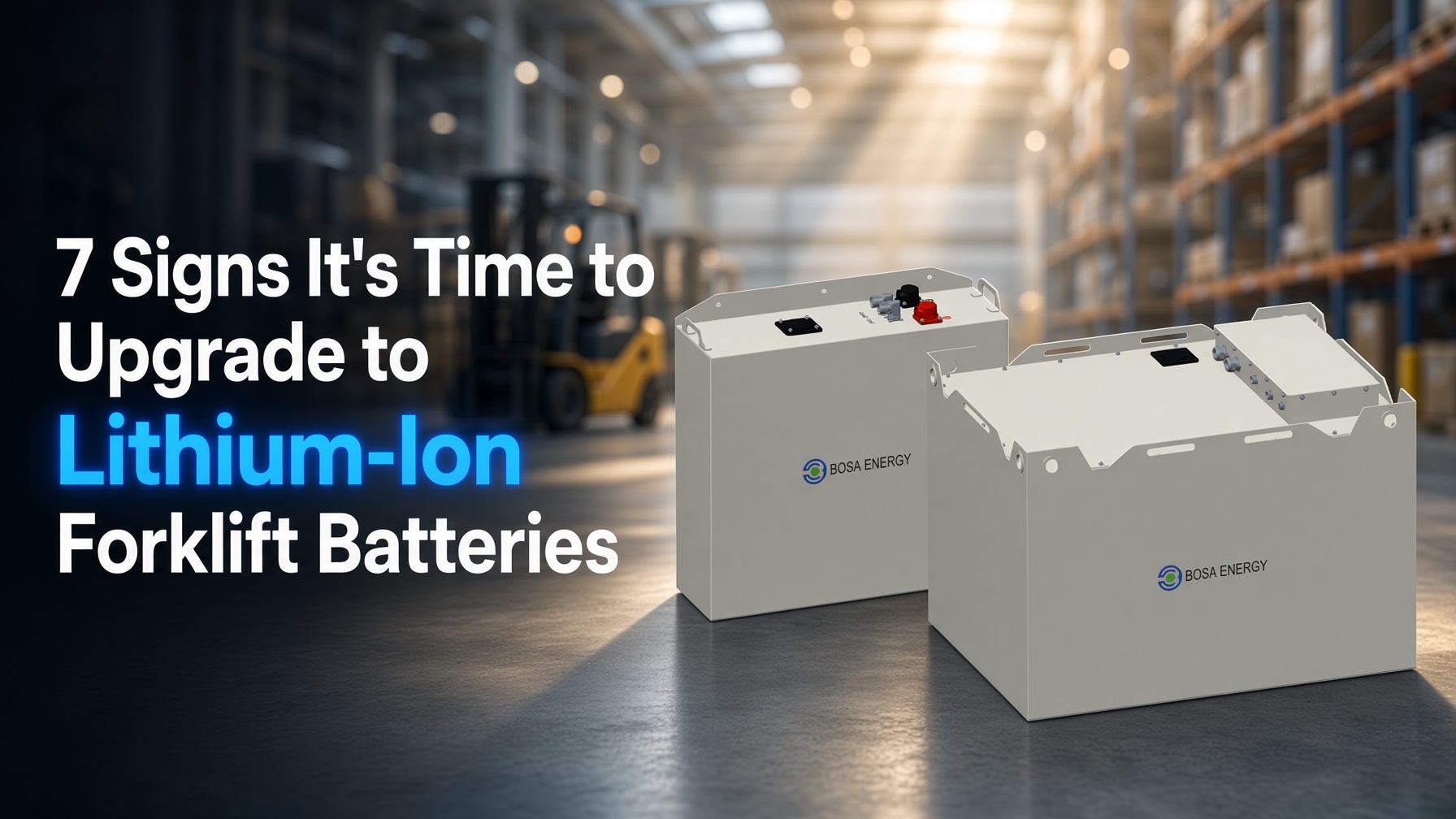
Warehouse and material-handling operations depend on reliable power to keep goods moving and costs under control. For decades, lead-acid batteries have been the standard, yet many fleets now face rising downtime, higher labor demands, and shrinking margins. Recognizing the right moment to switch protects productivity and improves long-term economics. 7 Signs It’s Time to Upgrade to Lithium-Ion Forklift Batteries highlights practical indicators that experienced fleet managers watch closely before committing to a technology change.

Sign 1: Battery Changes Interrupt Shifts and Reduce Output
In multi-shift environments, lead-acid packs typically need removal and replacement once or twice per day. Each change can consume 15–20 minutes of operator time plus extra labor for transport and storage. Over a year, those interruptions add up to hundreds of lost productive hours. Opportunity charging lithium batteries eliminate the need for swaps because operators can plug in during breaks or between tasks without harming cycle life. The result is higher equipment utilization and fewer bottlenecks on the floor.
Sign 2: Maintenance Tasks Consume Excessive Labor
Lead-acid batteries require regular watering, equalization charges, terminal cleaning, and corrosion checks. These routines demand skilled technicians, create safety exposure to sulfuric acid, and generate hydrogen gas that needs ventilation. Facilities that track labor often discover that battery care accounts for a measurable share of maintenance budgets. Lead-acid forklift battery maintenance becomes a persistent cost center rather than an occasional task. Sealed lithium-ion forklift batteries with integrated battery management systems remove watering, equalization, and most cleaning, freeing technicians for higher-value work.
Sign 3: Energy Bills Continue to Climb
Charging efficiency for conventional flooded lead-acid systems commonly falls in the 70–80 percent range because energy is lost as heat. Lithium-ion packs routinely achieve 95 percent or higher round-trip efficiency. The difference appears directly on utility invoices, especially in large fleets that charge daily. Faster charge acceptance also reduces the time equipment sits idle, further improving energy productivity. Operations that have already optimized other costs often find that battery inefficiency is one of the last large levers still available.
Sign 4: Performance Declines Before the Shift Ends
Lead-acid voltage drops steadily as the state of charge falls, so lift speed and travel rate slow in the final hours of a shift. Operators compensate by changing batteries earlier or accepting reduced throughput. Lithium chemistry maintains a flatter voltage curve, delivering consistent power until the pack is nearly depleted. When supervisors notice that trucks “feel weaker” late in the day or that more frequent top-offs are required, the underlying capacity loss is usually advanced. Switching restores predictable performance across the full operating window.
Sign 5: Dedicated Battery Rooms and Spare Packs Waste Space
Traditional setups need charging rooms with ventilation, watering stations, spill containment, and racks for spare batteries. In high-utilization sites, two or even three packs per truck are common so that one can always be charging or cooling. Those rooms and spares occupy square footage that could otherwise support inventory or production. Because lithium-ion forklift batteries support opportunity charging and require no cool-down period, most operations move to a one-battery-per-truck model and reclaim substantial floor space.
Sign 6: Packs Are Approaching or Past Typical Service Life
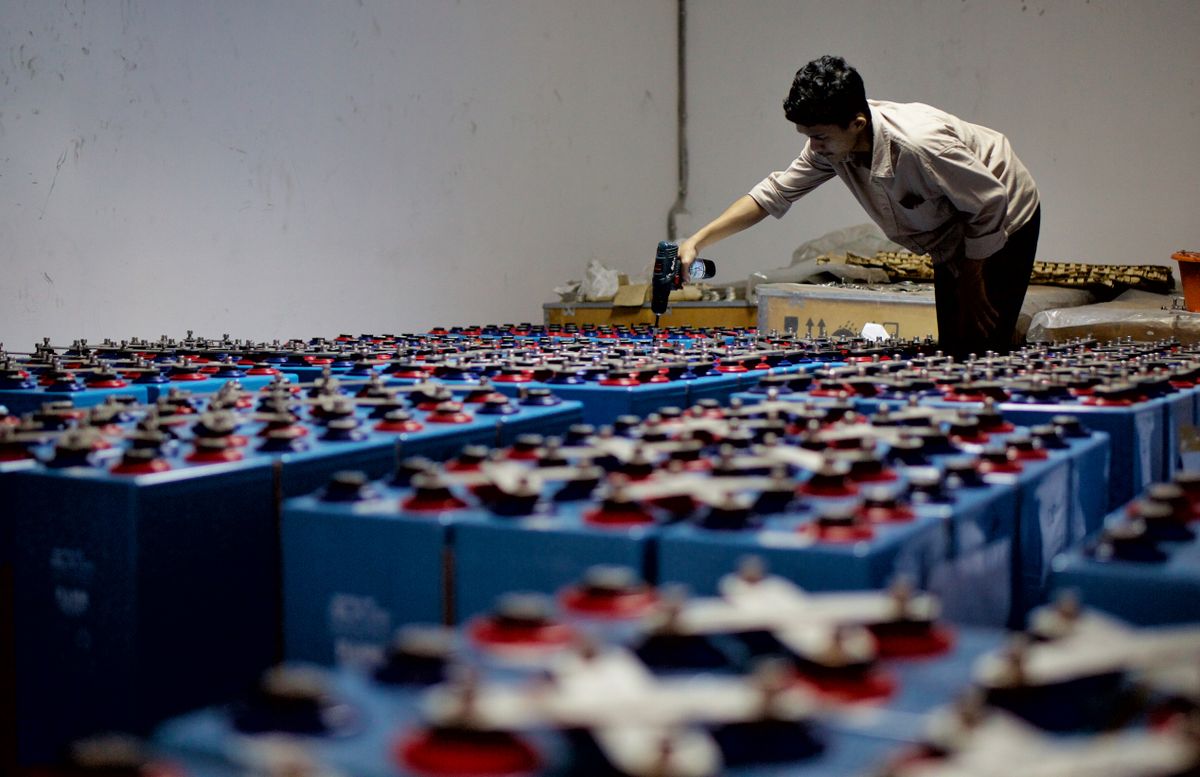
Industry data show well-maintained lead-acid forklift batteries deliver roughly 1,000–1,500 cycles, which often translates to three to five years under daily use. Beyond that point, capacity falls, watering frequency rises, and failure risk increases. Lithium-ion alternatives commonly reach 3,000–5,000 cycles and can remain in service for seven to ten years in moderate applications. When a fleet begins replacing packs on a regular cycle or when load tests show capacity below 70–80 percent of original rating, the economics of continued lead-acid ownership weaken. An upgrade to lithium-ion forklift batteries at this stage aligns capital expenditure with a longer useful life.
Sign 7: Safety, Compliance, and Sustainability Expectations Rise
Acid spills, hydrogen emissions, and heavy manual battery handling create both regulatory and insurance considerations. Sealed lithium packs eliminate acid exposure and off-gassing during normal operation, simplifying OSHA compliance and reducing the need for eyewash stations and specialized flooring in charging areas. Many organizations also face internal or customer-driven goals to lower energy intensity and waste. Fewer battery replacements, higher efficiency, and the absence of acid waste support those objectives without requiring separate capital projects.
Taken together, these indicators signal that the total cost of ownership lithium forklift batteries can deliver better results than continued investment in lead-acid infrastructure. Initial purchase prices remain higher, yet the combination of reduced labor, lower energy use, eliminated spares, and extended life often produces payback within two to four years for multi-shift or high-utilization fleets.
Practical Next Steps Before Upgrading
Evaluate current cycle counts, runtime data, and maintenance logs. Confirm that forklift controllers and chargers can accept a lithium profile or that drop-in solutions with adaptive voltage regulation are available. Model total cost of ownership over five to seven years rather than comparing sticker prices alone. Facilities with cold-storage applications should note that lithium chemistry retains capacity more effectively at low temperatures than lead-acid, which can lose significant runtime below freezing.
7 Signs It’s Time to Upgrade to Lithium-Ion Forklift Batteries therefore serve as a diagnostic checklist rather than a rigid timeline. When two or more signs appear together, the operational and financial case for change strengthens.
الأسئلة الشائعة
How long do lithium-ion forklift batteries typically last? Most quality packs deliver 3,000–5,000 cycles, equating to seven to ten years under single- or double-shift use when properly managed by the battery management system.
Can existing forklifts accept lithium batteries without major modifications? Many modern trucks accept drop-in lithium packs after charger and controller settings are updated. Always verify voltage, connector type, and weight with the equipment manufacturer or a qualified integrator.
Is opportunity charging safe for lithium packs? Yes. Unlike lead-acid batteries, lithium chemistry tolerates partial charges throughout the day without accelerating degradation, provided the battery management system is functioning correctly.
What is the typical payback period? For multi-shift operations, many fleets recover the higher upfront cost within 24–48 months through labor savings, energy efficiency, and avoided battery replacements.
Do lithium batteries require special ventilation? No dedicated battery room ventilation is needed for normal operation because sealed packs do not emit hydrogen gas.
خاتمة
Recognizing the operational, financial, and safety signals outlined above helps fleet managers time their investment wisely. When productivity losses, maintenance burdens, rising energy costs, declining performance, space constraints, aging packs, or compliance goals converge, the case for change becomes clear. 7 Signs It’s Time to Upgrade to Lithium-Ion Forklift Batteries offers a structured way to evaluate readiness and protect long-term competitiveness.
Related Resources
- Calculating Total Cost of Ownership for Material-Handling Batteries
- Best Practices for Opportunity Charging in Multi-Shift Warehouses
- Cold-Storage Performance: Lithium versus Lead-Acid
- OSHA Guidelines on Battery Handling and Hydrogen Ventilation
- Industry Overview of Lithium-Ion Adoption in Material Handling