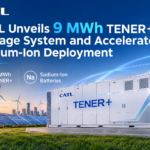
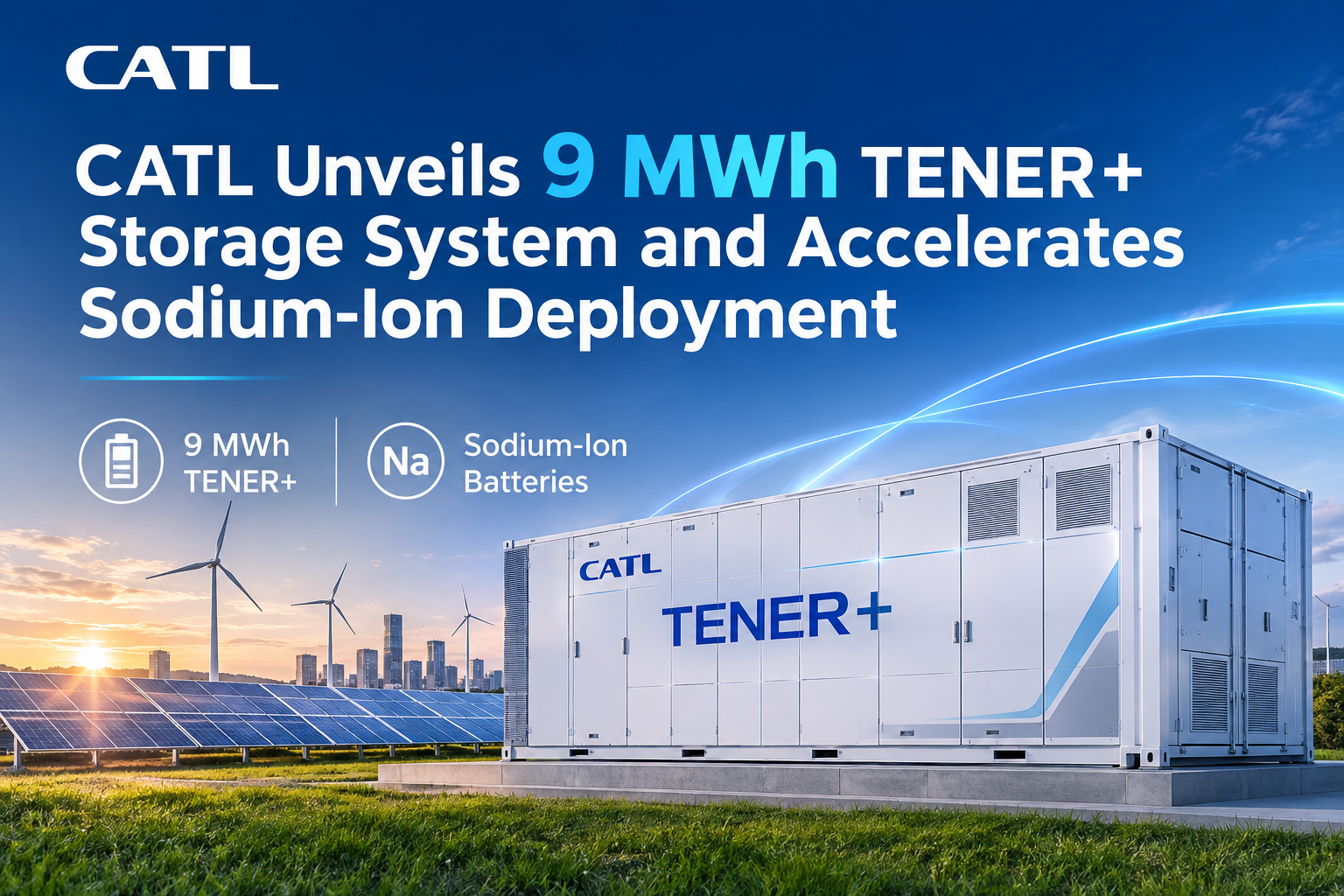
CATL used All Energy Australia 2026 to launch two major energy storage products and sign new partnerships.
The company globally introduced TENER+, a 9 MWh ultra-high-capacity lithium-ion energy storage system. The design reduces the number of containers required by up to 40% and shrinks project footprint by about 12%, addressing land-constraint issues for large-scale projects. Alongside it, CATL showcased TENER Sodium, described as the world’s first mass-produced and field-validated sodium-ion battery energy storage system. It can deliver more than 30 MWh in a modular cabinet architecture, operates in temperatures up to 55°C, and achieves more than 10,000 cycles at 45°C with 95% round-trip efficiency and a lifespan exceeding 20 years.
CATL also signed memoranda of understanding with Hitachi Energy, EPEC Group, and UNSW Sydney to support grid connection and project delivery in Australia.
Separately, CATL and German storage provider Intilion signed an MoU to deploy 3 GWh of sodium-ion energy storage systems in Europe (Germany, Switzerland, and Austria) by 2031. The systems are rated for over 15,000 charge cycles and strong performance in cold climates (down to –20°C). This builds on earlier European sodium-ion deals, including a 5 GWh agreement with Alfen.
Sodium-ion technology is increasingly positioned as a complement to lithium-ion rather than a full replacement—especially attractive for stationary storage in extreme temperature environments where lithium chemistries face challenges.
Samsung SDI Secures Over 60 GWh of ESS Orders and Lands First European LFP EV Deal
Samsung SDI reported strong momentum in energy storage while making its first move into European EV LFP batteries.
On its third-quarter earnings call, the company said it has booked more than 60 GWh of ESS battery orders so far in 2026—enough to keep its U.S. and Ulsan lines running at high utilization through 2028. Management aims to secure a similar volume of additional orders by year-end. The company has already begun mass production of prismatic LFP cells for ESS at its Starplus Energy joint-venture plant in Indiana and plans to open two more lines there.
In a notable diversification step, Samsung SDI also secured its first LFP battery project for electric vehicles in Europe. While details of the customer and volume were not disclosed, the deal marks an expansion beyond its traditional high-nickel NCM focus into the cost-sensitive LFP segment in the European market.
The results reflect a broader industry shift: ESS demand (driven in part by AI data centers) is helping Korean battery makers offset softer EV volumes in certain regions.
Mercedes-Benz Targets Manganese-Rich Cathodes for Up to 30% Range Gain Over LFP
Mercedes-Benz is developing manganese-rich cell chemistries, including LNMO (lithium nickel manganese oxide), which the company says could deliver up to 30% more range compared with current LFP batteries.
The automaker is also extending its 800-volt EV powertrain architecture to the E-Class and S-Class. The move toward manganese-rich cathodes aims to improve energy density and cost competitiveness while reducing reliance on more expensive nickel and cobalt. If successful at scale, such chemistries could help narrow the performance gap between lower-cost LFP packs and higher-energy NCM packs without fully matching the expense of nickel-heavy designs.
This development fits a wider industry trend of exploring alternative cathode materials as manufacturers seek better range-cost trade-offs.
Additional Short Notes
- India sodium-ion pilot: Rajasthan is preparing to test India’s first 250 kW sodium-ion battery energy storage system at the distribution-transformer level, in partnership with Jaipur Vidyut Vitran Nigam and the Global Energy Alliance for People and Planet.
- LG Energy Solution innovation push: LG Energy Solution launched its 2026 Battery Innovation Contest, inviting universities and research institutions worldwide to submit proposals (deadline December 6) aimed at commercializable battery technologies. The company has supported roughly 50 research projects through the program since 2017.
- Korean battery recovery: Industry executives noted early signs of recovery for Korean battery makers, supported by ESS demand from AI data centers and stronger European EV sales, even as their combined share of the global EV battery market (excluding China) has declined.
These stories highlight the parallel growth of energy storage applications, sodium-ion commercialization, and chemistry diversification beyond traditional lithium-ion NCM and LFP routes.
Would you like me to expand any of these into a longer standalone article, combine them into one multi-topic roundup, or find more news on a specific angle (e.g., sodium-ion, ESS, Korean makers, or recycling)?