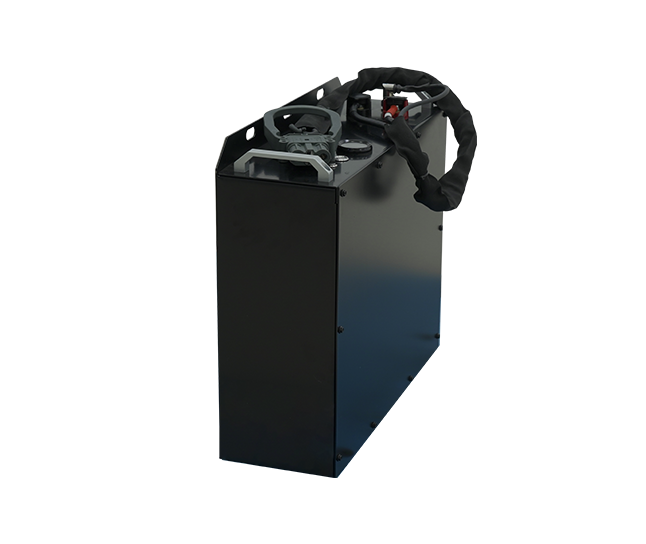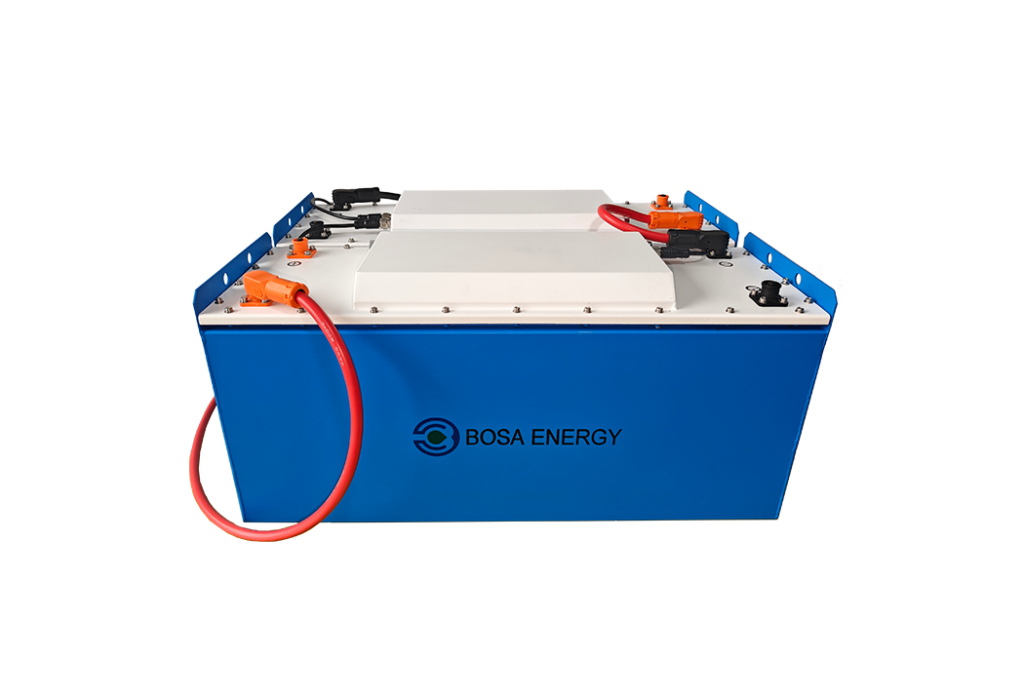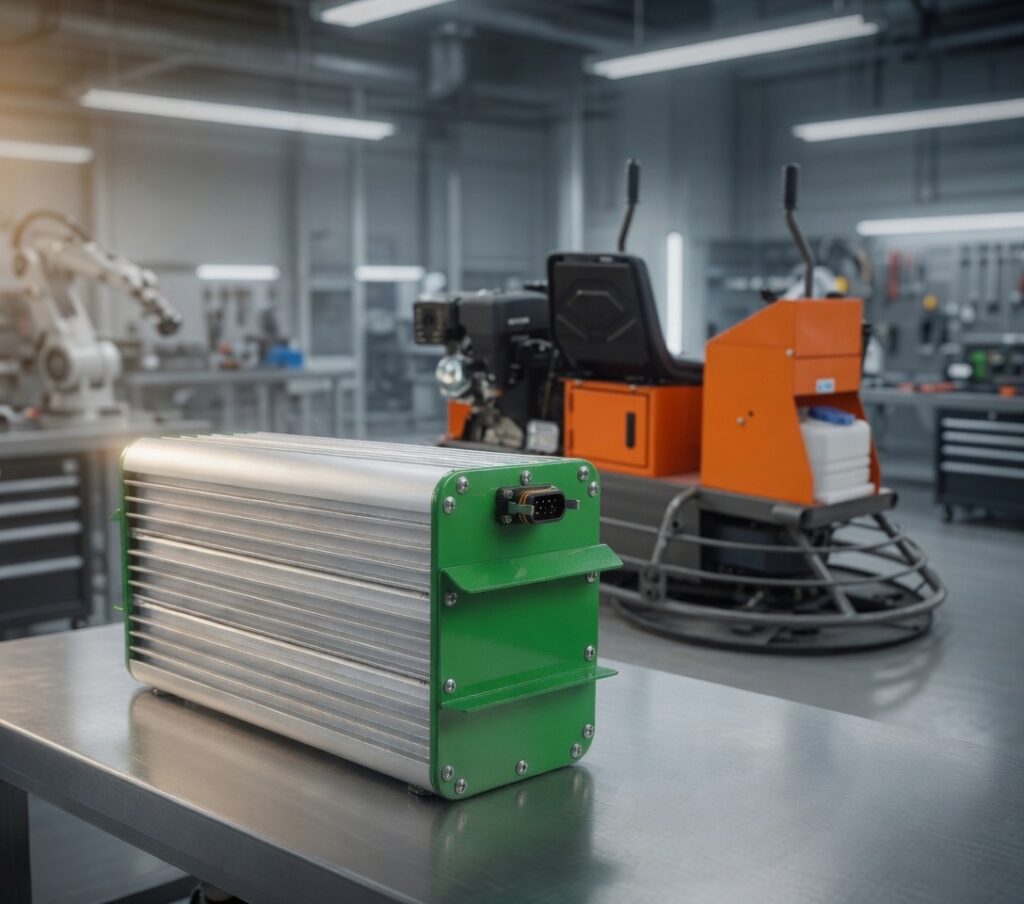

Kilowatt-hour (kWh) ratings quantify the total energy a forklift battery can store and deliver. Unlike ampere-hour (Ah) figures that measure charge, kWh incorporates voltage and therefore enables direct comparison of energy capacity across 24 V, 36 V, 48 V, 80 V, and higher-voltage platforms. Forklift Battery kWh Explained: Understanding Energy Capacity gives facility managers and procurement teams the quantitative framework needed to size batteries correctly, calculate runtime, and evaluate total cost of ownership in 2026 multi-shift operations.
Correct interpretation of kWh capacity prevents mid-shift downtime, avoids unnecessary capital expenditure, and supports the shift from lead-acid to lithium iron phosphate (LiFePO₄ / LFP) systems that now dominate high-utilization fleets.
How to Calculate Forklift Battery Energy Capacity
Nominal energy capacity is calculated with a simple formula:
kWh = (Nominal Voltage × Ampere-hours) ÷ 1,000
Examples:
- 48 V × 600 Ah = 28.8 kWh
- 80 V × 700 Ah = 56 kWh
- 36 V × 750 Ah = 27 kWh
- 24 V × 400 Ah = 9.6 kWh
This calculation applies equally to flooded lead-acid, AGM, and lithium packs. The resulting number is the theoretical energy stored under the manufacturer’s stated test conditions. Real delivered energy is always lower and depends on chemistry, depth of discharge (DoD), discharge rate, temperature, and system efficiency.
Why kWh Matters More Than Ah Alone
Ah ratings cannot be compared across different voltages. A 36 V 1,000 Ah battery and a 48 V 750 Ah battery both store approximately 36 kWh of nominal energy. When evaluating replacement options or mixing voltages within a fleet, convert every offer to kWh first.
Energy capacity also determines:
- Theoretical runtime under a known average power draw (kWh ÷ average kW)
- Daily energy throughput needed for multi-shift duty cycles
- Charger and infrastructure sizing
- Total cost of ownership when electricity rates and cycle life are factored in
For high-throughput warehouses, usable kWh—not nameplate Ah—is the decisive metric.
Typical Forklift Battery kWh Ranges in 2026
| Forklift Class / Application | Common Voltage | Typical Ah Range | Nominal Energy (kWh) | Preferred Chemistry |
|---|---|---|---|---|
| Pallet jack / walkie stacker | 24 V | 200–500 | 4.8–12 | LFP or lead-acid |
| 3-wheel counterbalance | 36 V | 500–850 | 18–30.6 | LFP preferred |
| 4-wheel counterbalance (3–6k lb) | 48 V | 500–800 | 24–38.4 | LFP |
| Reach / order picker | 36–48 V | 600–1,000 | 21.6–48 | LFP |
| Heavy counterbalance / container handler | 80 V | 600–1,000+ | 48–80+ | LFP |
Heavy-duty and multi-shift applications increasingly specify packs in the 25–50 kWh range for standard warehouse trucks and higher for outdoor or high-lift equipment.
Usable Energy: Lead-Acid vs Lithium Iron Phosphate
Nameplate kWh overstates usable energy, especially for lead-acid.
| Metric | Flooded / AGM Lead-Acid | LiFePO₄ (LFP) |
|---|---|---|
| Typical usable DoD | 50 % | 80–95 % |
| Usable energy from 30 kWh pack | ~15 kWh | 24–28.5 kWh |
| Efficiency (charge–discharge) | 70–85 % | 95–98 % |
| Voltage stability under load | Significant sag | Flat until near end of discharge |
| Cycle life at 80 % DoD | 1,000–1,500 | ≥3,500–5,000 |
| Opportunity charging tolerance | Limited (reduces life) | Excellent (15–40 % top-ups) |
A 48 V 600 Ah LFP pack rated at 28.8 kWh routinely delivers more usable energy than a larger lead-acid pack of equal or higher nameplate capacity because of deeper allowable DoD and higher round-trip efficiency. This is one of the primary drivers behind the rapid conversion of multi-shift fleets documented in 2025–2026 industry analyses.
Factors That Reduce Delivered kWh
- Depth of discharge limits — Lead-acid is routinely restricted to 50 % to protect cycle life; LFP can safely use 80–95 %.
- Discharge rate (C-rate) and Peukert effect — Lead-acid loses substantial capacity at high currents common in lifting cycles. LFP retains >95 % of rated capacity even at 1C continuous.
- Temperature — Capacity falls in cold environments. Quality LFP packs retain significantly more usable energy below 0 °C than lead-acid.
- System losses — Contactors, cables, motor controllers, and regenerative braking efficiency reduce net energy available at the wheels and mast.
- Aging and state of health — Both chemistries lose capacity over time; LFP degrades far more slowly when kept above 20–30 % SOC.
Opportunity charging (adding 15–40 % capacity during breaks) further increases effective daily energy throughput without requiring a full discharge cycle, provided the battery management system (BMS) and charger support partial charges.
How to Size Energy Capacity Correctly
- Measure or estimate average power draw (kW) over a representative shift.
- Multiply by required continuous runtime between charging opportunities.
- Apply usable DoD and system efficiency factors.
- Add a 15–25 % buffer for aging, temperature extremes, and load spikes.
- Convert the resulting kWh requirement back to Ah at the forklift’s nominal voltage if needed for procurement.
- Verify continuous and peak current ratings, physical dimensions, minimum weight (counterweight), and connector compatibility.
Example: A 48 V truck averaging 5 kW for 6 hours needs roughly 30 kWh of usable energy. An LFP pack rated ~32–35 kWh nominal (accounting for 90 % usable and efficiency) satisfies the requirement while allowing opportunity charging to extend multi-shift capability.
Safety Standards and Certification
Industrial forklift lithium batteries should carry:
- UL 2580 — Batteries for use in electric vehicles (widely applied to motive industrial packs)
- IEC 62619 — Safety requirements for secondary lithium cells and batteries for industrial applications (explicitly covers forklift trucks)
These standards address electrical, mechanical, and thermal abuse conditions relevant to warehouse environments. BMS functional safety, cell-level monitoring, and thermal management are critical elements of compliant designs.
Selection Checklist for Forklift Battery kWh Capacity
- Convert all candidate batteries to kWh at the same nominal voltage before comparison.
- Demand usable energy figures at realistic DoD and C-rates, not only nameplate capacity.
- Prefer LFP chemistry with published cycle life ≥3,500 cycles at 80 % DoD.
- Confirm UL 2580 and/or IEC 62619 certification.
- Verify continuous discharge current, peak current, and BMS protection limits.
- Ensure the pack supports opportunity charging and maintains recommended SOC windows (typically keep above 20–30 %).
- Match physical dimensions, connector type, and minimum weight requirements of the forklift.
- Calculate 5–10 year total cost of ownership including electricity, maintenance, and replacement frequency.
Frequently Asked Questions
What is the difference between Ah and kWh for forklift batteries?
Ah measures charge capacity. kWh measures energy capacity and incorporates voltage, making it the correct metric for comparing packs of different voltages and for calculating runtime against a known power draw.
How much usable energy does a 28.8 kWh forklift battery actually deliver?
A lead-acid pack of that rating typically delivers ~14–15 kWh usable at 50 % DoD. An LFP pack of the same nameplate rating commonly delivers 24–27 kWh usable at 80–95 % DoD.
Can I replace a lead-acid battery with a lower-Ah lithium pack of equal kWh?
Yes, and often with a substantially lower Ah rating because lithium allows deeper usable discharge and higher efficiency. Always confirm voltage compatibility, weight, dimensions, and controller/charger requirements.
Does opportunity charging change required kWh capacity?
Yes. Short top-ups of 15–40 % capacity during breaks reduce the battery size needed for continuous multi-shift operation, provided the BMS and charger are designed for partial-state-of-charge operation.
What standards should industrial forklift lithium batteries meet?
UL 2580 and IEC 62619 are the primary safety standards referenced for motive industrial lithium batteries in 2026.
Decision Framework
When evaluating forklift battery energy capacity, prioritize:
- Usable kWh under real duty-cycle DoD and temperature conditions
- Ability to accept opportunity charging without accelerated degradation
- Certified safety (UL 2580 / IEC 62619) and robust BMS
- Cycle life and residual capacity after 5–7 years of multi-shift use
- Total cost of ownership rather than lowest first cost
Forklift Battery kWh Explained: Understanding Energy Capacity shows that selecting on nameplate Ah alone is incomplete. Converting every option to usable kilowatt-hours, applying realistic DoD and efficiency factors, and verifying certification produces batteries that deliver reliable runtime, lower operating cost, and longer service life. This Forklift Battery kWh Explained: Understanding Energy Capacity framework, applied consistently, helps fleets avoid both under-sizing and over-investment. In 2026 industrial fleets, LFP packs sized on usable kWh consistently outperform traditional lead-acid solutions for any operation that runs more than a single shift.
Authoritative References
- IEEE Spectrum – “A Better Way to Swap Lead-Acid With Lithium Batteries” (Willie Jones): https://spectrum.ieee.org/lithium-batteries-lead-acid-ev
- IEC 62619:2022 – Secondary cells and batteries containing alkaline or other non-acid electrolytes – Safety requirements for secondary lithium cells and batteries for use in industrial applications (covers forklift trucks): https://webstore.iec.ch/publication/67755
- MDPI Applied Sciences – “Energy Consumption Analysis and Thermal Equilibrium Research of High-Voltage Lithium Battery Electric Forklifts” (2025): https://www.mdpi.com/2076-3417/15/18/9854
- Batteries International – “The rise and rise of the LFP powered forklift” (2026 market analysis): https://www.batteriesinternational.com/news/the-rise-and-rise-of-the-lfp-powered-forklift/
- Redway Power – Practical calculation guidance and usable-energy comparisons for forklift batteries: https://www.redwaypower.com/how-to-calculate-kwh-of-a-forklift-battery/