
In today’s push toward energy independence and renewable integration, more engineers, businesses, and DIY enthusiasts are exploring custom energy storage systems (ESS) built around standardized battery modules. Among the most versatile options available is the VDA355 module — a compact, automotive-grade lithium-ion building block originally developed under the German Association of the Automotive Industry (VDA) standard.
This in-depth guide explains exactly how to plan, source, assemble, and safely commission a high-performance ESS using VDA355 modules. Whether you are designing a residential solar backup, commercial peak-shaving system, or off-grid installation, you will find practical, technically accurate steps grounded in real-world engineering practices.
What Is a VDA355 Battery Module?
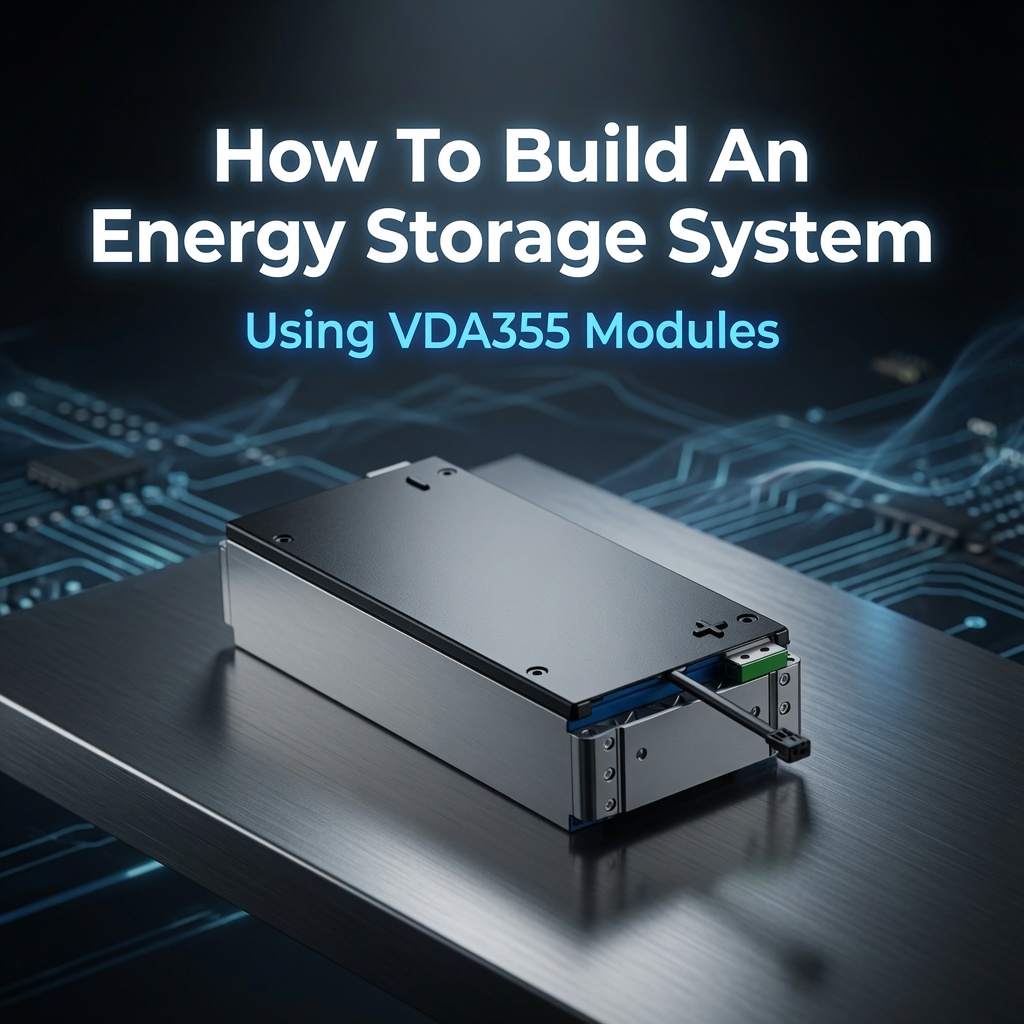
The VDA355 standard defines a prismatic module with nominal dimensions of 355 mm (length) × 151–152 mm (width) × 108–108.5 mm (height) and a typical weight of 11–12.5 kg. These modules were created to enable interchangeability across vehicle platforms and have since become popular in stationary storage because of their compact footprint, high energy density, and proven automotive reliability.
Typical configurations include:
| Configuration | Química | Voltaje nominal | Capacidad | Energy (approx.) | Common Use Case |
|---|---|---|---|---|---|
| 1P4S | NCM | ~14.8 V | 153 Ah | 2.26 kWh | High-density packs |
| 1P4S | LFP | 12.8 V | 135 Ah | 1.73 kWh | Safer stationary storage |
| 1P6S | NCM | ~22.2 V | 102 Ah | 2.26 kWh | Higher voltage strings |
| 3P4S | NCM | ~14.7 V | 174 Ah | 2.55 kWh | Higher current capability |
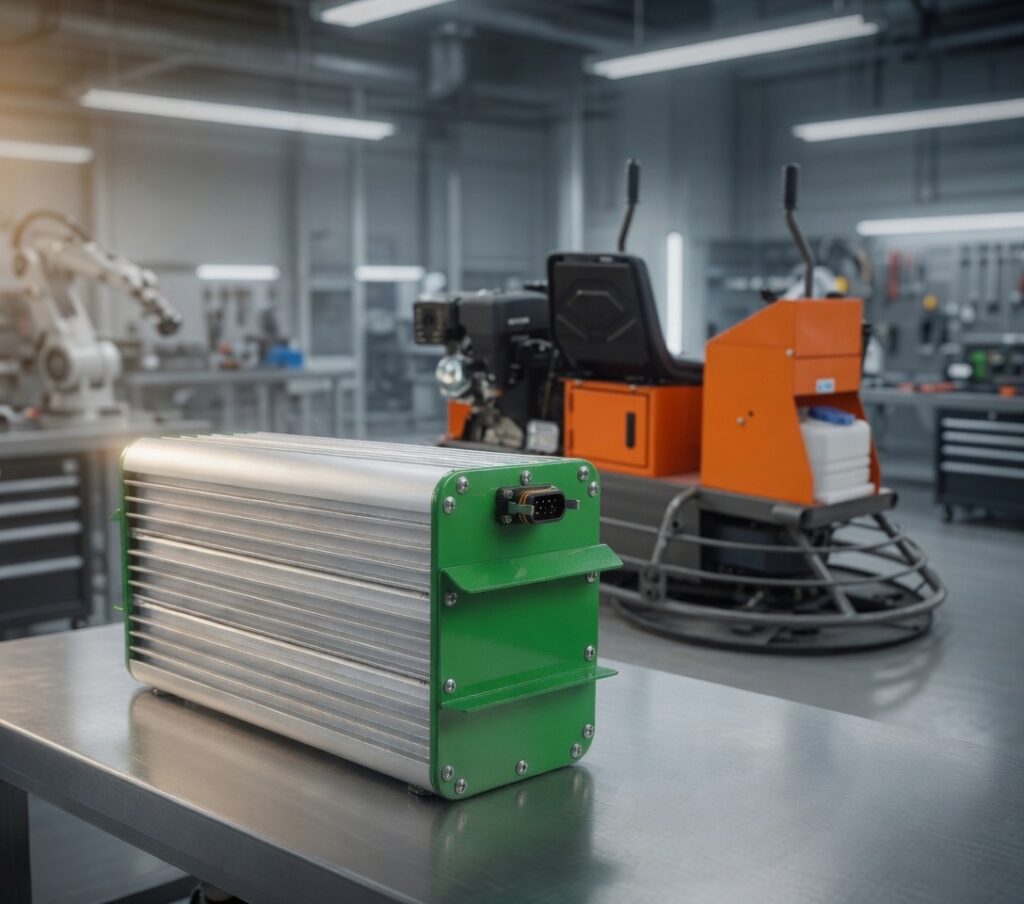
Most VDA355 modules feature aluminum housings, integrated busbars, and temperature sensors but do not include a full Battery Management System (BMS). An external professional-grade BMS is almost always required.
Why VDA355 Modules Excel in Energy Storage Systems
Key advantages that make VDA355 modules attractive for ESS projects:
- Standardization & Modularity — Interchangeable across suppliers; easy to scale or replace individual modules without redesigning the entire pack.
- High Energy Density — More kWh in less space compared with many cylindrical or pouch alternatives.
- Second-Life Potential — Repurposed modules from electric vehicles offer excellent value when properly tested and integrated.
- Proven Durability — Automotive-grade vibration, thermal, and safety testing.
- Cost Efficiency — Competitive pricing, especially in volume or secondary-market purchases.
Important chemistry note for stationary use: While many VDA355 modules use NCM chemistry (higher energy density), LFP variants are strongly preferred for home and commercial ESS. LFP delivers superior thermal stability, 3,000–6,000+ cycle life, and significantly lower fire risk — critical factors for long-term stationary installations.
Step-by-Step Guide: Building Your VDA355 Energy Storage System
Step 1: Define System Requirements
Calculate your daily energy consumption (kWh), peak power demand (kW), desired autonomy (hours or days), and solar input (if hybrid). Example target: 15–20 kWh usable storage at 48 V nominal with 5–8 kW continuous power capability.
Step 2: Source Modules Responsibly
- New modules: Purchase from reputable manufacturers (Bosa Energy, CALB, Sunwoda, etc.) with full datasheets and traceability.
- Secondary-market modules: Common on industrial auction platforms. Always perform incoming inspection: capacity test, internal resistance, visual check for damage, and cycle testing if possible.
- Verify connector types and communication protocols before purchase.
Step 3: Design Electrical Configuration
Determine series/parallel arrangement based on target system voltage and capacity.
Example for a 51.2 V LFP system: Four 12.8 V / 135 Ah LFP VDA355 modules in series = 51.2 V nominal, ~135 Ah string. Add parallel strings for higher capacity while keeping voltage matched.
Respect module continuous charge/discharge ratings (typically 0.5C–1C depending on model) and leave headroom for inverter efficiency and future expansion.
Step 4: Select and Integrate a High-Quality BMS
This is the single most important safety and performance component.
Essential BMS features:
- Active balancing (≥200 mA preferred)
- Full protection suite (over/under voltage, over current, over/under temperature, short circuit)
- CAN bus or RS485 communication compatible with your inverter
- Cell-level voltage and temperature monitoring
- Pre-charge circuit and contactor control
- Data logging and remote monitoring capability
Step 5: Build the Mechanical & Thermal Infrastructure
- Use a sturdy server-rack-style cabinet or custom aluminum/steel enclosure (IP20 minimum for indoor use).
- Ensure adequate airflow or prepare channels for liquid cooling plates if high C-rates or NCM chemistry is used.
- Mount modules with proper spacing and vibration isolation.
- Route heavy busbars or cables with correct cross-section and secure strain relief.
Step 6: Complete Electrical Integration & Safety Layers
- Install string-level and module-level fusing.
- Add pre-charge resistor and main contactor controlled by the BMS.
- Implement insulation monitoring and proper grounding.
- Integrate fire detection/suppression (aerosol or clean-agent systems recommended for indoor NCM installations).
- Connect smoke/heat sensors that can trigger BMS shutdown and external alarms.
Step 7: Connect to Inverter, Charger & Solar (Hybrid Systems)
Choose a hybrid inverter with proven lithium CAN protocol support. Configure charge voltages, current limits, and SOC windows exactly according to the module manufacturer’s datasheet. Perform low-power commissioning before full load testing.
Step 8: Testing, Commissioning & Documentation
- Insulation resistance and continuity checks
- BMS communication verification with inverter
- Controlled charge/discharge cycles at reduced C-rate
- Full system functional test under realistic loads
- Create detailed documentation for insurance, warranty, and future maintenance
Safety First — Non-Negotiable Requirements
Lithium-ion systems store significant energy. Never treat them as simple “drop-in” batteries.
Critical safety practices:
- High-voltage systems (>48 V) or installations above 5–10 kWh should be designed or reviewed by licensed professionals.
- Prefer LFP chemistry for any occupied-space installation.
- Install in well-ventilated areas with proper fire separation.
- Maintain clear emergency procedures and appropriate fire suppression equipment.
- Comply with local electrical codes, permitting, and insurance requirements.
Cost & Return on Investment Considerations
VDA355-based systems can achieve attractive levelized cost of storage, especially when leveraging modularity for future upgrades or partial replacements. Factor in:
- Module cost per kWh
- BMS, enclosure, and balance-of-system components (often 30–50% of total)
- Installation and certification
- Expected cycle life and round-trip efficiency
LFP VDA355 configurations typically deliver the lowest long-term ownership cost through reduced maintenance and replacement frequency compared with legacy lead-acid or less stable chemistries.
Conclusión
Building an energy storage system with VDA355 modules combines automotive-grade standardization with modern renewable energy flexibility. By following a structured engineering approach — careful planning, quality sourcing, professional-grade BMS integration, robust thermal and safety design, and thorough commissioning — you can create a reliable, scalable, and safe power storage solution.
For organizations seeking proven VDA355 modules or complete custom ESS solutions backed by automotive expertise, manufacturers such as Bosa Energy offer both NCM and LFP options along with technical support for system integration.
Start with a clear energy audit, consult certified professionals for complex or high-voltage projects, and you will be well on your way to a high-performance custom energy storage system.
Preguntas frecuentes
Can I use second-life VDA355 modules from EVs for home solar storage? Yes, many successful projects do so, but rigorous testing, addition of a professional BMS, and preference for LFP chemistry are essential. Professional installation is strongly recommended.
What is the biggest risk when building with these modules? Inadequate BMS integration or thermal management, especially with NCM chemistry. Always prioritize safety systems and proven components.
How many modules do I need for a typical home backup system? A common residential target is 10–30 kWh usable. This usually requires 6–20+ VDA355 modules depending on configuration and chemistry.
Do VDA355 modules support fast charging? Most support moderate C-rates suitable for solar ESS. Follow manufacturer limits (often 0.5C continuous) to maximize cycle life.
Is liquid cooling required? For low-to-moderate power stationary use with LFP modules, well-designed passive or forced-air cooling is often sufficient. High-power or NCM systems benefit from liquid cooling plates.
Ready to design your system? Begin with accurate load profiling and reach out to qualified battery integrators or manufacturers for module datasheets and application engineering support. A well-built VDA355-based ESS can deliver years of dependable, efficient energy storage.