
Looking for the best battery modules for Nissan Leaf in 2026? Whether your 2011–2017 model is suffering from degradation or you want to upgrade range on a later 40 kWh or 62 kWh Leaf, choosing the right battery modules can restore performance, extend vehicle life, and deliver significant range gains — often at a fraction of the cost of a new EV.
This comprehensive guide draws on real-world data from EV forums, specialist rebuilders, aftermarket manufacturers, and owner experiences to help you make an informed decision.
Why Nissan Leaf Owners Seek Battery Module Replacements or Upgrades
Nissan Leaf batteries are known for gradual capacity loss, especially in hot climates or after 8–12 years of use. Many owners report dropping below 70% State of Health (SoH), triggering reduced range and “turtle mode” warnings.
Replacing individual weak modules or upgrading the entire pack is often far more economical than buying a newer EV. Popular reasons include:
- Restoring 80–100+ mile range on older 24 kWh models
- Upgrading to 40 kWh or 62 kWh+ capacity for 150–240+ miles of real-world range
- Avoiding full dealership replacement costs ($8,000–$16,000+)
- Keeping a beloved, low-mileage Leaf on the road longer
Understanding Nissan Leaf Battery Module Specifications
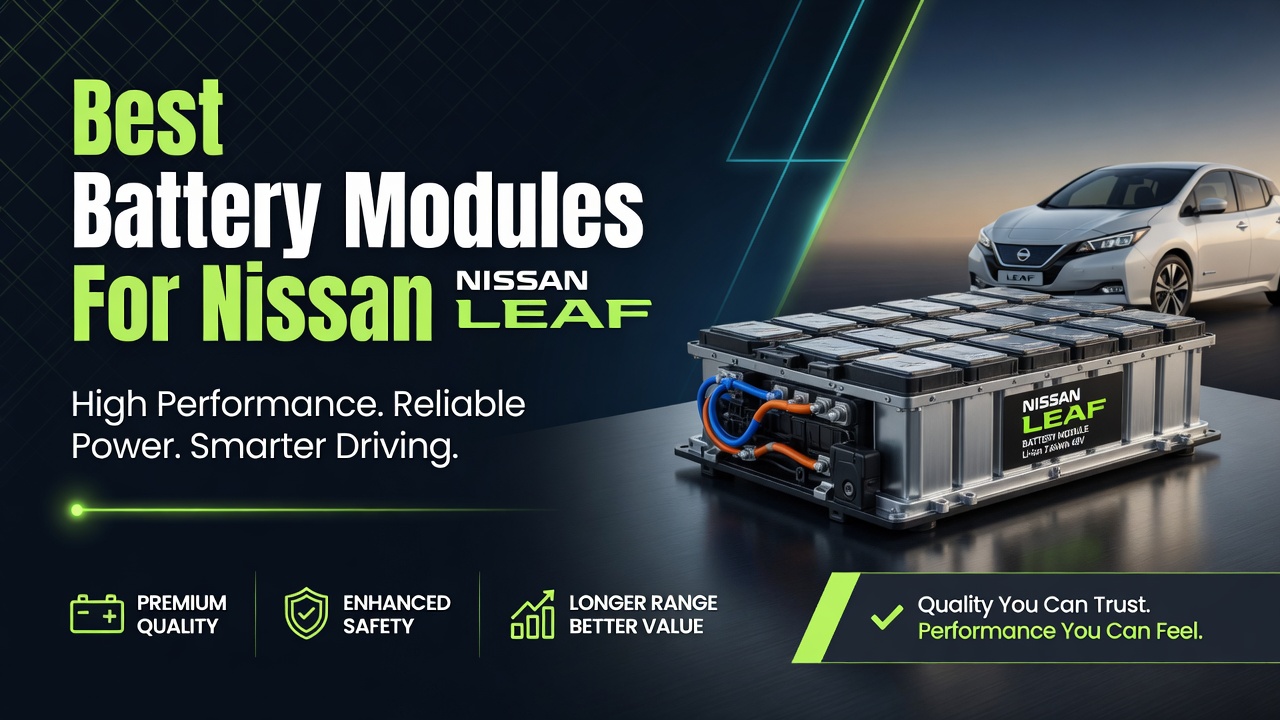
All Nissan Leaf battery packs use modular construction with pouch cells. Key specs include:
- Module configuration: 4 cells per module in a 2s2p arrangement (two series pairs in parallel)
- Nominal module voltage: 7.4–7.6 V
- Gen 1/Gen 2 (24 kWh packs, 2011–2017): ~60–66 Ah modules, ~500 Wh each. 48 modules per pack
- Later 40 kWh and 62 kWh packs: Higher-capacity cells or modified module designs with more parallel groups for increased energy density
- Química: Early models used LMO (lithium manganese oxide); later and aftermarket options often use higher-energy NMC
Important: Modules must be closely matched in capacity and SoH. Mixing old and new modules can cause balancing issues and reduced performance.
Best Battery Module Options for Nissan Leaf in 2026
Here are the top choices ranked by reliability, value, and upgrade potential:
1. Refurbished OEM Modules from Specialists (Best Overall for Most Owners)
Companies like Greentec Auto specialize in rebuilding packs using tested, high-SoH OEM modules.
- Options: 24 kWh rebuilds or full upgrades to 40 kWh / 62 kWh using original Nissan modules
- Pricing (approximate, 2026): $4,000–$6,500 for 24–40 kWh packs; $10,000–$14,500 for 62 kWh upgrades
- Garantía: 24–36 months workmanship + range warranties on many packs
- Pros: Proven compatibility, strong support, mobile installation available in many areas, CAN bridge options for older cars
- Lo mejor para: Owners wanting reliable, OEM-like performance without aftermarket risks
2. Aftermarket New NMC Modules (Best for Maximum Range Upgrade)
Chinese manufacturers such as VIVNE y CNS Battery offer brand-new high-capacity modules designed as drop-in upgrades.
- Capacities: 40 kWh, 50 kWh, 62 kWh, even 68 kWh kits
- Características: Often include new BMS compatibility, improved thermal performance, and plug-and-play wiring harnesses
- Pros: Dramatic range increases (some owners report doubling original range), modern cell chemistry, warranties (typically 2 years / 80,000 km)
- Cons: Higher upfront cost; ensure seller provides proper Leaf-specific firmware/CAN compatibility
3. Used Salvage Modules (Budget Option – Use with Caution)
Available on eBay, salvage yards, and specialist sites. Prices per module often range $50–$500 depending on SoH and generation.
Recommendation: Only buy from sellers who provide LeafSpy SoH/Ah readings and capacity test data. Always match modules closely.
Module Replacement vs Full Pack Upgrade: Which Is Best?
| Factor | Individual Module Replacement | Full Pack Upgrade / Rebuild |
|---|---|---|
| Best when | Only 1–3 modules are weak | Multiple modules degraded or seeking more range |
| Cost | Lower per module + labor | Higher but better long-term value |
| Range gain | Modest | Significant (often 50–100%+) |
| Complexity | High (balancing, disassembly) | Simpler with specialist support |
| Longevity | Limited (other modules still aging) | Much better |
| Recommendation | Rarely ideal | Usually the smarter choice |
Most experts and owners on MyNissanLeaf and Reddit recommend full pack upgrades over piecemeal repairs for better results and peace of mind.
Real-World Results and Owner Experiences
Owners regularly report impressive gains:
- 24 kWh → 40 kWh upgrades: 80–130+ mile real-world range
- 40 kWh → 62 kWh upgrades: 180–240+ mile range possible
- YouTube installs (2025) using VIVNE modules have shown doubled range with relatively straightforward module swaps
Many use LeafSpy Pro before and after to verify SoH improvements.
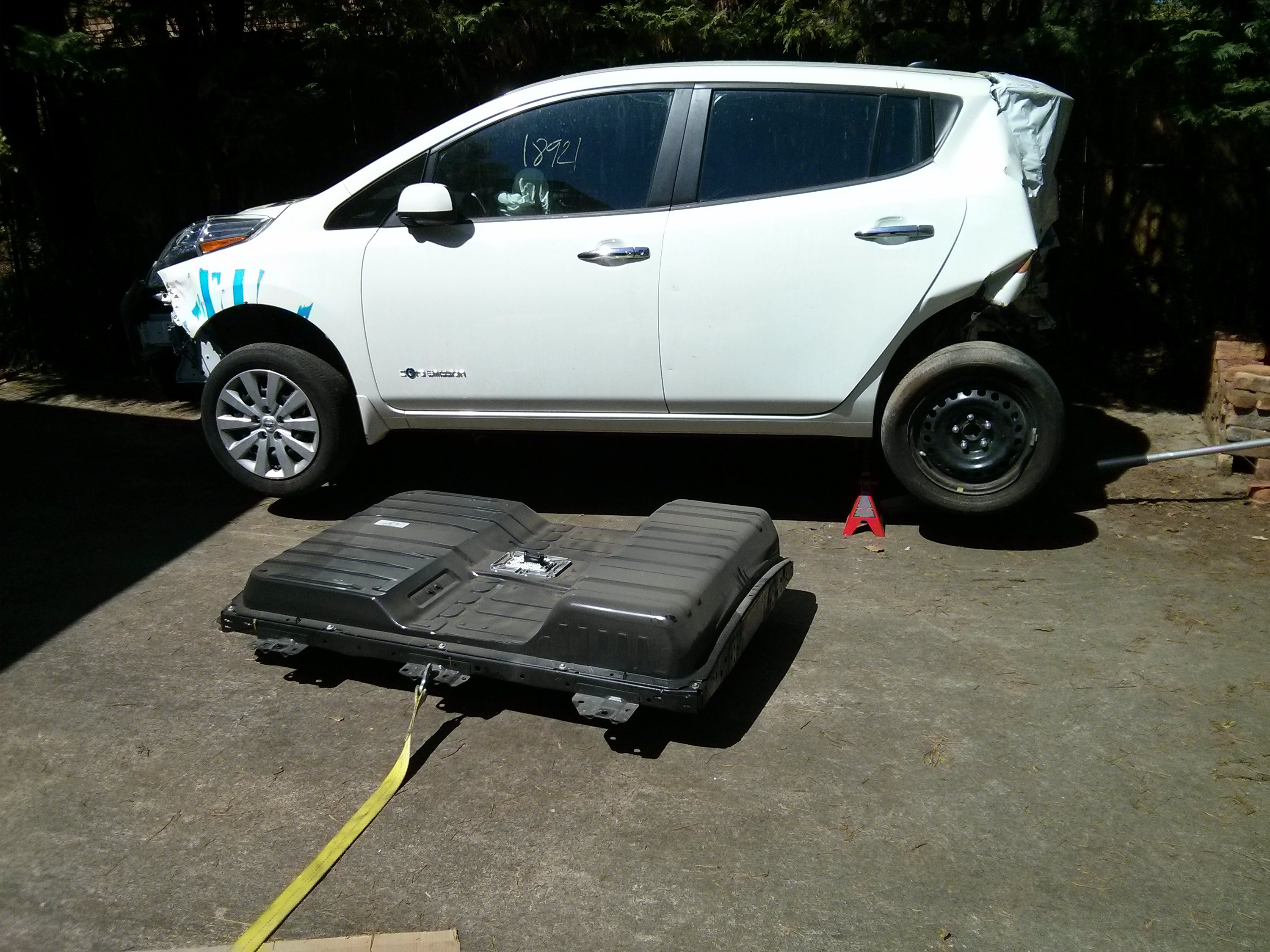
How to drop a Nissan Leaf battery pack (without an auto lift) | Jay’s Technical Talk
Cost Breakdown and Return on Investment (2026)
- Individual module: $50–$500 + labor ($1,000–$2,500 per job)
- Full 24 kWh rebuild: $4,000–$6,000 installed
- 40 kWh upgrade: $6,500–$9,000 installed
- 62 kWh upgrade: $10,000–$15,000+ installed
ROI tip: If your Leaf is otherwise in excellent condition with low mileage, a quality upgrade often costs less than a comparable used EV and keeps your car for many more years.
Critical Safety and Compatibility Considerations
High-voltage battery work is dangerous. Always:
- Use a qualified EV technician or specialist shop
- Install a CAN bridge (required for most 2011–2012 models when using newer batteries)
- Verify mechanical fit, high-voltage connectors, and cooling system compatibility
- Update or flash the car’s computer if needed
- Never mix chemistries or significantly mismatched capacities without professional BMS integration
Warranty note: Aftermarket upgrades may affect remaining factory warranty (most Leafs are now out of warranty anyway).
How to Choose the Best Battery Modules for Your Nissan Leaf
- Check your model year — 2011–2012 often need adapters + CAN bridge; 2013+ are usually easier
- Diagnose first — Use LeafSpy to identify weak modules
- Define your goal — Repair only or upgrade range?
- Budget and warranty — Refurbished OEM for reliability; aftermarket for max range
- Work with reputable suppliers — Greentec Auto for rebuilt OEM; VIVNE/CNS-style specialists for new modules
Final Recommendations
For most Nissan Leaf owners in 2026, the best battery modules come from established rebuilders like Greentec Auto or proven aftermarket upgrade kits that maintain OEM compatibility while delivering meaningful range improvements.
Piecemeal module swaps make sense only in rare cases with very few degraded modules. In the majority of situations, a quality full-pack rebuild or upgrade provides superior value, performance, and longevity.
Ready to revive your Nissan Leaf? Drop your model year, current SoH (from LeafSpy), and target range in the comments — or reach out to a specialist for a personalized quote. With the right battery modules, your Leaf can easily deliver many more years of efficient, enjoyable driving.
This guide is based on publicly available data from manufacturer sites, EV enthusiast communities, and real-world installations as of mid-2026. Always consult qualified professionals for high-voltage work and verify current pricing/compatibility for your specific vehicle.
Keywords: best battery modules for Nissan Leaf, Nissan Leaf battery replacement, Nissan Leaf battery upgrade 2026, 24kWh to 40kWh Leaf conversion, Leaf battery module specs.