
From Lead-Acid Constraints to Lithium Capability
Lead-acid batteries have powered electric forklifts for decades, yet they impose clear limits. A typical flooded lead-acid unit requires roughly eight hours of charging followed by an equal cooling period. Power output falls as the state of charge drops, so lift speeds and acceleration decline late in a shift. Multi-shift sites must keep spare batteries on hand, dedicate floor space to a ventilated charging room, and assign labor to watering, equalizing, and terminal cleaning. These steps add cost and interrupt work.
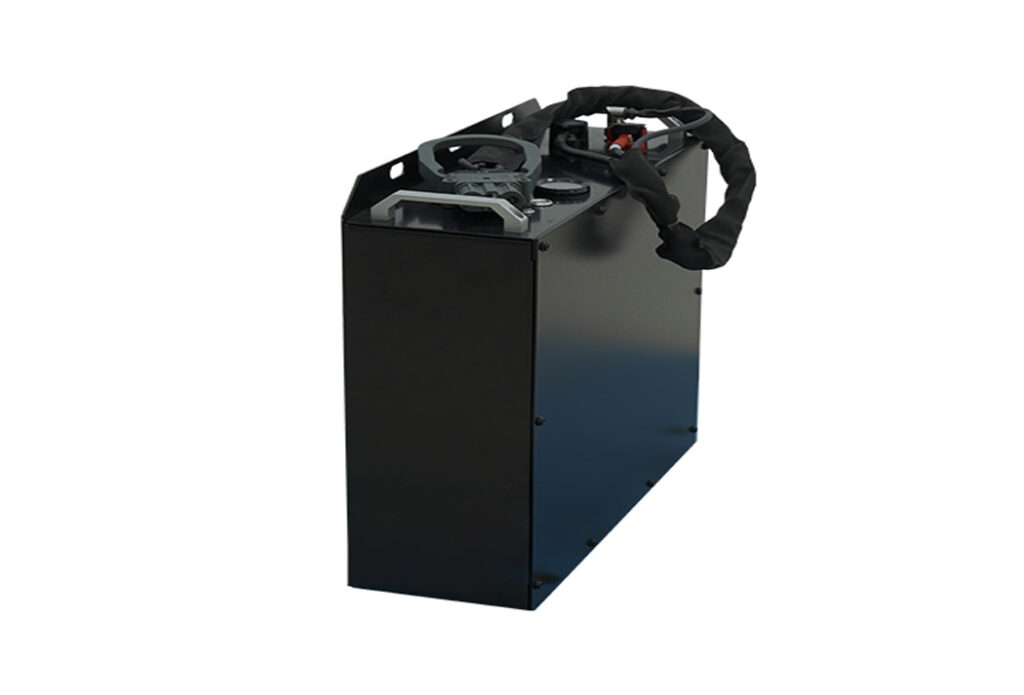
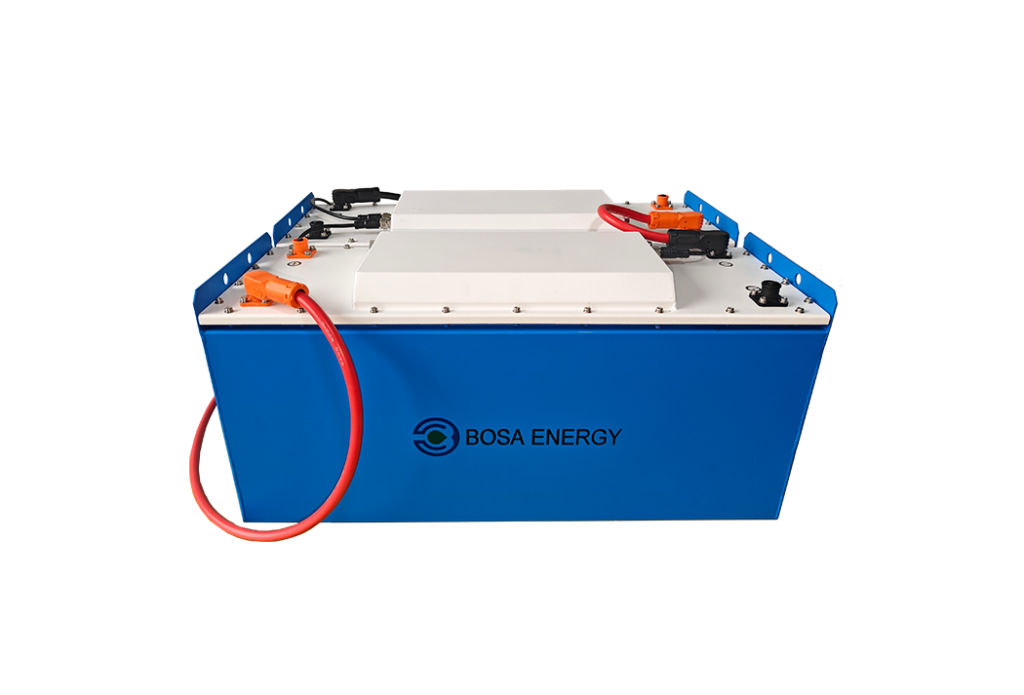
Lithium systems reverse most of those constraints. A modern lithium forklift battery reaches 80 percent charge in one to two hours and accepts brief top-ups without measurable life penalty. Because the battery stays in the truck, operators avoid the physical handling of heavy packs and the associated injury risk. Voltage remains nearly flat until the pack is nearly depleted, so lift and travel performance stays consistent. Industry studies, including work published by The Raymond Corporation, note productivity gains near 17 percent when fleets eliminate the performance drop and the downtime of battery changes.
Core Performance Advantages
El lithium forklift battery advantages that drive adoption fall into four practical categories: charging speed, energy efficiency, service life, and maintenance. Full charges finish in one to two hours instead of eight or more. Opportunity charging during breaks or shift changes keeps a single pack supporting continuous operation. Round-trip efficiency commonly exceeds 95 percent, compared with roughly 70–80 percent for lead-acid, so less electricity is lost as heat. Cycle life typically reaches 3,000–5,000 cycles versus 1,200–1,500 for conventional flooded batteries, translating to eight to twelve years of service in many warehouses instead of three to five.
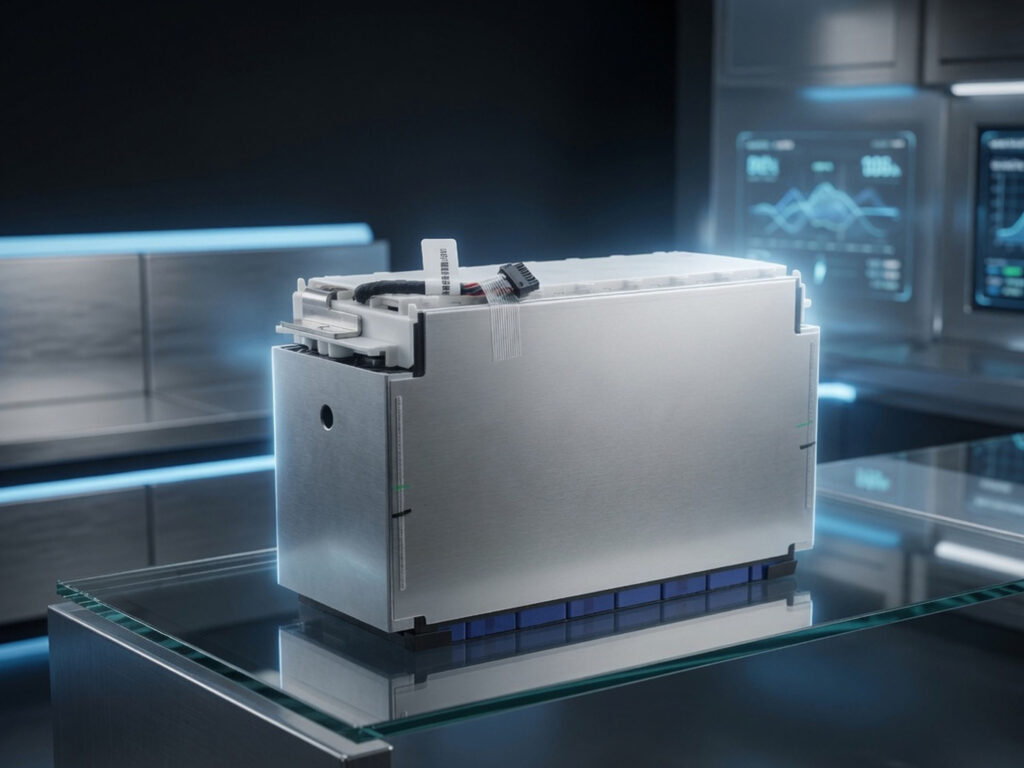
Safety and facility requirements improve as well. Sealed lithium packs eliminate acid spills and hydrogen off-gassing, removing the need for specialized ventilation and spill-response protocols. An integrated battery management system monitors cell temperature, voltage, and state of charge in real time and can share data with fleet telematics. Cold-storage operations benefit particularly because lithium retains usable capacity at low temperatures where lead-acid output falls sharply.
Total Cost of Ownership and Return on Investment
Purchase price remains the most visible difference. Lithium packs commonly cost two to three times more than equivalent lead-acid units. Yet the lithium forklift battery total cost of ownership calculation frequently favors lithium once labor, energy, infrastructure, and replacements are included. Sites that run two or three shifts no longer need a second or third battery per truck, nor the charging equipment and floor space those extras occupy. Maintenance labor for watering and cleaning drops near zero. Energy consumption falls because of higher charge efficiency. Replacement cycles lengthen, so capital outlays for new batteries become less frequent.
Published analyses from equipment manufacturers and independent operators show breakeven periods between ten and thirty-six months for high-utilization fleets, with lifetime returns sometimes reported in the range of several hundred percent. A manufacturing plant that converted twenty trucks cited annual savings of tens of thousands of dollars from reduced energy and labor alone. Distribution centers have reclaimed hundreds of square feet previously reserved for battery rooms and redeployed that space for inventory. For single-shift, low-hour operations the payback can be slower, which is why careful modeling of actual shifts, electricity rates, and labor costs remains essential before conversion.
Operational Flexibility and Workforce Impact
Opportunity charging lithium forklift batteries changes daily routines. Operators plug in during lunch or brief idle periods and resume work with additional range. The result is higher equipment availability without expanding the fleet size. Because one battery serves continuous duty, the practice of rotating packs disappears, freeing staff for value-adding tasks. Consistent voltage also reduces the compensatory slowdowns that operators adopt when lead-acid packs begin to fade late in a shift.
Facilities gain simpler layouts. Chargers can be placed near work areas rather than confined to a dedicated, ventilated room. The absence of acid handling lowers training requirements and reduces the chance of corrosive damage to floors or equipment. Over multi-year horizons these changes compound: less unplanned downtime, fewer spare-part inventories, and more predictable capacity planning.
Environmental and Compliance Considerations
Lithium packs support corporate sustainability targets. Higher efficiency lowers electricity use and associated emissions. The elimination of lead and sulfuric acid reduces hazardous-material handling and disposal obligations. Many packs are designed for high recyclability, and the longer service interval means fewer batteries enter the waste stream. Cold-chain and food-grade warehouses appreciate the absence of acid fumes and the reduced risk of product contamination. While manufacturing lithium cells carries its own environmental footprint, the operational savings over a decade of service typically outweigh the difference for high-utilization fleets.
Implementation Considerations
Successful conversion begins with a usage audit. Track amp-hour consumption per hour of operation, number of shifts, and current battery-related labor. Match charger output to the desired opportunity-charge window. Verify that the forklift’s existing connectors and control systems accept the lithium pack or budget for adapter work. Most suppliers offer drop-in replacements for common voltages (24 V, 36 V, 48 V) together with compatible high-frequency chargers. Pilot one or two trucks, measure actual cycle counts and energy use, then scale. Training is minimal because daily operation changes little once operators understand the new charging habits.
Warranty terms and battery-management data access matter for long-term support. Reputable manufacturers provide multi-year coverage that covers capacity retention and integrate with existing telematics platforms. Cold-storage or outdoor applications may benefit from packs with active heating elements to protect cells during extreme low temperatures.
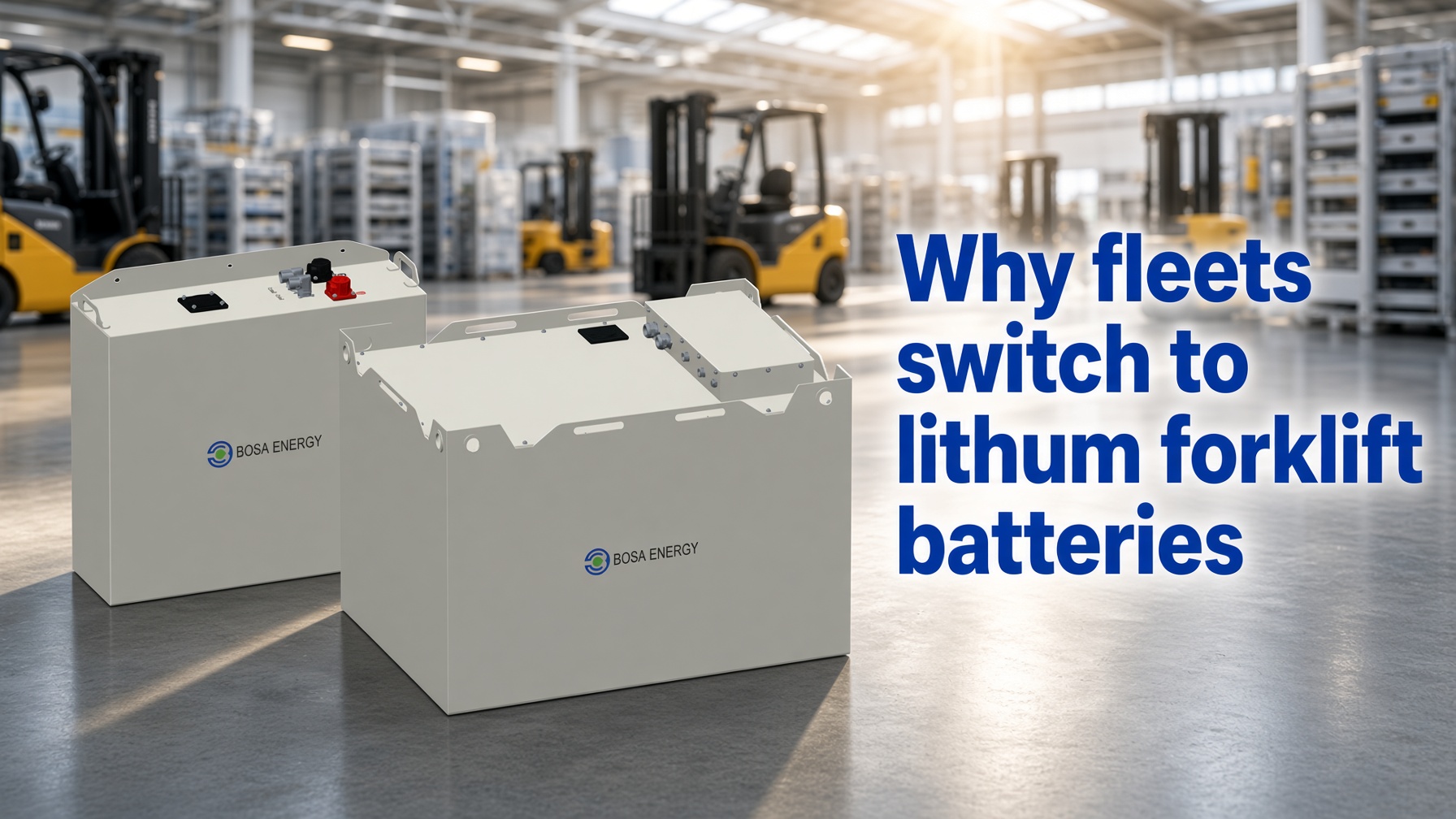
Why fleets switch to lithium forklift batteries
The decision ultimately rests on operational reality rather than technology preference. Why fleets switch to lithium forklift batteries is explained by the combination of higher uptime, lower ongoing labor and energy cost, and the ability to run multi-shift duty with a single pack per truck. Sites that once budgeted for battery rooms, spare packs, and weekly watering routines find those line items shrink or disappear. The higher purchase price is recovered through avoided costs and productivity gains, after which the remaining service life produces ongoing savings. For operators whose utilization exceeds roughly one full shift per day, the economics and the practical advantages align.
Conclusión
Material-handling fleets continue to adopt lithium power because the technology removes structural constraints that lead-acid systems impose on throughput and cost. Faster charging, consistent performance, near-zero maintenance, and longer cycle life produce a lower total cost of ownership for most multi-shift operations. Careful measurement of current practices and a staged pilot remain the surest path to capturing those benefits. As charger infrastructure and pack costs continue to improve, the share of fleets that choose lithium is expected to rise further.