
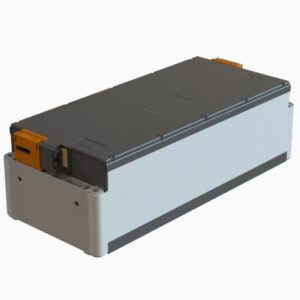
Ο VDA355 module has become one of the most sought-after solutions for Nissan Leaf battery upgrades and custom EV conversions. Whether you’re restoring a high-mileage Leaf, building a 60+ kWh pack from new cells, or swapping Leaf powertrain components into another vehicle, these standardized modules offer a compelling combination of performance, availability, and value.
In this comprehensive guide, we break down exactly what VDA355 modules are, why they work so well for Nissan Leaf projects, detailed specifications, configuration advice, and practical considerations drawn from real-world EV conversion experience.
What Is a VDA355 Battery Module?
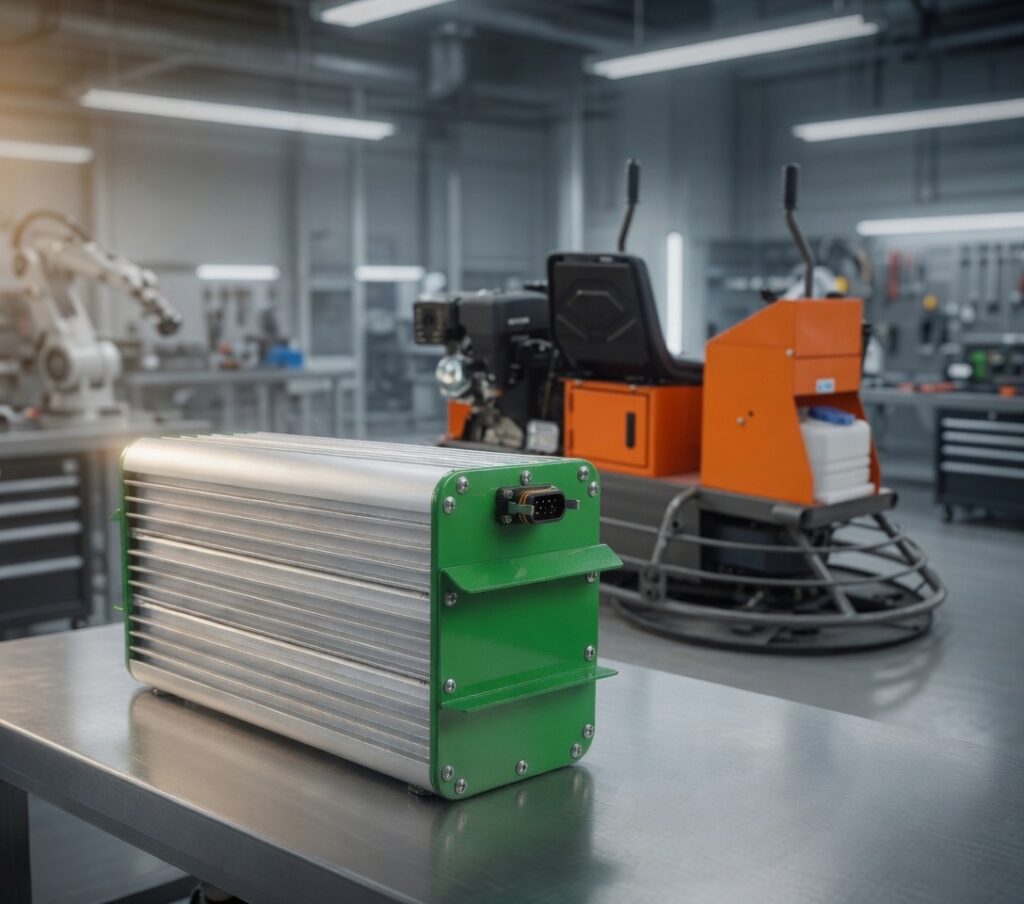
VDA355 refers to a standardized lithium-ion battery module size defined by the German Association of the Automotive Industry (VDA). The “355” comes from the module’s length: 355 mm.
Standard dimensions (with minor manufacturing tolerances):
- Length: 355 mm (±1 mm)
- Width: 151–152 mm
- Height: 108–110 mm
These modules typically use NMC (Nickel Manganese Cobalt) prismatic cells and come in several common electrical configurations:
- 4S1P — 14.8 V nominal, 153–180 Ah (most popular for Leaf-style packs)
- 6S1P — 22.2 V nominal, ~102–114 Ah
- 8S1P — 29.6 V nominal, ~86–90 Ah
A single 4S1P 180 Ah module stores roughly 2.66 kWh. Twenty-four of these modules connected in series create a ~355 V nominal pack delivering 60–65 kWh — almost a perfect match for a Nissan Leaf 62 kWh battery.
Why VDA355 Modules Excel in Nissan Leaf Conversions
Nissan Leaf original modules (especially Gen 1 and early Gen 2) are now 8–15 years old. Many salvaged packs suffer from capacity loss, imbalanced cells, and failing BMS boards. VDA355 modules solve these problems:
- Brand-new cells — No calendar aging or cycle degradation from previous use.
- Standardized form factor — Easier to design custom enclosures or adapt into Leaf chassis.
- High energy density — Modern NMC chemistry delivers strong range in a compact, relatively lightweight package.
- Cost-effective upgrade path — Often cheaper per kWh than buying a complete used Leaf pack in good condition.
Many aftermarket suppliers explicitly market these modules as “Nissan Leaf 62 kWh replacement” or “Leaf battery upgrade” modules because the voltage and energy numbers line up so cleanly.
Typical Specifications (CATL / Svolt 4S1P VDA355 Modules)
| Παράμετρος | Typical Value | Σημειώσεις |
|---|---|---|
| Configuration | 4S1P | 4 cells in series |
| Ονομαστική τάση | 14.8 V | 3.7 V per cell |
| Ικανότητα | 174–180 Ah | Varies by exact cell batch |
| Nominal Energy | 2.58–2.66 kWh per module | — |
| Βάρος | 11.0–11.6 kg | Excellent power-to-weight |
| Διαστάσεις (Μ×Π×Υ) | 355 × 151.5 × 108.5 mm | VDA standard |
| Continuous Discharge | 1–2C (depending on cell) | Check datasheet |
| Κύκλος ζωής | 2,000–4,000+ cycles | At 80% DoD, 25 °C |
| Ανακοίνωση | Usually no built-in BMS | External BMS required |
| Χημεία | NMC (often 811 or similar) | High energy density |
How to Configure VDA355 Modules for a Nissan Leaf Pack
The most common successful build uses 24 × 4S1P modules:
- Σύνδεση σειράς → ~355 V nominal (matches original Leaf architecture)
- Total capacity → 174–180 Ah
- Συνολική ενέργεια → 62–65 kWh
You can also create parallel strings for higher current capability or different voltages depending on your motor controller and inverter.
Important: Original Nissan Leaf BMS is calibrated for the specific AESC cells and will not work reliably with these aftermarket modules. Most builders use:
- A high-quality aftermarket BMS (e.g., REC, Orion, or Chinese CAN-bus BMS)
- Or a complete conversion controller such as Resolve-EV that handles both motor/inverter and battery management
Step-by-Step Nissan Leaf Conversion Overview
- Define your goals — Daily driver range? Track use? Budget?
- Calculate pack size — 24 modules (≈63 kWh) is the sweet spot for most Leaf conversions.
- Source modules + BMS + contactors + fuses from reputable suppliers.
- Design or adapt the battery box — VDA355 modules are compact and stack neatly.
- Integrate with Leaf powertrain (motor, inverter, charger, DC-DC) or go full custom.
- Thorough testing — Insulation, balancing, thermal imaging, and high-voltage safety checks.
- Road legality & insurance — Document everything; many regions require professional inspection.
Safety warning: Working with high-voltage EV batteries (300–400 V) is extremely dangerous. Incorrect wiring, poor insulation, or inadequate BMS can cause fire, explosion, or fatal electric shock. Always use proper PPE, insulated tools, and ideally work with or under the guidance of certified EV technicians.
Advantages vs. Original Nissan Leaf Modules
- New cells = predictable performance and longer remaining life
- Often higher usable capacity than a tired 8–12-year-old pack
- Easier to source consistent batches (no need to cherry-pick modules from multiple wrecks)
- Better support for modern BMS features (Bluetooth monitoring, app integration, OTA updates on some systems)
- Standardized mounting points simplify custom fabrication
Challenges to Consider
| Challenge | Solution |
|---|---|
| BMS compatibility | Use dedicated aftermarket BMS or conversion controller |
| Cell balancing & monitoring | Quality BMS with individual cell voltage sensing |
| Thermal management | Add active cooling or ensure good airflow; NMC runs warmer than LFP |
| Physical fitment | Custom tray or slight modification to Leaf battery compartment |
| Legal / warranty issues | Professional installation + proper documentation |