
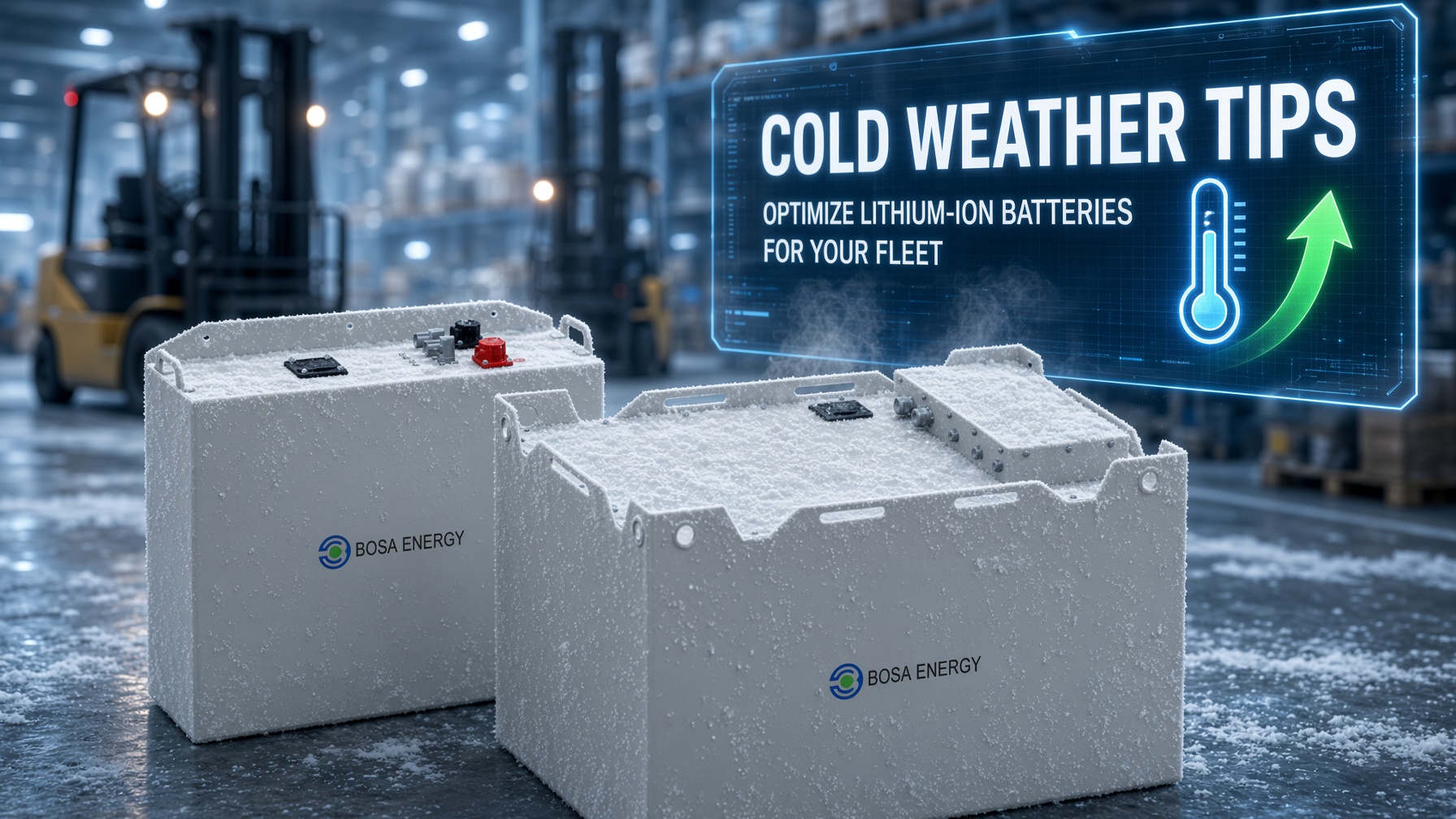
Cold Weather Tips to Optimize Lithium-Ion Batteries for Your Fleet are essential for any operator managing electric vehicles, forklifts, delivery vans, or other battery-powered assets through winter months. Lithium-ion chemistry delivers exceptional energy density and cycle life under normal conditions, yet sub-zero temperatures slow ion mobility, raise internal resistance, and can cut usable range by 20 to 50 percent. Fleet managers who ignore these effects face higher energy costs, missed routes, and accelerated battery degradation. This guide draws on established electrochemical principles and field-proven practices to help you maintain reliable fleet lithium battery winter performance without sacrificing safety or longevity.
Understanding the Impact of Cold on Lithium-Ion Cells
Lithium-ion batteries rely on the movement of lithium ions through a liquid electrolyte between anode and cathode. When ambient temperatures drop below roughly 10 °C (50 °F), the electrolyte viscosity increases and ion diffusion rates fall sharply. The result is higher internal resistance, voltage sag under load, and a temporary reduction in available capacity. Studies of real-world electric fleets consistently show average range retention of about 70–80 percent at freezing temperatures, with greater losses on short trips that demand cabin heat. At –20 °C the usable energy can fall below 60 percent of the nameplate rating for conventional cells.
The most serious risk is not discharge but charging. Attempting to charge a lithium-ion pack below 0 °C promotes lithium plating on the graphite anode. Metallic lithium deposits permanently reduce capacity and can create internal short-circuit pathways. Modern battery-management systems (BMS) therefore limit or block charge current until the cells reach a safe temperature. Understanding this distinction—discharge is possible at low temperatures, while charging is not—is the foundation of every successful winter strategy.

Preconditioning and Thermal Management Strategies
The single most effective practice is preconditioning lithium batteries for cold starts. Schedule vehicle departure times so the battery and cabin can be warmed while the vehicle remains plugged into shore power. Most contemporary electric vans and trucks offer app-based or timer-based preconditioning that draws energy from the grid rather than the traction battery. Warming the pack to 15–25 °C before the first drive restores near-normal power capability and reduces the energy later required for cabin heating.
Advanced lithium battery thermal management for fleets further improves results. Liquid-cooled or liquid-heated packs circulate a glycol mixture through dedicated channels, allowing the BMS to bring cells into the optimal 20–40 °C window quickly. Heat-pump systems, now standard on many commercial EVs, recover waste heat from the drivetrain and deliver cabin warmth at roughly half the energy cost of resistance heaters. Operators should confirm that thermal-management loops are filled with the correct coolant mixture and that sensors are calibrated before the first freeze.
Parking indoors or in heated depots whenever possible keeps packs above the critical temperature threshold overnight. For outdoor storage, insulated battery blankets or dedicated pack heaters can maintain a minimum temperature with modest energy draw. Always verify that any aftermarket heater is compatible with the vehicle’s BMS and does not void warranty coverage.
Safe Charging Practices Below Freezing
Safe charging lithium-ion batteries below freezing requires deliberate procedures. Never initiate a charge session when cell temperatures are at or below 0 °C unless the pack incorporates an automatic pre-heat function that has already brought the cells above the threshold. Prefer Level-2 AC charging during the coldest periods; high-power DC fast charging on a cold pack is both slower and more stressful because the BMS severely derates current until the cells warm.
Schedule the majority of charging during the warmer afternoon hours when ambient temperatures are highest. Keep daily state-of-charge targets between 20 and 80 percent for regular operation; reserve 100 percent charges for the night before long routes. After a cold drive, plug the vehicle in promptly so residual heat in the pack assists the charge process. Monitor the BMS for temperature-related derating messages and train drivers to report persistent warnings.
Operational Tips That Extend Winter Range
Beyond battery conditioning, everyday driving and loading practices compound the benefits of good thermal management. Use seat and steering-wheel heaters in preference to full cabin heat; they warm occupants directly and consume only a fraction of the energy. Limit short, frequent trips that never allow the pack to reach operating temperature. Plan routes with fewer stops and avoid high-speed highway runs when temperatures are lowest, because aerodynamic drag rises with denser cold air.
Regenerative braking can be dialed back on icy surfaces to preserve stability, accepting a modest range trade-off for safety. Keep tire pressures at the manufacturer’s cold-weather recommendation; under-inflated tires increase rolling resistance and accelerate energy loss. Finally, clear snow and ice from the vehicle before departure—extra weight and aerodynamic disruption both reduce range.
Long-Term Storage and Maintenance
When vehicles will sit unused for more than a few days, store the battery at 40–60 percent state of charge in a temperature-controlled environment. Full or empty packs left in extreme cold experience accelerated calendar aging. Periodically cycle the pack or allow the BMS to perform a balance charge once temperatures rise. Inspect high-voltage connectors and coolant lines for moisture intrusion before winter arrives, and replace cabin air filters so the heat-pump system operates at peak efficiency.
Regular firmware updates often include improved cold-weather charge algorithms and more accurate range predictions. Subscribe to manufacturer service bulletins and incorporate winter-specific diagnostic routines into your preventive-maintenance schedule.
Conclusion: Turning Winter Challenges into Operational Strength
Implementing these proven strategies for Cold Weather Tips to Optimize Lithium-Ion Batteries for Your Fleet transforms winter from a period of reduced productivity into a predictable operating window. By combining preconditioning, disciplined charging, intelligent thermal management, and thoughtful driving habits, operators routinely recover 15–25 percentage points of lost range and protect long-term battery health. The same practices also lower energy costs and improve vehicle availability—advantages that compound across a large fleet.
Συχνές ερωτήσεις
How much range do lithium-ion batteries typically lose in freezing weather?
Most fleet vehicles retain 70–80 percent of rated range at 0 °C and 50–70 percent at –20 °C. Losses vary with chemistry, thermal-management quality, and duty cycle. Preconditioning and heat-pump use can reclaim a substantial portion of the difference.
Can I charge a lithium-ion pack when the temperature is below freezing?
Only after the cells have been warmed above 0 °C. Charging a cold pack risks lithium plating. Use the vehicle’s built-in pre-heat function or park indoors before connecting the charger.
What is the best state of charge for overnight storage in cold weather?
Keep the pack between 40 and 60 percent for multi-day storage. For daily operation, target 20–80 percent and charge to 100 percent only when a long route is planned.
Do heat pumps make a measurable difference?
Yes. Independent testing shows heat-pump-equipped vehicles retain roughly 8–10 percent more range in freezing conditions compared with resistance-heater-only models.
How often should fleet batteries be preconditioned?
Every departure on cold mornings. Set automatic schedules so preconditioning occurs while the vehicle is still plugged in.
Are special “cold-weather” lithium batteries worth the premium?
Wide-temperature cells with enhanced electrolytes or silicon-dominant anodes can reduce range loss by half in extreme climates. Evaluate total cost of ownership against the operational savings of fewer mid-route charges and longer pack life.