
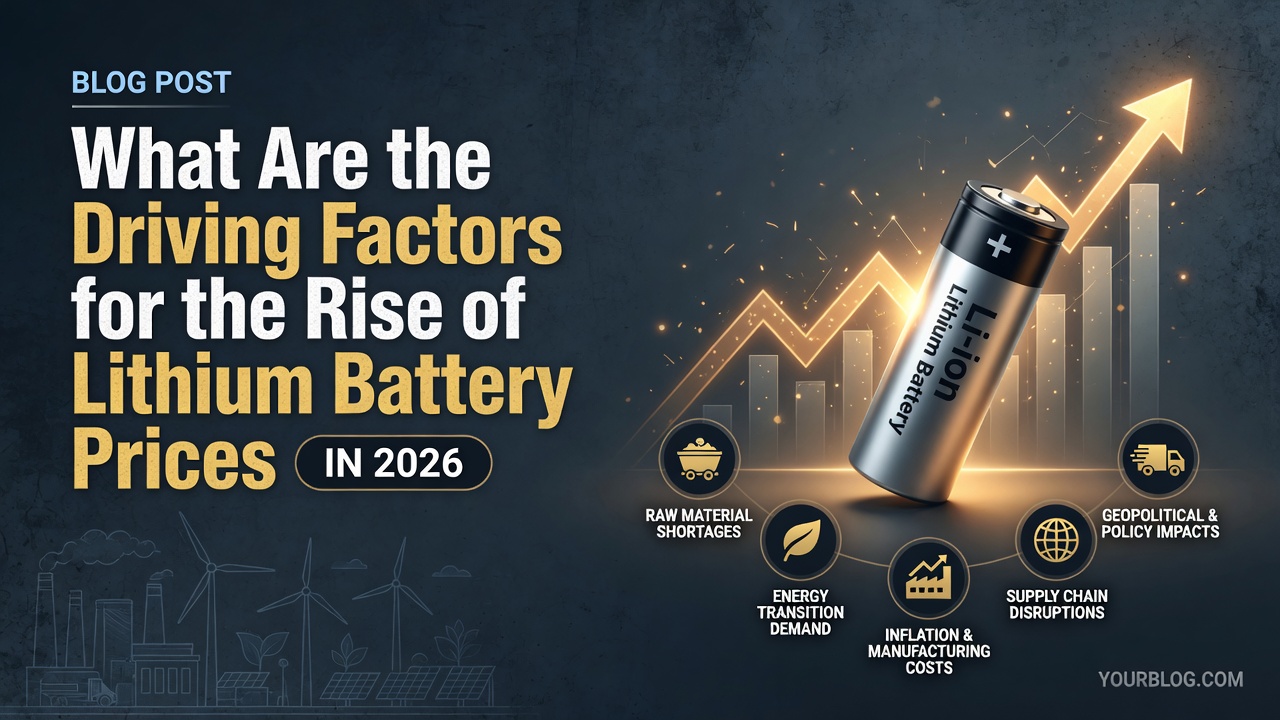
The lithium battery industry is navigating a notable shift in 2026, with multiple structural factors creating upward pressure on prices after periods of significant deflation. While manufacturing efficiencies and chemistry shifts continue to play a role, a powerful combination of policy changes, surging demand, and supply-side constraints is reshaping cost dynamics across the value chain.
This analysis examines the primary drivers behind these trends, drawing on insights from leading market observers and research organizations.
Explosive Growth in Energy Storage Demand
One of the most influential forces in 2026 is the rapid expansion of battery energy storage systems (BESS). Lithium demand from stationary storage applications grew sharply in 2025 and is expected to maintain strong momentum this year, driven by renewable energy integration, grid modernization, data center buildouts for AI infrastructure, and supportive policies in major markets.
Energy storage is emerging as a standout growth segment, often outpacing traditional electric vehicle (EV) demand in its impact on lithium consumption. This broadening demand base—spanning utility-scale projects, commercial and industrial installations, and behind-the-meter systems—adds sustained pressure on battery supply chains.
According to Reuters reporting, the boom in battery storage has strengthened the demand outlook for lithium, with analysts highlighting its role in narrowing market surpluses.
China’s Export VAT Rebate Phase-Out
A critical policy development directly affecting global pricing is China’s phased reduction and eventual elimination of export VAT rebates for battery products.
Rebates for lithium-ion batteries and related products are being cut from 9% to 6% between April and December 2026, before dropping to zero starting January 2027. This change raises the effective cost for Chinese exporters, who dominate global cell and pack manufacturing. Manufacturers are expected to pass on at least part of these higher costs to international buyers.
The policy is also triggering front-loaded export demand in the first half of 2026 as buyers and sellers accelerate shipments ahead of the reductions. This surge in near-term production activity intensifies demand for upstream materials like lithium carbonate, contributing to tighter market conditions and price support.
Reuters covered the market reaction, noting how the announcement contributed to lithium price movements as participants anticipated higher battery output.
Industry analyses from Benchmark Mineral Intelligence similarly highlight how the VAT adjustments are influencing battery pricing dynamics and supply chain planning.
Tightening Supply and Raw Material Cost Recovery
Lithium and other key battery raw materials are experiencing price recoveries amid a narrowing global surplus. While overall supply continues to expand, the pace of new project commissioning and utilization rates in some segments have not fully kept pace with demand growth, particularly from energy storage.
Contributing factors include:
- Previous periods of low prices that led to production cuts, project delays, and reduced capital expenditure.
- Specific supply disruptions, including mine suspensions and slower restarts in key regions.
- Environmental regulations, permitting challenges, and local opposition affecting new mining developments in traditional producing areas such as Australia, Chile, and Argentina.
- Policy measures in other jurisdictions (for example, export controls or quotas on related materials like cobalt) that add rigidity to certain supply chains.
S&P Global Commodity Insights has noted that the global lithium carbonate surplus is expected to narrow in 2026, with energy storage emerging as the most significant outperforming driver of demand.
These dynamics create a more balanced—or in some forecasts, tighter—market environment compared to the oversupply conditions of prior years, feeding into higher input costs for battery manufacturers.
Broader Demand from EVs and Emerging Applications
Electric vehicle adoption continues to support baseline demand, even as growth rates vary by region. Increasing battery sizes per vehicle and the penetration of commercial EVs (such as heavy-duty trucks) add to overall lithium requirements.
Additionally, new high-growth applications—including power backup and energy management for AI data centers—are expanding the addressable market for lithium batteries. This diversification reduces reliance on any single sector and provides more resilient demand fundamentals.
Supply Chain, Geopolitical, and Cost Factors
Beyond raw materials and demand, several operational and external factors are contributing to price pressures:
- Logistics, transportation, and energy input costs that remain elevated in certain regions.
- Ongoing trade policy measures and tariffs in major import markets, which can increase landed costs for batteries and components.
- Currency fluctuations and exchange rate dynamics affecting international trade.
- Industry-wide efforts to address overcapacity in China, which are gradually rebalancing production but can create short-term volatility during the transition.
These elements compound the effects of policy and demand shifts, particularly for imported batteries and systems.
Market Adaptation and Outlook
Battery manufacturers are responding through continued adoption of lower-cost lithium iron phosphate (LFP) chemistries, process improvements, and vertical integration strategies. Some forecasts from organizations like BloombergNEF anticipate that pack-level prices may still see modest declines in certain segments due to these adaptations and manufacturing scale.
However, the upward pressures from raw material markets, China’s export policy transition, and robust energy storage demand are creating a more complex pricing environment in 2026. Price trajectories are likely to show volatility, with regional and chemistry-based divergences becoming more pronounced.
Key takeaway: The rise in lithium battery prices in 2026 is not driven by a single factor but by the convergence of strong, policy-supported demand growth (especially in energy storage), structural adjustments in China’s export framework, and supply constraints in critical minerals. These trends are reinforcing each other in the near term.
Stakeholders across the EV, energy storage, and battery supply chain should closely monitor developments in Chinese policy implementation, mining project timelines, and energy storage deployment data throughout the year. The market is transitioning toward a phase where genuine demand and supply fundamentals, rather than pure overcapacity dynamics, will play a larger role in price formation.
بوسا للطاقة
Bosa Energy with 150GWH capacity and over 400,000 electric bus/utility vehicle application experience we are listing first 5 in China power battery industry, actually in 2025 we are the number 3 on li-ion cell delivery in China Market. We cooperate with Yutong/Geely/Damiler etc.
We are also offering Container ESS systems. In local market, we are offering OEM service for Changan, CALB, National grid, Ping Gao Electric , Xuji electronics, Ruineng electronics, they are our main Container ESS suppliers in China Market.
نحن المورد الأكثر احترافية لبطاريات الليثيوم البحرية في الصين، ويحتل حجم صادراتنا من البطاريات البحرية باستمرار مرتبة بين الثلاثة الأوائل في الصين؛ كما أننا المصدر الأول لوحدات بطاريات الليثيوم في الصين، متخصصون في توفير حلول متنوعة لوحدات بطاريات الليثيوم.
For excellent quality and performance our products are popular in more than 30 countries in the world. We also have established warehouse in Germany and Netherlands to provide safety stock timely delivery for our customers.
This article draws on analysis and reporting from Reuters, S&P Global Commodity Insights, BloombergNEF, Benchmark Mineral Intelligence, and the International Energy Agency (IEA) to provide an evidence-based overview of current market drivers.
Further Reading:
- Reuters: Lithium soars as China to revoke battery export tax rebates
- Reuters: Energy storage boom strengthens demand outlook for beaten-down lithium
- S&P Global: Lithium carbonate surplus to narrow; energy storage to drive growth
- Benchmark Mineral Intelligence coverage on lithium market dynamics
For businesses and investors evaluating battery procurement, project economics, or supply chain strategy in 2026, understanding these interconnected drivers is essential for navigating the evolving cost landscape.